
William Hines and his wife Diana/Dinah Foster resided much of their lives in what was then the Staffordshire & Warwickshire parts of England now known as the ‘midlands’. There were a lot of William Hines with variations on the spelling at the time of our Hines.
I’ve been able to put together a footprint of their movements starting when they were married in Darlaston (Staffordshire.) Moving about a two hour walk south east to West Bromwich (Staffordshire,)A further two hours walk further south east into the centre of Brimingham (Warwickshire.)
William I’ve estimated to have been born around 1760 and Diana about the same.
Marriage by banns records between Dinah Foster and William Hines are dated 23 Nov. 1777 at Darlaston, St Lawrence, Staffordshire. This would have made William and Diana about 17. England. Church of England Marriages and Banns, 1754-1900.
While I’ve been able to locate baptisms of children after extensive trawling of parish records tying down the actual life details of William and Diana is still a work in progress made more challenging by their pre-registration status in industrialising England.
That they gradually moved toward the centre of the city indicates to me that perhaps their prior income had been threatened pushing them into city-based poverty. The year 1802 followed a period of extreme food scarcity and skyrocketing grain prices across England due to the Napoleonic Wars. This economic strain pushed many working-class Birmingham families over the brink into the parish poor relief system.
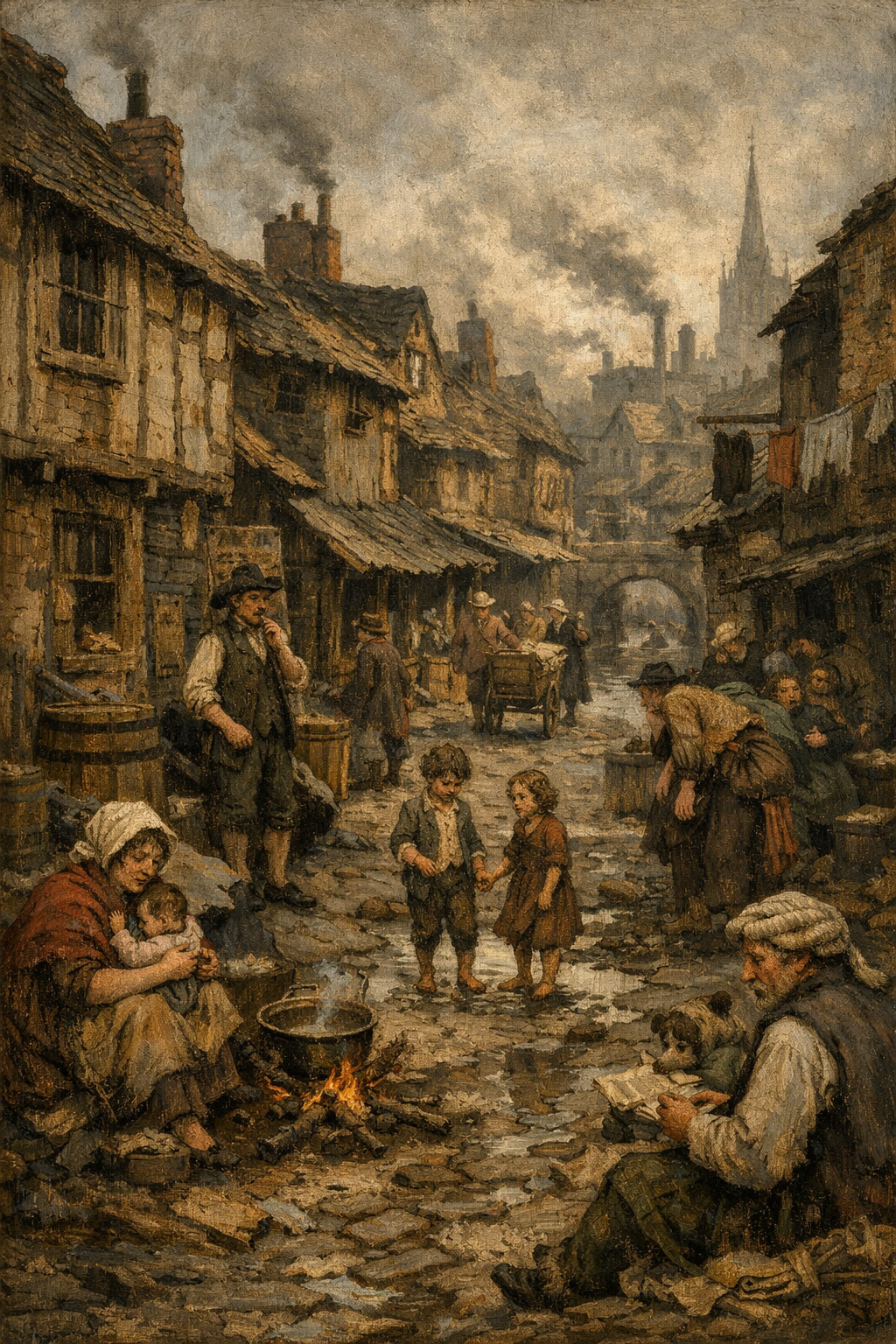
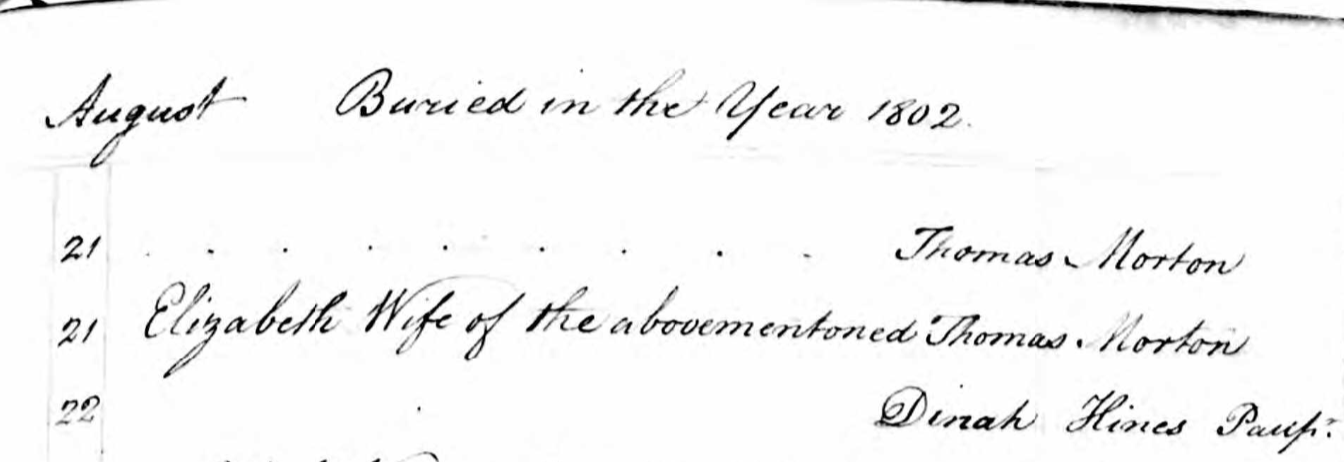
I’m inclined to believe that both were buried as paupers viz entries at St Martin’s in Birmingham a few years apart at a parish they lived in. They may or may not have lived in the workhouse in what was Litchfield St. (near modern-day Corporation Street).
At the time of Diana’s death if she became sick and could not be cared for at home then the possibility is that she went to the workhouse ‘hospital’. But it is likely they did not have the means to purchase a burial.
Unfortunately, the daily admission and discharge ledgers for the Lichfield Street Workhouse from 1802 and 1807 have not survived and therefore cannot be referenced.
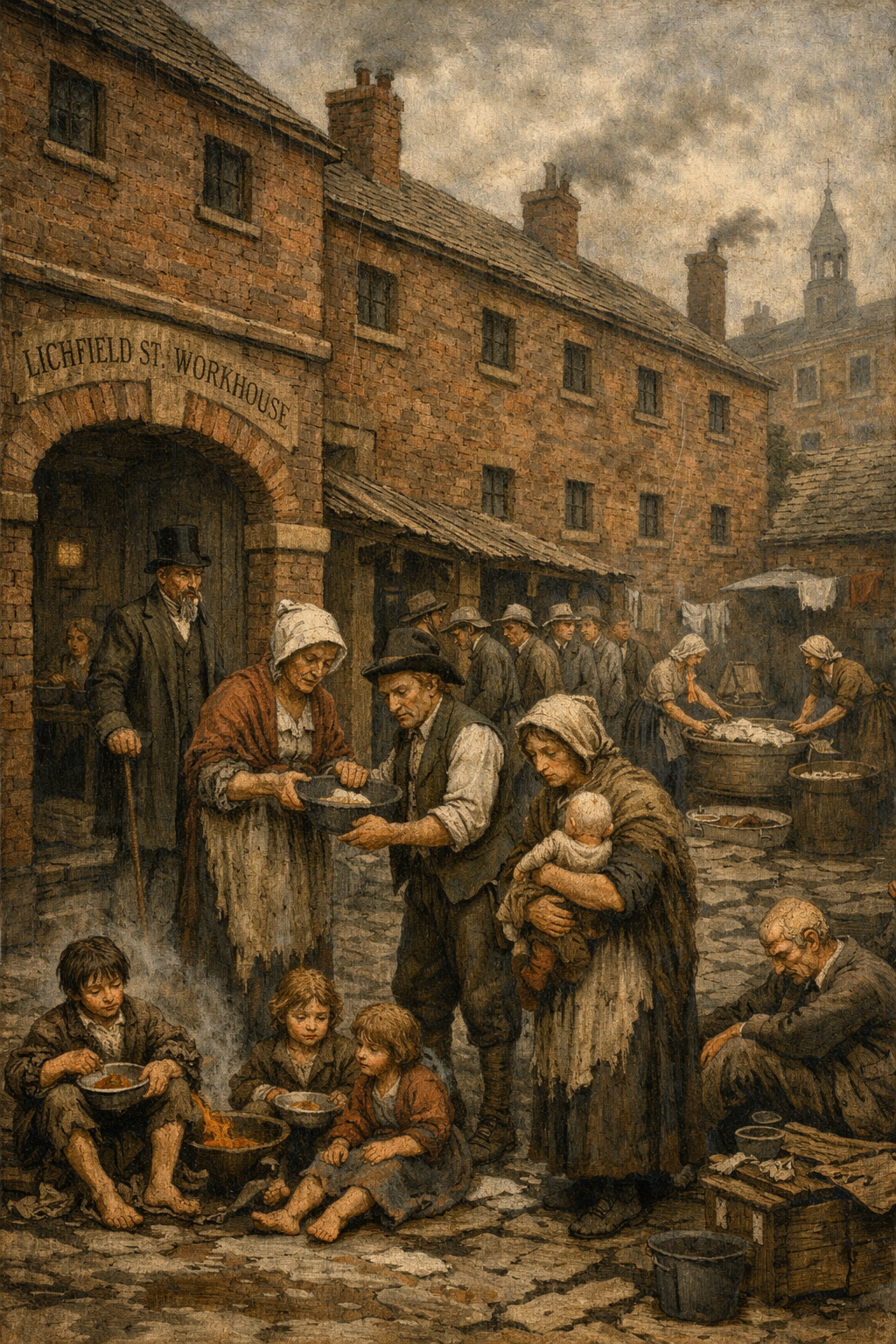
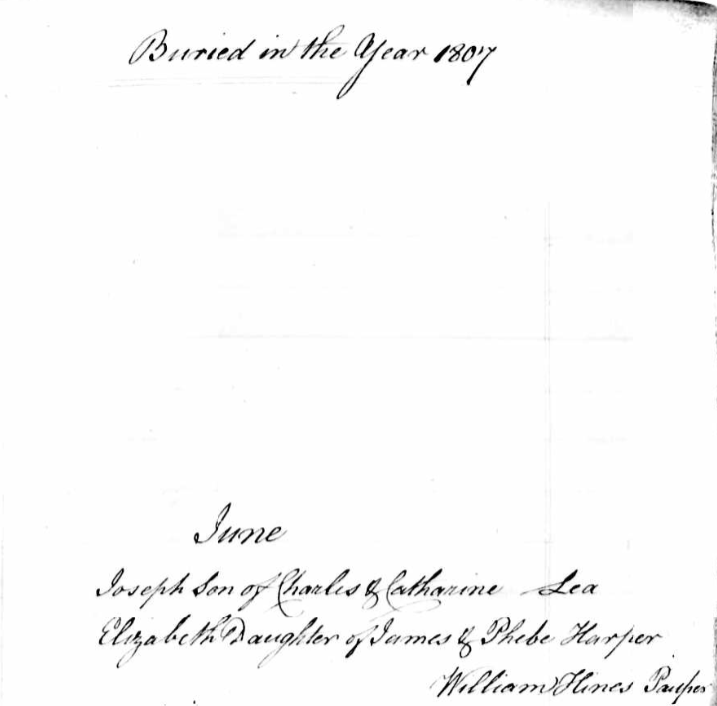
By 1807, the central churchyard of St. Martin’s was severely overcrowded and deemed a health hazard if they were buried there it would have been in a communal grave. Otherwise the likelihood is that at least one of them was buried in a communal grave at the nearby Park St Burial Ground. Centuries later, this exact burial ground was excavated during the UK’s High Speed 2 (HS2) railway development)
I’m proposing that Diana and William were in their early forties when they died a few years apart. William would die the same year three of his daughters were being transported to Australia.
DEATH

The Hines story is an unusual one in that of the children of this family, five sisters would at different times be tried at Warwick Assizes with all five eventually sentenced to transportation to the colony of Australia. They would reconnect in Australia living out the remainder of their lives there in regular contact.
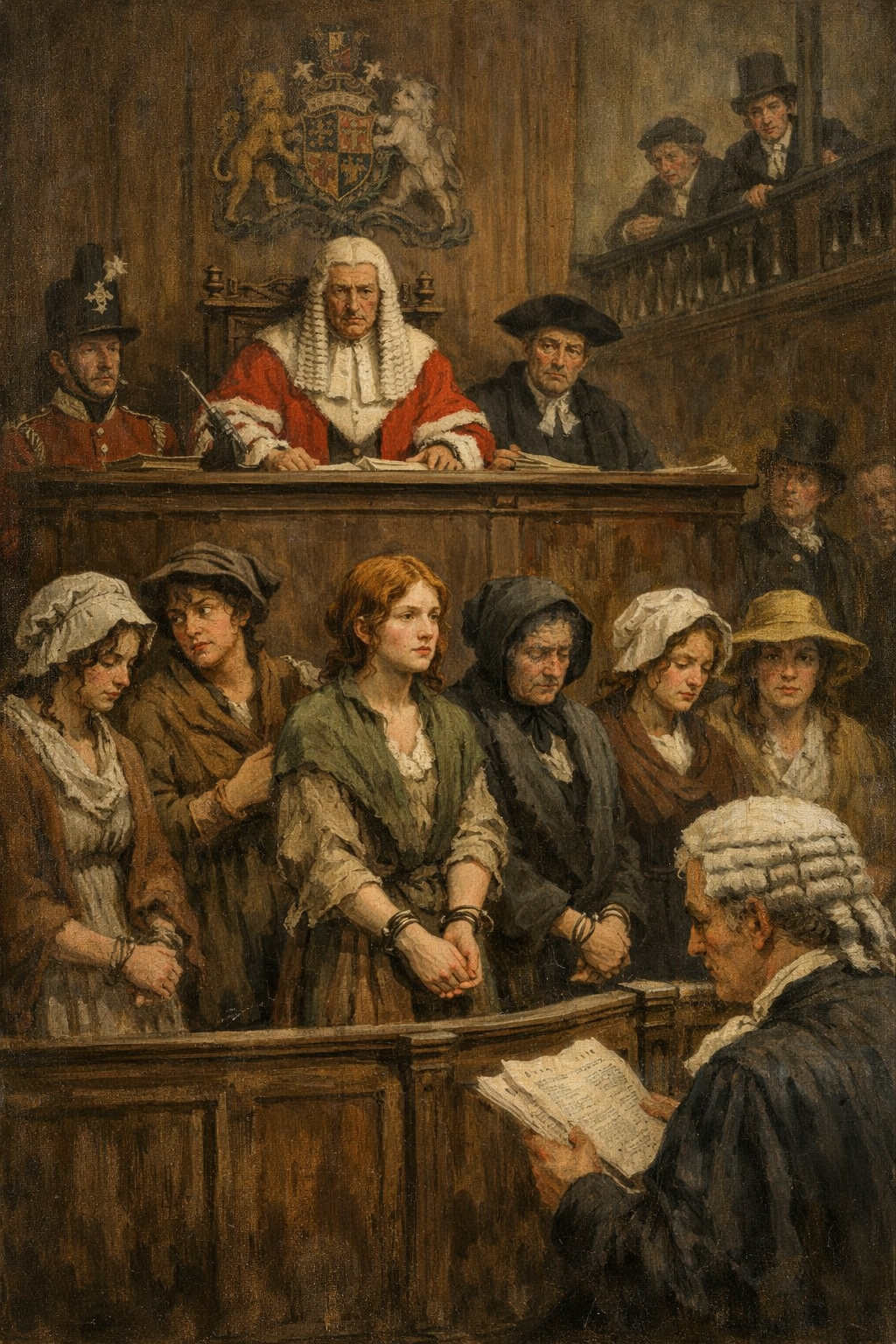

Sydney Cove 1807. Mary, Martha and Maria left England aboard the Sydney Cove arriving in New South Wales, Australia in 1807.
Wanstead 1814. Catherine left Spit Head England 24 Aug 1813 aboard the Wanstead and arriving in New South Wales, Australia 9 Jan 1814.

The Lord Meville 1817. Phoebe left England with her infant son James aboard The Lord Melville Jul 1816 arriving 24 Feb 1817 in New South Wales, Australia. If Phoebe hadn’t spent so much time being held in Gaol she would have joined her sisters a few years earlier.

Now were these girls singularly lousy at not getting caught or do we suspect that maybe somewhere along the line there has been some degree of orchestration at least with the last two sisters for perhaps an opportunity for a new life together albeit under considerable difficulty. Their lives in England had been marked by extreme poverty and excessive loss. Their convict years in Australia featured through personal experience and exposure to people who had been brutalised and hardened under the convict penal system. What continues to appear repeatedly throughout their lives was their ongoing commitment to each other as a family.
Parramatta Female Factory
I have been able to locate both Catherine and Martha at the factory which is not to say that Maria, Mary and Phoebe didn’t also go there. This is more likely than not as all ladies came via Sydney.
Martha and most likely her sisters time at the factory in 1807 would have been far from comfortable. A fire along with the general decay of the buildings reported by Governor Bligh at the time indicated living standards being poor and insufficient to house the required numbers of women. It would not be until 1821 that a building considered suitable would be built and opened for the factory women and their children.
Catherine was there in 1814.
Their time, whether they were there and their experiences while at the factory is a current line of investigation I am following.
Mary Hines. Married Connor, Trayner & Goddard
Baptism, 20 Dec 1778 • Darlaston, St Lawrence, Staffordshire, England. Darlaston, St Lawrence, Staffordshire, England used to be a part of Staffordshire pre 1966. Two hour walk from West Bromwich.
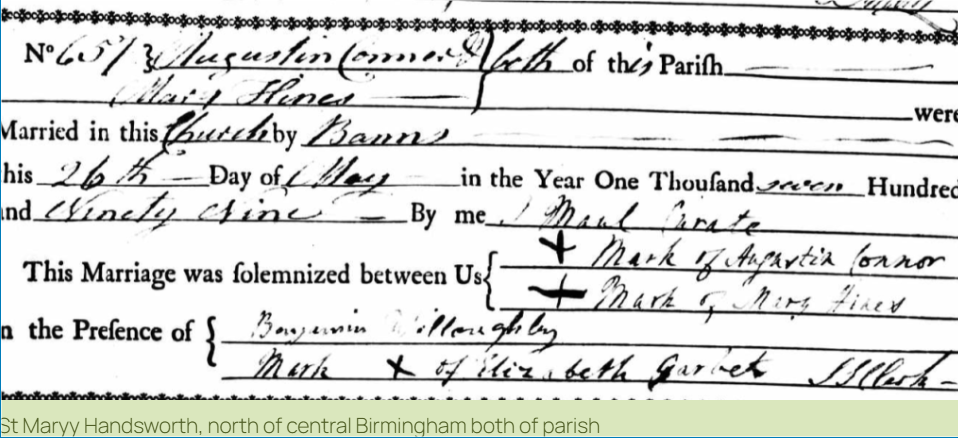
26 May 1799 marries Augustin Conner. Her age supposed to be around 20. Both of parish.
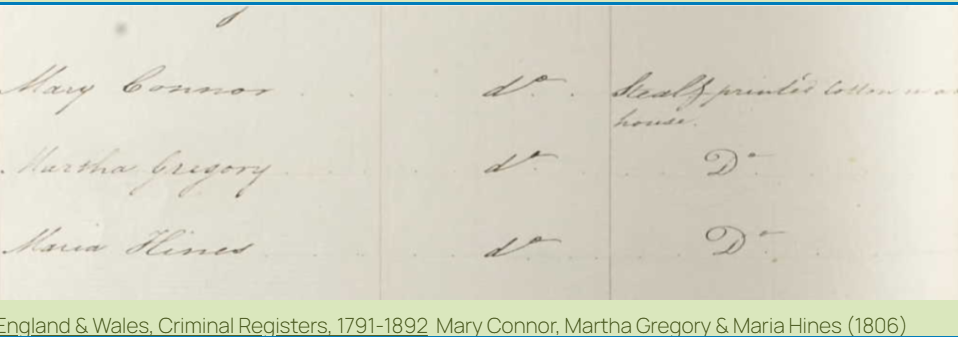
24 March 1806. WARWICK ASSIZES (Lent)
Martha Gregory was tried with her sisters Maria Hines and Mary Connor at the Warwick Assizes for burglary and stealing printed cotton inside a house. All convicted to 7 years transportation –
Mary arrived aboard Sydney Cove in 1807 having been convicted of burglary (housebreaking). Mary’s co-accused in this were (her sisters who were now) Martha Gregory & Maria Hines. All three tried together, convicted at Warwickshire Assizes and transported together aboard Sydney Cove.
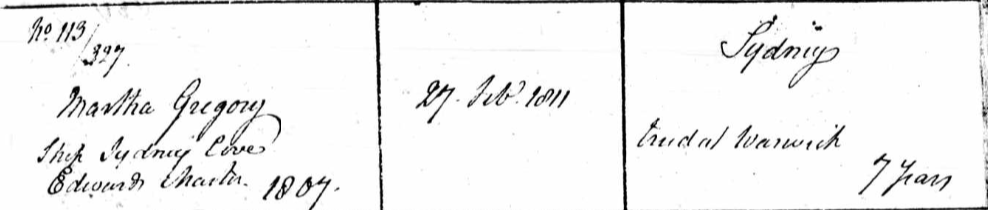
Martha, Maria and Mary boarded the ship together The Sydney Cove which departed Falmouth England 11 Jan 1807. There were 4 male convicts & 113 female convicts among the passengers and crew. A voyage of 158 days the ship arrived at Port Jackson NSW 18th Jun 1807.
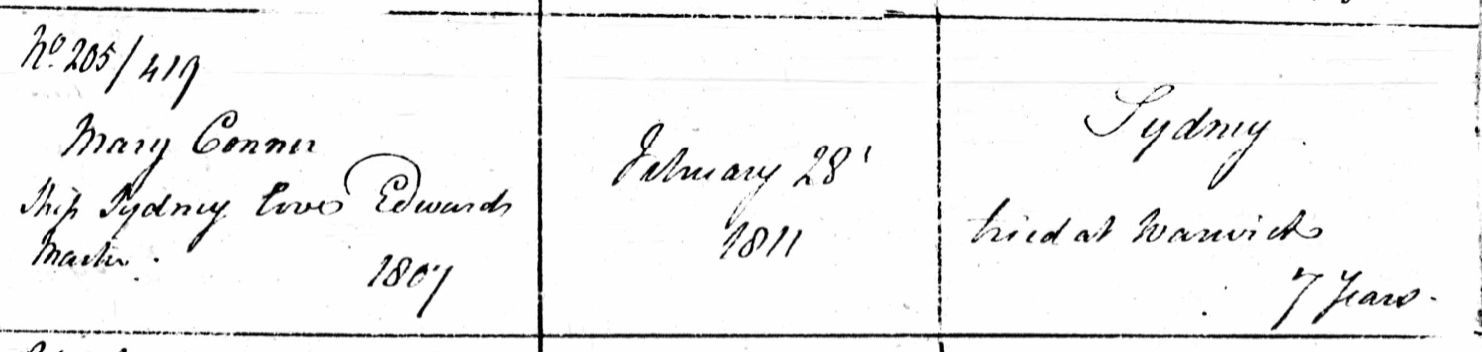
27 Feb 1811 Mary, Martha and Maria had been granted their Tickets of Leave.
By the 1822 Convict Muster Mary is recorded as the wife of P Trayner. Patrick who would go by Trainer/Trayner and McCrainer was a native of Downpatrick in Ireland. He’d been transported on the Marquis Cornwallis in 1795 for stealing and housebreaking.
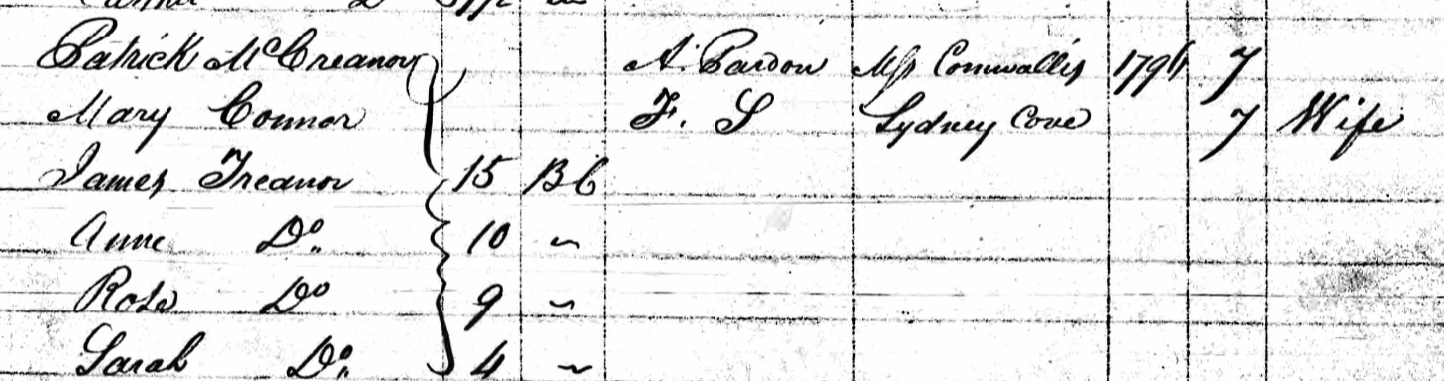
By 9 Jan 1824 Mary had been assigned a convict to work for her at her home at Gloucester St in Jeremiah Foley.

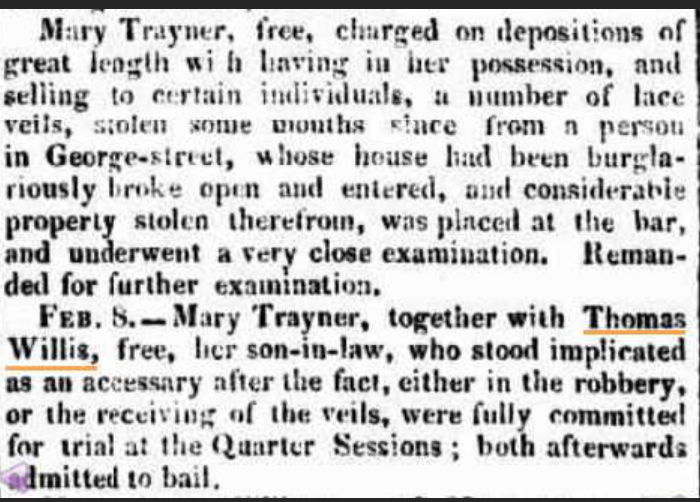
1826 Mary and son in law Thomas Willis were charged and found not guilty by a jury of burglary possessing and selling lace veils.
During their life together Patrick worked as a Shoemaker and they had land together for farming. However, Patrick was regularly in trouble and recorded as a violent and intemperate man in his ways including toward his own family. At different times Patrick was brought before the courts and imprisoned.
Newspaper reports indicate that theirs was far from a happy relationship right up to the end. Mary did outlive Patrick who died in 1839.
Their children James, Ann, Rose (died young), & Sarah Trayner.
On the 24 April, 1846 aged 67 Mary married John Goddard at St Phillips Church in Sydney before moving out with him to rural Mangrove Creek in the Hawkesbury.
Mary died 31 Jan 1850 aged 71 survived by her husband James Goddard. Her remains are interred at Mangrove Creek.

Martha Hines. Married Gregory, Beams, Tomkinson.
Baptism, 11 Apr 1784 • All Saints,West Bromwich, Staffordshire, England. West Bromwich to Birmingham, Warwickshire is about a two hour walk.
20/9/1803 marries William Gregory. Her age supposed to be around 19. His parish church.
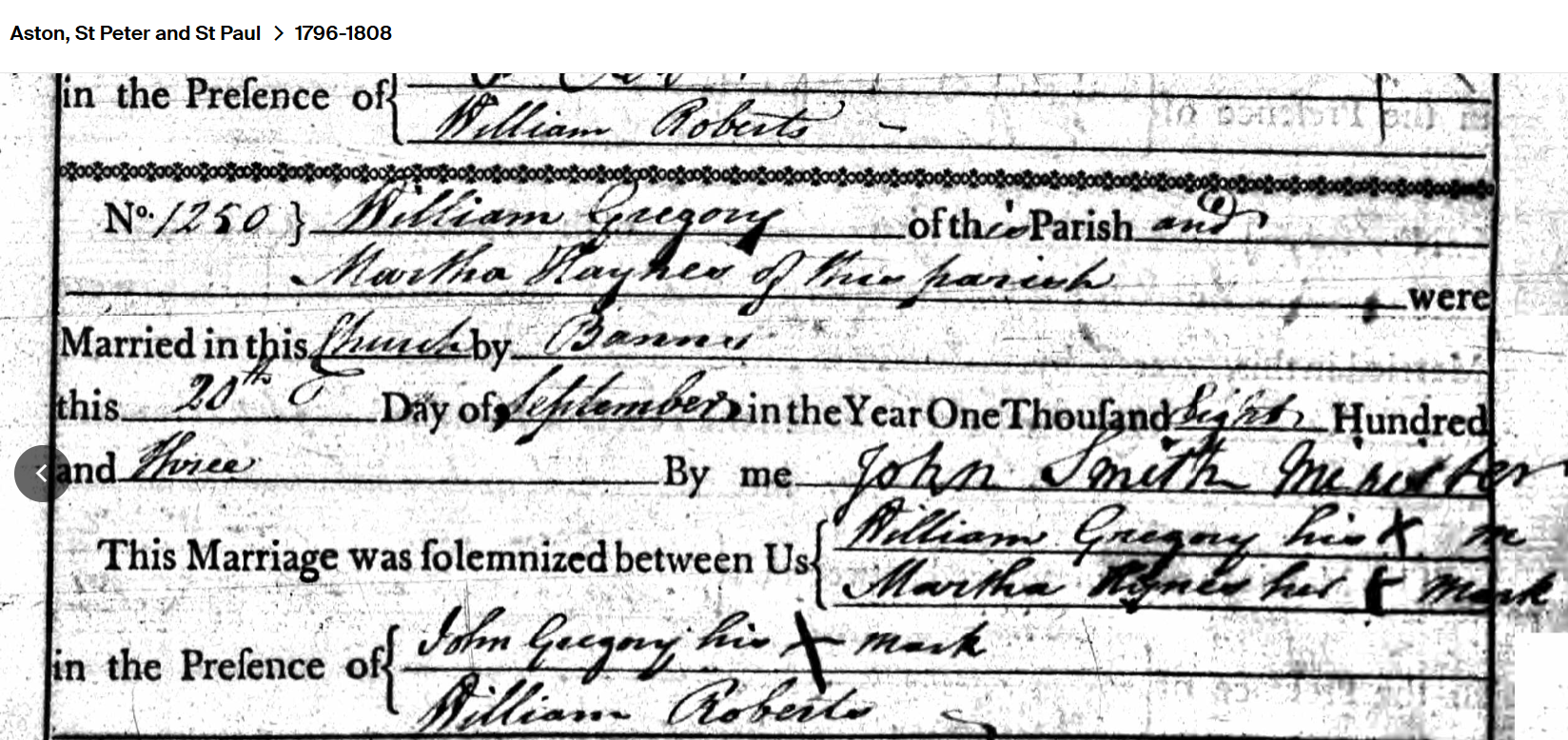
Aston St Peter & Paul. with note “hes of this parish”
24 March 1806. WARWICK ASSIZES (Lent)
Martha Gregory was tried with her sisters Maria Hines and Mary Connor at the Warwick Assizes for burglary and stealing printed cotton inside a house. All convicted to 7 years transportation –
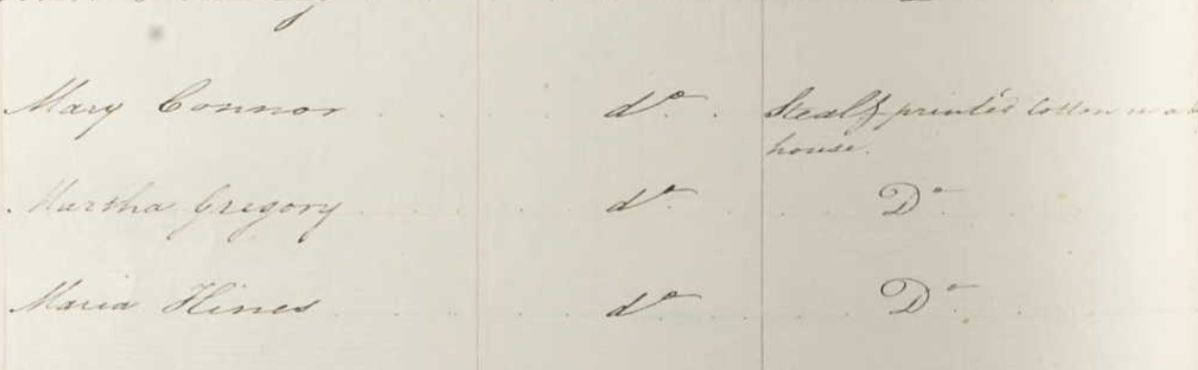
Martha arrived aboard Sydney Cove in 1807 having been convicted of burglary (housebreaking). Martha’s co-accused in this were (her sisters who were now) Mary and Maria. All three tried together, convicted at Warwickshire Assizes and transported together aboard Sydney Cove.
Martha, Maria and Mary boarded the ship together The Sydney Cove which departed Falmouth England 11 Jan 1807. There were 4 male convicts & 113 female convicts among the passengers and crew. A voyage of 158 days the ship arrived at Port Jackson NSW 18th Jun 1807.

27 Feb 1811 Mary, Martha and Maria had been granted their Tickets of Leave.
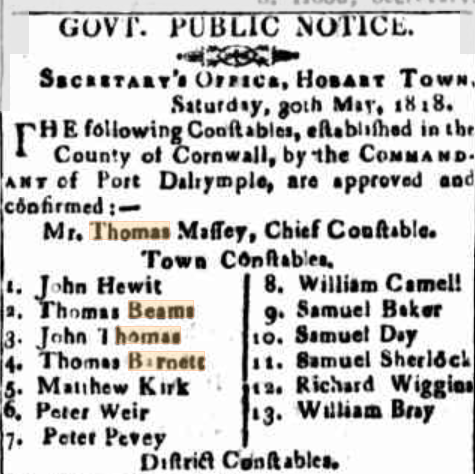
Around 1808 Martha establishes a common law marriage arrangement with Thomas Beams or Beames a fellow convict who left a wife behind in England.
17 Jan 1809 their first son Thomas was born in Sydney. A son Robert would follow in 1812 and daughter Diana in 1814.
12 Oct 1811, The Sydney Gazette. HIS EXCELLENCY the GOVERNOR has been pleased to appoint Thomas Beams and James Styles to be Constables in the Town of Sydney, in the Room of Samuel Read, resigned, and John Smith dismissed for Misconduct. By Command of His Excellency the Governor, J. T. CAMPBELL, Secretary. GOVERNMENT ORDERS. Head Quarters, Sydney, 5th October, 1811.
Population Muster 1814, Martha Gregory ‘ wife of a constable’.

Feb 1817 the family would move to Tasmania. An advertisement of same was put into the (Sydney Gazette)papers to notify any creditors. THOMAS BEAMES and Family leaving the Colony by an early opportunity for Port Dalrymple, request Claims may be presented.
Thomas had taken a position as a Town Constable at P.ort Dalrymple. By the time Thomas was appointed to the still new settlement he could have expected that his constable role included enforcing curfews, rounding up and/or conveying escaped convicts and/or bushrangers. Keeping peace in the township. Overseeing junior constables, and ensuring all assigned servants carried official travel documentation.
Thomas and Martha would take up farming land at what would become known as the areas of Beamsford and Beams Hollow near Launceston.
A daughter Phoebe was born in 1824 in Tasmania.
The year 1827 included a particularly violent and brutal extended period of Australian and specifically Tasmanian history now referred to as The Black War. Nothing I write will come close to the critically researched, educative and analytical material researched by Nicholas Clements, The Black War, Fear, Sex and Resistance in Tasmania (2014.) I’ve read this surprisingly easy to read and digest book whose contents in my opinion should be taught to all students in our schools. If you haven’t read it, I encourage you to do so.
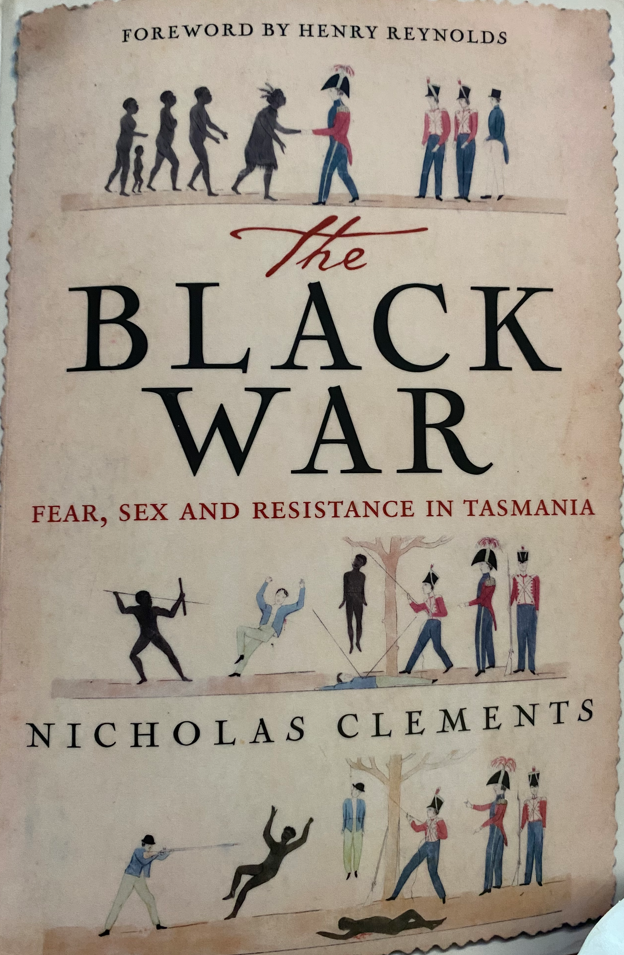
Of particular relevance to the Hines family, in 1827 an attack on the Beams property at Hadspen had resulted in two of the Beams family servants being killed. An armed roving party of white settlers tracked the group of Tasmanian Aboriginals believed to be responsible to a gully. By the next morning eleven of the located group lay dead. This area soon attracted the name of Beams Hollow. What led to the raid and the reprisal, I believe is able to be understood viz Clements narrative. A news copy of the report is available on Trove NLA, however it lacks the nuance Clements work provides.
1828 Thomas Beams died aged 44 at his property known as Beams Ford near Launceston. He was interred at St John’s (church) Launceston.
A surveyors report of 1831 gave a description of the area the Beams family had been farming also. IT being intended to construct a high road from Launceston to the village of Carrick, by the line recently surveyed and traced by Mr. Assistant Surveyor Scott—public notice is hereby given of the measure in contemplation, in order to afford an opportunity to all those who are interested, of bringing forward any well grounded objection that may possibly exist to the adoption of that line ;—and as the final decision will not be made until one month from the date of this notice shall have expired, all communications on the subject which may be received by the Surveyor General during the intermediate period will be laid before His Excellency the Lieutenant Governor. The proposed line of road, on leaving Launceston, ascends the hills by passing to the westward of the Roman Catholic burial ground ; and afterwards takes a south westerly direction to Strahan’s hill, passing through the hollow which divides that hill. It then passes through the centre of a grant of 50 acres to Thomas Beams,—then through the village of Hadspen to the Ford in the river South esk. From that point it passes in front of Mr T. Reiby’s house and through his enclosures to the bridge at Carrick. A road way will also be reserved from Mr. T. Reiby’s red gate to the bend in the Southest, east of his home, aud where a bridge may eventually be constructed. G. FRANKLAND, Surveyor General. April 30,1831. The Hobart Town Courier
James Beams, John Moulds, and Robert Beams, were put to the bar, the former charged with having stolen, and the two latter with receiving, knowing it to be stolen, one bull-calf, value £5. There were two counts as to the property of the beast, one stating it as belonging to W. E. Leith and the other to S. Southall. W. E. Leith, sworn. – I reside near Westbury ; formerly had cattle on the thirds from a man named Southall ; in May 1830, 1 missed a bull calf, which I afterwards saw on the 15th June,in Mr. Field’s paddock adjoining my own land, and having the appearance of having been cut about four or five weeks, and branded J ; I had mentioned to the prisoner J. Beams the loss of the calf, but do not suppose he knew the beast ; I took a servant named Barrett with me
in the course of the day, and he likewise saw the calf in the paddock ; on the 23rd June I went to Norfolk Plains for a warrant, returning on the 25th ; July 3rd R. Beams and J. Moulds
were brought to my house by Bonney, the district constable, driving a number of cattle,among which I pointed out the young bull for the discovery of which I had applied for a warrant ; they were taken into custody ; the animal was worth £5.
15 Feb 1832, Colonial Times Hobart. Martha’s brother in law and son’s were accused of animal theft. Cross-examined. – Cross-examined by Mr. Gellibrand. – I never showed the calf to Southall, but told him I had saved it for him ; he had been several times to receive cattle, but whether during the 20 months the calf was in my possession I do not know. Francis Barrett, sworn. – I had charge of the cattle at Leith’s in 1830 ; a bull calf had been
missing about three months when I saw it in Mr. Field’s paddock ; Mr. Leith went with me then to Captain Smith’s, and on our return the animal was not in the paddock.
By the Court. – When I saw the bull in Field’s paddock, there were 30 or 40 other cattle there ; it was possible for the bull to have been in the paddock when Leith and I returned from Norfolk Plains, without having been seen by us.
Henry Bonney, sworn. – Recollect on the 18th June, 1830, receiving a warrant to search Field’s paddock and its neighbourhood for a bull ; Leith and one of the police went out with me during the 24th, 25th and 26th ; the first day I searched the paddock, which was about the half of a 500 acre grant, I am sure the beast was not there ;in the latter end of May, I saw James Beams brand the animal in question with J ; I had seen the beast before, and thought it was Grifffiths’s; the prisoner James Beams said it was
his own beast ; I saw James Beams cut the animal the same day that he branded it ; I saw it afterwards in Field’s paddock, before I went to search ; I saw it again on the 3rd July, about a mile from Leith’s, among a herd of cattle, Robert Beams and Moulds were driving ; I told them I had a warrant to search for one, pointing to the calf in question; Beams said he found it on the farm of his sister-in-law, on whose account he was there, she being arrested
for debt ; they went back with me to Leith’s,who recognised the beast.
I was at the time of which I have been speaking a district constable and acted as inspector of stock ; the beast was branded in the yard, three persons being present ; I have known the Beams’s for 12 years ;widow Beams has a farm near Westbury, on which Moulds was residing ; never saw old
(Robert) Beams there except on this occasion ;he resided at the Springs ; I never heard of anything against Robert Beams in my life, he always bore the character of an honest man -so likewise the younger Beams – James. Alice Blackstone, sworn. – I know all three
of the prisoners ; know of a young bull calf about 18 or 20 months ago, belonging to Southall being missing when the cattle were
given up, on the 20th May, 1830 ; saw it afterwards in Field’s paddock bearing the brand of J, and afterwards on July 3, when driven up with others by Bonney to Leith’s house ; on the
20th May, I saw James Beams assisting Leith to get in the cattle and brand.
Cross-examined. – Had seen the bull in the yard more than half a dozen times – I think Leith has likewise ; after the 20th May the cattle were to have been in the charge of James and Thomas Beams ; on that day John Waddle,James Beams, and Thomas Beams took the charge of the cattle, but they were not removed
off Leith’s ground ; Leith did not give a particular description of the beast that was missing.
Martha Beams, sworn. – The prisoner John Moulds was my servant when he went after some cattle at Westbury in June 1830 ; my
mark is T B ; all that are my property are so marked.
Cross-examination. – My sons have cattle belonging to them, but I do not know their marks ; in June 1830, Moulds was living with my
family at Westbury ; Robert Beams is my brother, and I requested him to act for me in the disposal of either land or cattle ; in a few
days after I heard he was in trouble about some cattle.
Henry Bonney, re-called. – By the Court – Recollect about the latter end of May, near the time the beast was branded, that Southall’s and Wade’s cattle were given up to Thomas Beams ; I was there all the time they were settling, but I do not recollect any thing being said then about this bull. Leith, re-called. – I had no directions from
Southall respecting the giving up of his cattle ; when I took them in charge I had an agreement with him respecting his cattle as well as with Mrs. Waddle respecting those belonging to her – I saw Southall himself on the subject ;after I had obtained the receipts, I drew up an agreement, by instructions, in virtue of which
the Beams’s were to have the future management of the cattle.
This closed the case for the prosecution, when the prisoners made their respective statements in defence, which was afterwards borne out by the following evidence.
Samuel Southall, sworn. – I had formerly a number of cattle running at Mr. Leith’s ; I was servant to Mrs. Waddle ; after Leith gave them up, I never put any one else in possession of them ; I never agreed to put them in possession of either of the Beams’s ; I never gave any authority to Mr. Waddle, junior, to place them with the Beams’s, nor any instructions for Leith to give them up to Waddle : I sold one
of the increase, a young bull, I think in April or May, to the prisoner James Beams, for £2 ; I had seen the beast but once before – I have
seen it once since, at the Police-office ; I never had any brand on it – it was a brindled beast,with a white back ; I gave a receipt for the
money, and an order directed to Leith for the beast, in presence of a man named David Hillier. David Hillier, sworn. – Was present with
Southall and James Beams, when an agreement was made between them respecting a beast belonging to Southall ; it was about last May twelvemonth – I think about two months before
I heard of Beams getting into trouble respecting a young brindle bull ; the bull Southall sold Beams was a young brindle bull which was running at Leith’s ; I wrote out some papers, a receipt for the money, and an order on Leith for the beast, by direction of Beams, in presence of Southall ; 50s. was the price asked for the animal, it was sold for 40s.
Bonney, re-called.- By Mr. Ross – I saw a man named Stone with Hillier at Brumby’s public-house, on the evening of the day on which I took the prisoners to Norfolk Plains ; Hillier asked if it was Leith’s beast they were in trouble about ; I replied, no one of Southalls, when Hiller said, then it is all right, for Beams had
purchased it of Southall.
This closed the case, and after the evidence had been very fully and patiently investigated and summed up by His Honor, the Jury retired, returning in a few minutes with a verdict of – Not Guilty.
Generations of the Beam’s and their associated families would remain in the area growing their agricultural holdings.
6 April 1841 Martha was engaged in a land sale with her new husband Thomas Tomkinson.
As best I can make out it is likely that Thomas moved in with Martha and the youngest child on the family farm Beams Ford after her husband Thomas Beams died. She was 46 years at the time. Thomas Tomkinson a younger man had been a convict from England and operated his own carting business. (He would appear in the papers fined with not having his name on his cart as was the law.”
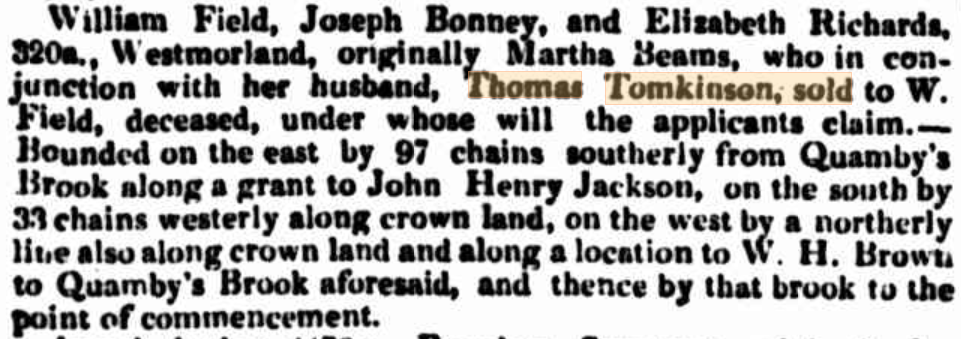
Martha and some of the family would leave Tasmania for Victoria where they would settle around Portland. It was here that Martha lived the remainder of her years.
Death, 7 July 1859 • Portland, Victoria, Australia
Death 7 Jul 1859 • Portland, Victoria, Australia DIED. On the 7th instant, Martha Beams, mother of Mrs. Sutton, of this town, The funeral will take place to-morrow (Saturday), at three o’clock. Friends are invited to attend. The Portland Guardian and Normanby General Advertiser (Vic. : 1842 – 1876)
DIED. On the 9th instant, at Portland Bay, in the 82nd year of her age, Martha, widow of the late Mr Thomas Beams of Cumminsfolly, Beamsford, and mother of Mr Thomas Beams, of Hadspen. The Cornwall Chronicle (Launceston, Tas. : 1835 – 1880) 6 Aug 1859
Thomas Jnr. James and Phoebe (Beams) remained in Tasmania. As an older woman Martha would go back to the mainland to live with her daughter Diana either Stone or Sutton in Portland Victoria where her remains were interred 1859.

Phoebe Hines. Married Richards & Price
Baptism, 27 Nov 1786 • All Saints,West Bromwich, Staffordshire, England. West Bromwich to Birmingham, Warwickshire is about a two hour walk.
1807 Warwick Assizes Catherine Hines & Phoebe Hines tried together for Larceny, Warwick discharged by proclamation
5 May 1811. Phoebe Hines married James Richard at Aston, (Birmingham) Warwickshire St Peter & Paul. Her age supposed to be around 25 their Parish church.
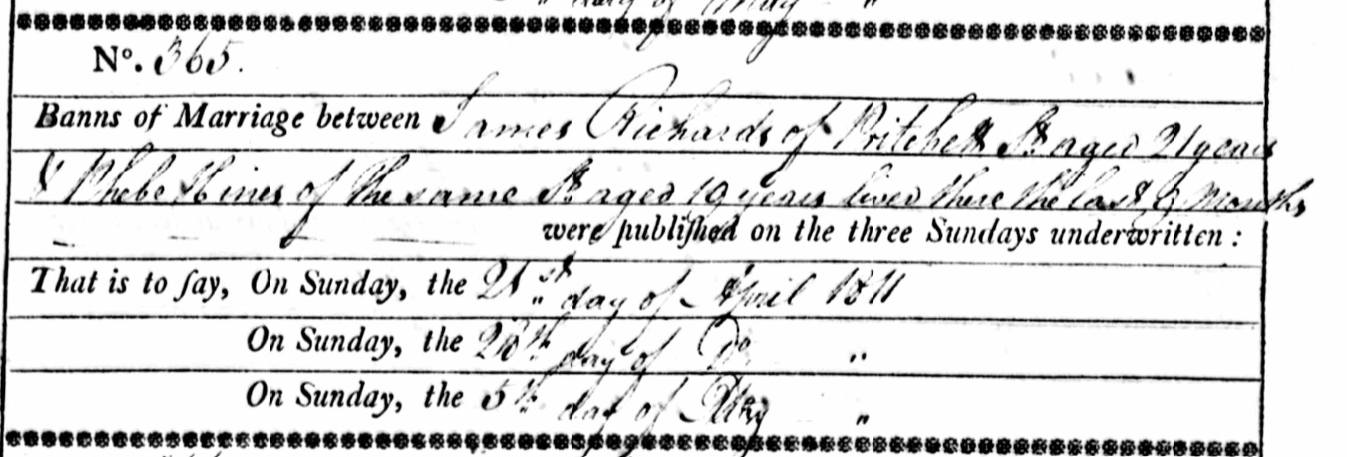
Lent 1813 (Feb – April 1813), Phoebe was tried and convicted (as Phoebe Hines) of Larceny and was sentenced to Warwick prison 12 months imprisonment.
1814 released from prison.
Phoebe’s son James had to have been born in 1815 most likely toward the latter part of the year.
1 Apr. 1815 Phoebe was tried and convicted of shop stealing (linen) and sentenced to fourteen years transportation.
Phoebe was held in Warwick Gaol for an extended period of 12 months (estimate April 1815-Jul 1816) before being transferred in July 1816 to the Lord Melville berthed at Deptford.
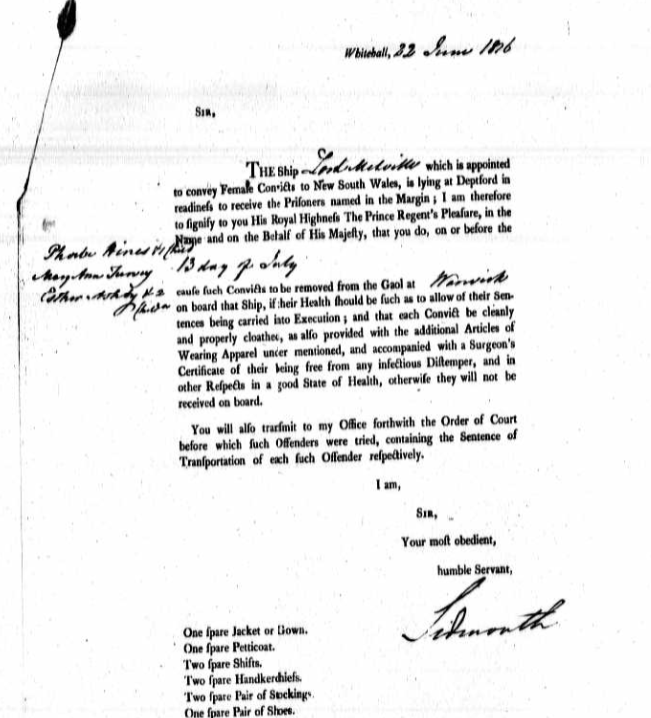
In August 1816 The Lord Melville embarked for Sydney with Phoebe who was calling herself Hines and her infant son James onboard. If James had been anything other than a dependant infant he would have been separated from Phoebe and she would not have been able to take him.
24 Feb 1817 the Lord Melville arrived in Sydney.
A daughter Eliza was born in 1817 and another daughter Ann born 1819.
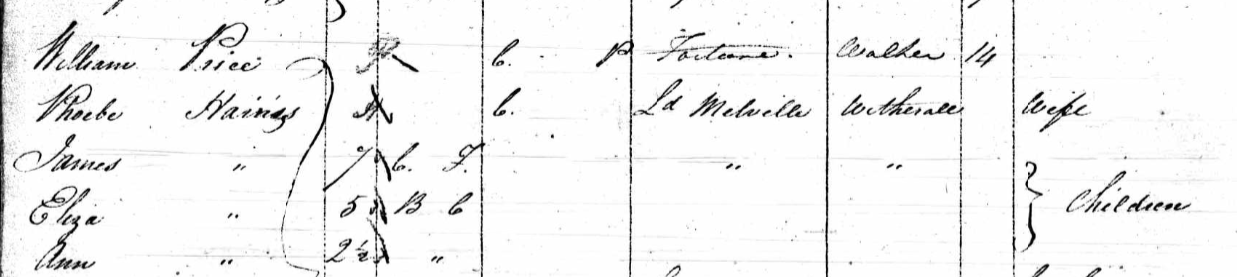
1822 Convict Muster states Phoebe (Hains) as convict wife of Mr Price of Sydney.
The census of 1822 records states WILLIAM PRICE and his wife Phoebe and her children are recorded as Hains (Hines) with a bracket around the five of them. Phoebe could not write so this is how she would have pronounced her surname. She would have been the common-law wife of William Price whom had also been a transported convict
In 1825 Phoebe who was now recorded as Phoebe Price had received her Ticket of Leave. Unfortunately at this time she was accused and convicted of stealing cloth from Mrs Dillon’s drapery in Pitt Street, Sydney. Phoebe had her ticket of leave cancelled and was conveyed to the Parramatta Female Factory under a six month sentence. 29, Sept 1825. The Sydney Gazette.
1828, Census states re Phoebe Hines, aged 36, regards residence, ‘Lodges with Mr Price”. (NRS 1272) 1828 Census: Alphabetical Return, Surnames C-L
By Feb 1829 Phoebe who was recorded in the papers as Hines had received a further Ticket of Leave and had it again cancelled for being a ‘drunken and disorderly character.’
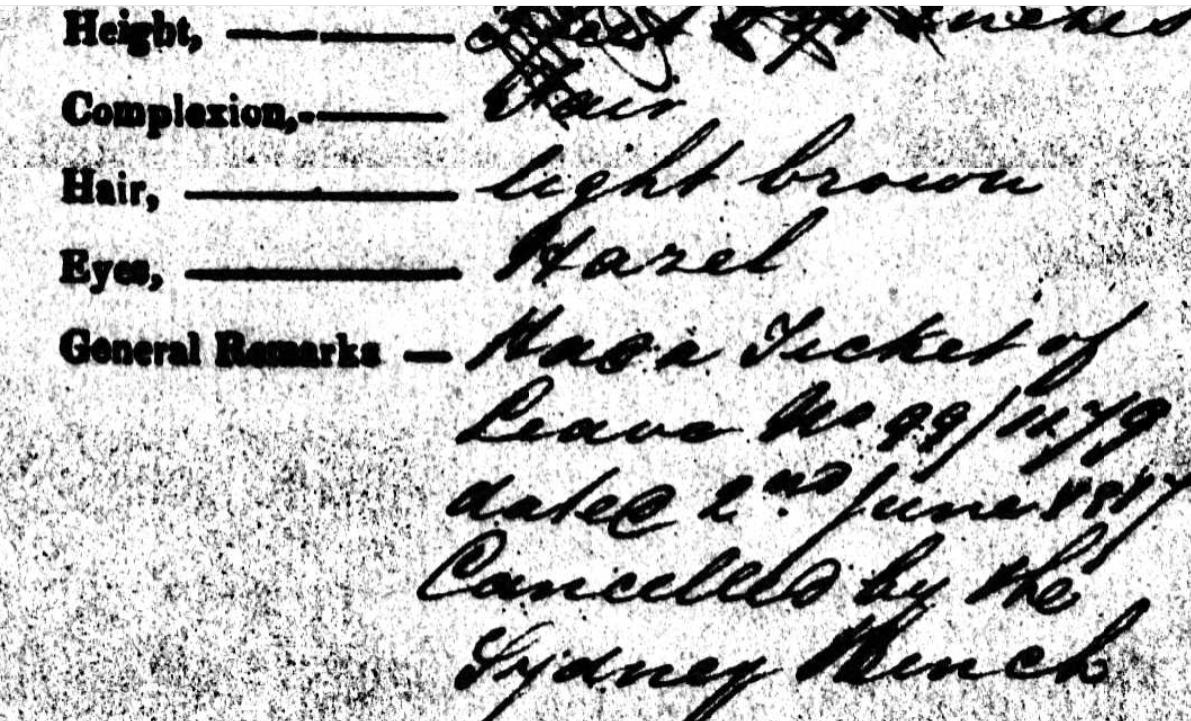
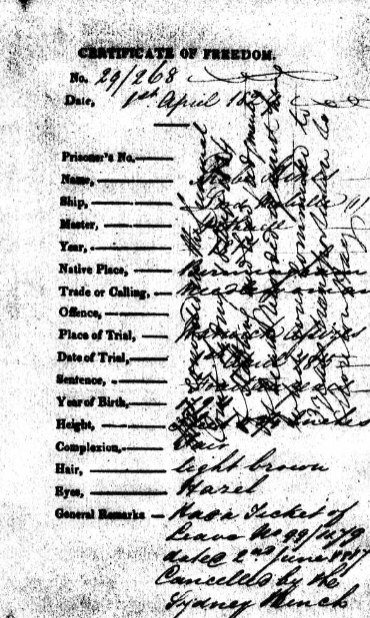
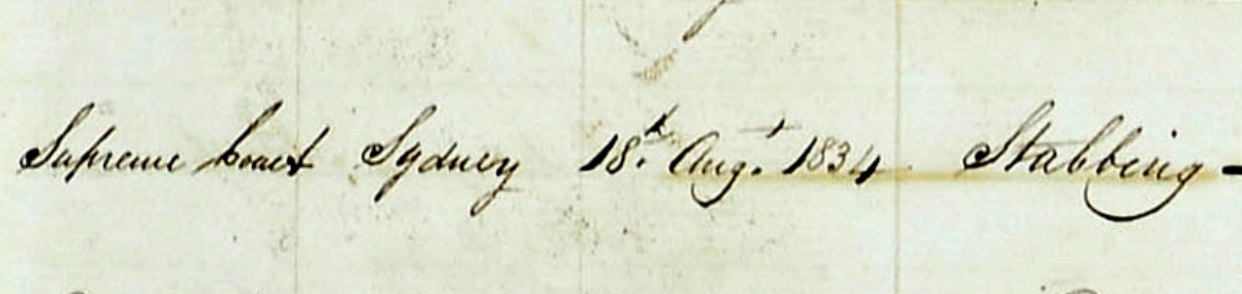
19 July 1834 heralded events that would result in Phoebe being incarcerated for three years at the Moreton Bay Penal Colony (Qld. This was following serious charges heard in the Supreme Court that could have resulted in her being given the death penalty. Phoebe’s sentence commenced 16 Aug 1834.
19 July 1834, The Sydney Gazette. Phoebe Price, a matronly looking woman, was on Thursday last fully committed to take her trial before the supreme court, for maliciously stabbing and cutting Sarah Wilson. The parties residing in the hollow which faces Cambridge-street and Essex-lane. On Sunday morning last, as the complainant was sitting at breakfast, the prisoner’s daughter came into her house for the purpose of speaking to a shopmate of Wilson’s, when Mrs. W. ordered her away, observing that she would not wish on any account to draw down her mother’s tongue upon her. The girl accordingly retired, and between 1 and 2 o’clock on the same day, Mrs. Wilson being at a neighbour’s house, the prisoner came up and reproached her for the slight put upon her daughter in ordering her out of the house in the morning, a host of ill language was made use of, and the prisoner made several stabs and cuts at the complainant with a dinner knife, inflicting three slight wounds on her head, face, and neck. A general row then took place between the prisoner, her husband, and daughter on the one side, and the complainant and her spouse on the other, which terminated in Mrs. Wilson being pushed off a precipice some eight or ten feet in height, and left for dead. Drunkenness, as usual, was alleged to be the cause of this disgraceful affray on the sabbath, which had well nigh proved of fatal consequences to two persons, the husband of Mrs. Wilson being stunned from a violent blow upon the head with a brickbat, which was thrown at him out of the yard in the prisoner’s premises.
21 Aug, 1834. The Sydney Gazette. (Before Mr. Justice Dowling, and a Jury of Military Officers.)Phoebe Price was indicted for maliciously stabbing Sarah Wilson, at Sydney, on the 13th July last, with a knife, with intent to kill her. A second count laid the intent to do her some grievous bodily harm. The prisoner was convicted upon the second count, and the learned Judge directed judgment of death to be recorded against her; at the same time remarking, that had she been found guilty of the intent to kill, he should have felt it his duty to pass sentence of death upon her.
1 Sep 1834, The Sydney Gazette. James Trainer, Ann Martin, and Sarah Willis was brought up by warrant, to answer a charge of assault upon Mrs. Rogers of the Saracen’s head, under the following circumstances. A female named Phoebe Price, aunt to the above parties, having been convicted at the Supreme Court on Monday last, of stabbing a female named Wilson who gave evidence on the occasion, she was beset on her return to her residence on The Rocks, by the defendants and a crowd of other persons, who after a volley of execrations for transporting the poor woman as they expressed it, they proceeded to violence, and would most probably have “settled” her had she not taken refuge in the house of complainant; she had scarce got over the threshhold however’ before she was seized by one of the defendants, who dragged her collar off her neck, making at the same time a deep impression of her talons, from which the blood flowed in copious streams on complainant’s interposing to rescue the poor young woman from their merciless grasp, she received several blows from the female defendants,Trainer at the same time flourishing his hands about complainant’s head in a menacing manner, which he would no doubt have carried into effect, but for the interposition of a neighbour named Stone who saw the female (Sarah)Willis strike complainant, but could not speak as to the alleged assault by (Ann) Martin, although her language was gross beyond description. Complainant’s testimony being unsupported, as to the assault by (James)Trainer and Ann Martin, they were dis-charged, Sarah Willis was committed to take her trial at the Quarter Sessions.
Mary Kenny free, and Rosanna Bowen a prisoner, were brought forward charged by Sarah Wilson, the female alluded to in the former case, with assaulting her in consequence of her having given evidence at the Supreme Court against Phoebe Price. A witness stated that she lives next door to the complainant, defendants also are neighbours; before complainant returned home from the Court, defendants went to witness’ house, and desired her to hold no further communication with the complainant, as she was a bad woman, and had been the cause of transporting poor Mrs.Price, winding up their observations on the subject by threatening if she transgressed their direction, they would burn her house over her head; when complainant came home, they went to her door where she was standing, and abused her in a most shameful manner, upbraiding her with having given evidence against Phoebe Price ; the defendant Rosanna Bowen struck her several times, and tore her face in the manner presented to the Court. The Chief Magistrate expressing his determination to put a stop to such proceedings which were calculated to prejudice the ends of justice, sentenced the prisoner Rosanna Bowen to the third class of the Factory for six months. The proof against Mary Kenney being defective, she was discharged.
Phoebe was transported to Moreton Bay where she served her full three years was Prisoner 2560, Hines with remark uses alias Price.


Phoebe’s daughters were 15 and 17 when she went to Moreton Bay, her sister Maria adopted her daughters and looked after them in her absence.
What became of Phoebe later in her life has been more challenging to tie down.
Maria Hines. Married Haywood
Baptism, 12 Apr 1789 • All Saints,West Bromwich, Staffordshire, England. West Bromwich to Birmingham, Warwickshire is about a two hour walk.
In some records Maria can be found as Mariah.
1805 Summer WARWICK ASSIZES – Acquitted
TRIAL
Tried for burglay acquitted – Not Guilty. 1805 Maria Hines age 16, is tried for burglary, Warwick Summer Assizes

24 March 1806. WARWICK ASSIZES (Lent)
Martha Gregory was tried with her sisters Maria Hines and Mary Connor at the Warwick Assizes for burglary and stealing printed cotton inside a house. All convicted to 7 years transportation –
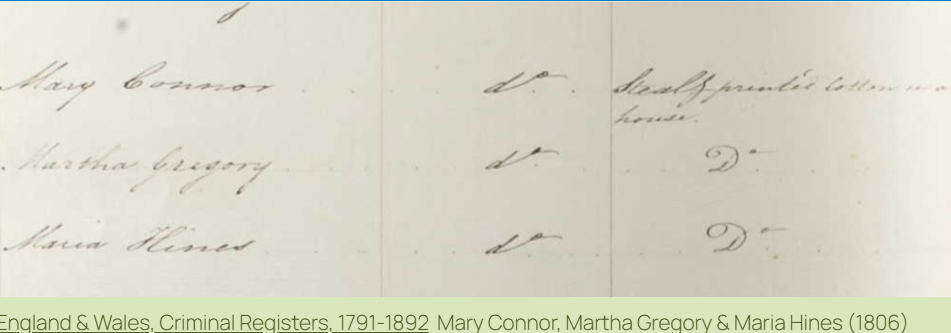
Maria Hines arrived aboard Sydney Cove in 1807 having been convicted of burglary (housebreaking). Maria’s co-accused in this were (her sisters who were now) Martha Gregory & Mary Conner. All three tried together, convicted at Warwickshire Assizes and transported together aboard Sydney Cove.
Martha, Maria and Mary boarded the ship together The Sydney Cove which departed Falmouth England 11 Jan 1807. There were 4 male convicts & 113 female convicts among the passengers and crew. A voyage of 158 days the ship arrived at Port Jackson NSW 18th Jun 1807.
Maria’s future husband John Haywood was about fourteen years older than she. John was tried at the Warwick Assizes for larceny in 1805. Around this same time Maria was also tried at the Warwick Assizes. Where Maria was acquitted, John was not. He was convicted of Larceny and transferred to a prison hulk awaiting transportation. This would be aboard the Fortune which left England January of 1806 arriving in New South Wales 12 July 1806. Not long after John arrived Maria would be back in custody awaiting her turn for transportation which would occur in 1807.
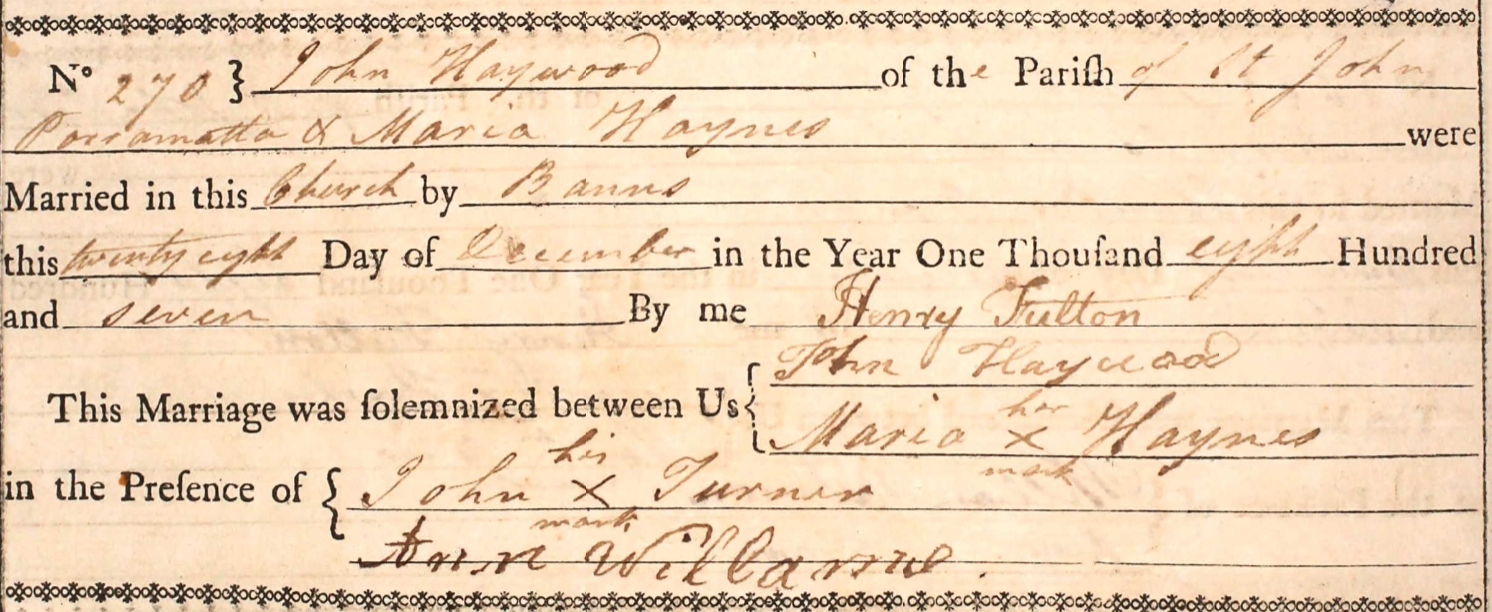
Very soon after arrival 28 Dec 1807 Maria would marry John Haywood at St John’s Church in Parramatta. They would have two known children sons John and William Haywood. During their lives three of Phoebe’s children woul come to live with Maria and John.
27 Feb 1811 Mary, Martha and Maria had been granted their Tickets of Leave

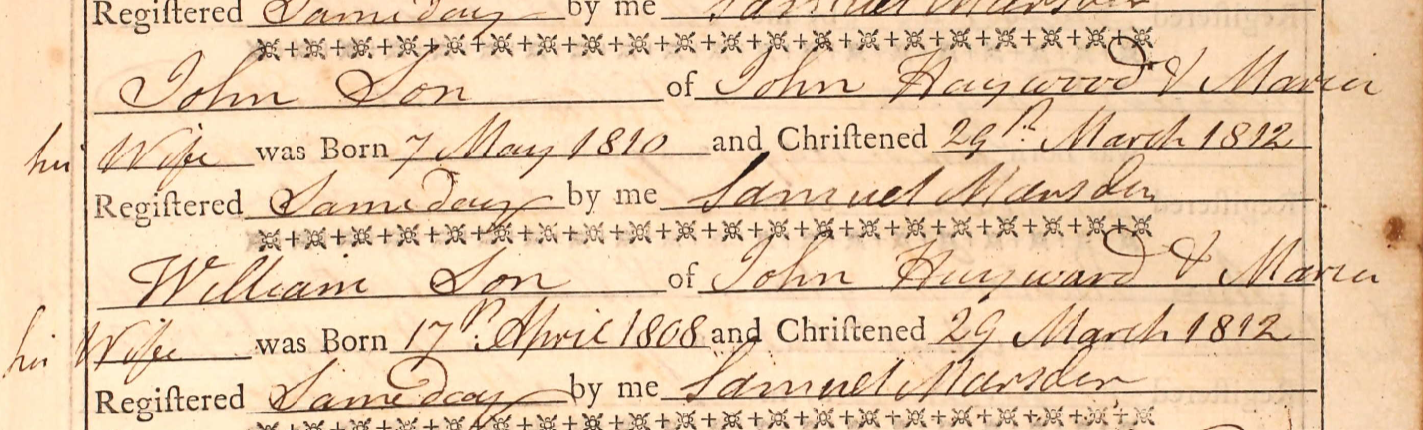
29 March 1812 John and Maria had both sons christened together at at St Johns church Paramatta.
In the 1828 Census Maria (38) was living with her husband John Haywood (53), a shopkeeper in Parramatta with their sons William (20)and John (18).
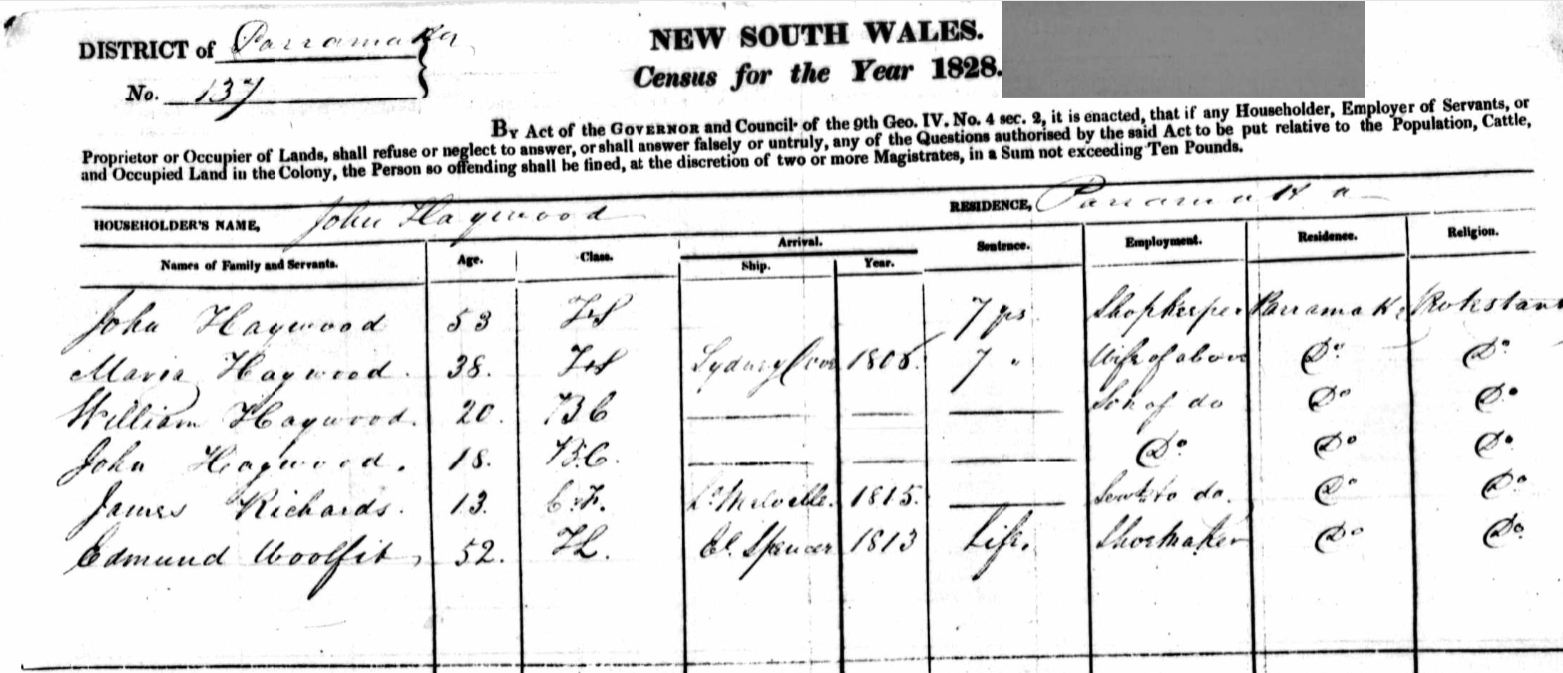
James Richards (aged 13)noted on this same census as a servant, is almost certainly Maria’s nephew from Phoebe living with his aunt, uncle and cousins. His date of birth 1815 and that came on the Lord Melville.

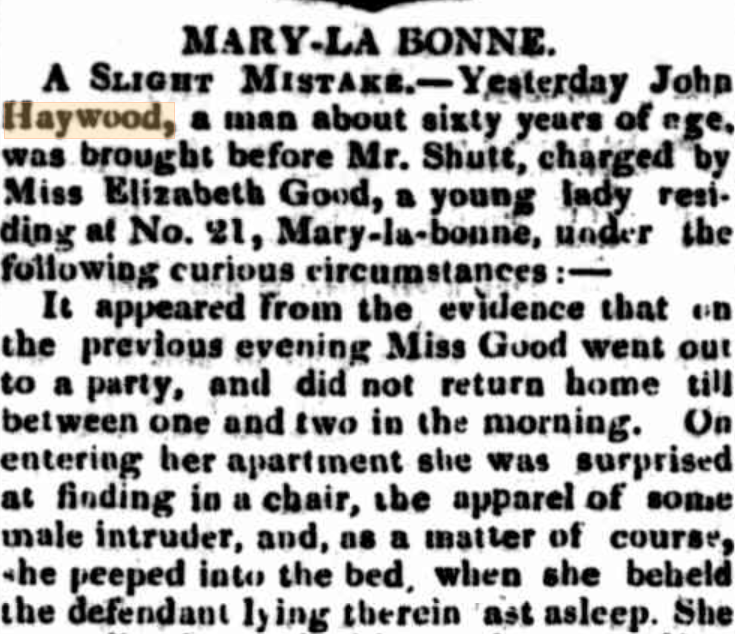
Friday 12 May 1838 John had been brought into Gaol short term before facing the magistrate albeit over a pretty lightweight charge. John would return home.
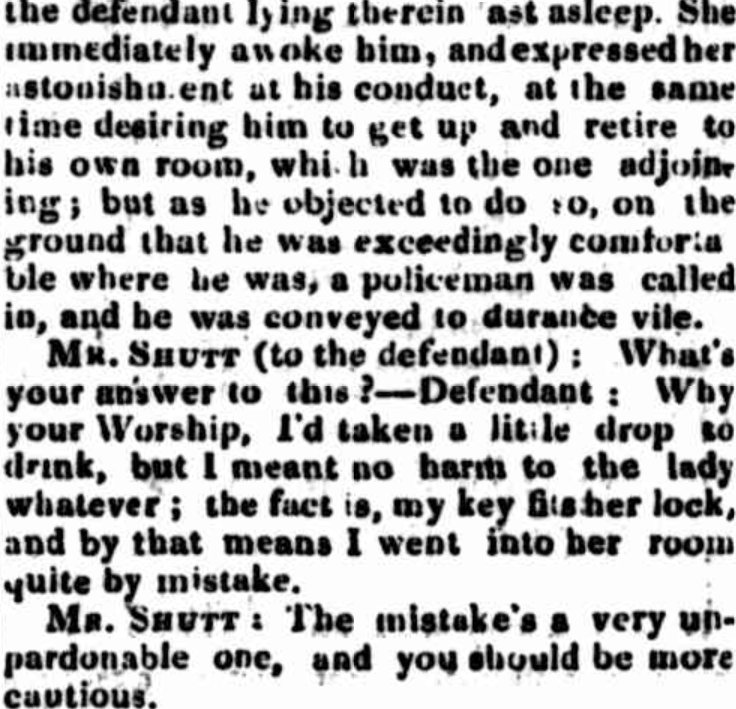
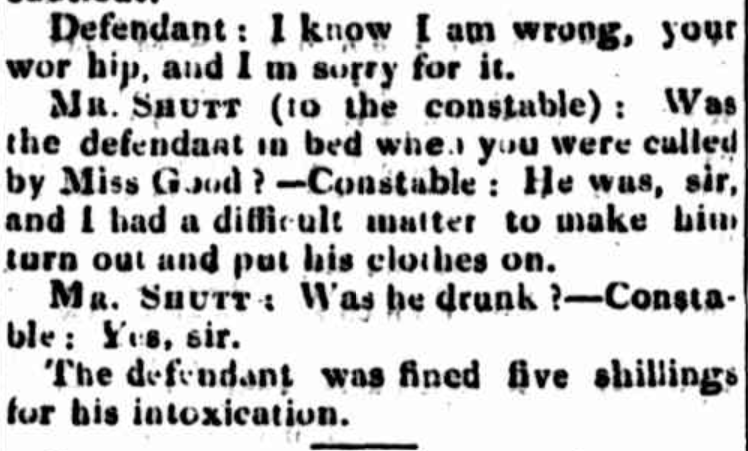
Maria Heywood date of birth 1790 (inaccurate,) date of death 13 April 1845, aged 55 and buried 15th April St John’s Cemetery, lived Parramatta NSW. Maria is buried in Parramatta NSW.

John died 7 July and was buried on the 9th 1853. He was 78 not 87. Recorder error. Paramatta, St Phillips Church.

Catherine Hines. Married Lattimore &, Riley
Baptism, 19 Mar 1792 • St. Philip’s, Birmingham, Warwickshire, England. A two hours walk further south east from West Bromwich into the centre of Birmingham (Warwickshire.)
Date of birth, depending on documents, ranges extensively. The dates between 1790 – 1792 being the more likely.
21 Dec 1807 marries Thomas Lattimore. Her age supposed to be about 15. Family church of St Martin’s in Birmingham city. Catherine is also recorded with the spelling of Lattimore along with Latimore, Latimer and Lattimoore and at one stage even Lettermore so it gets a bit confusing.
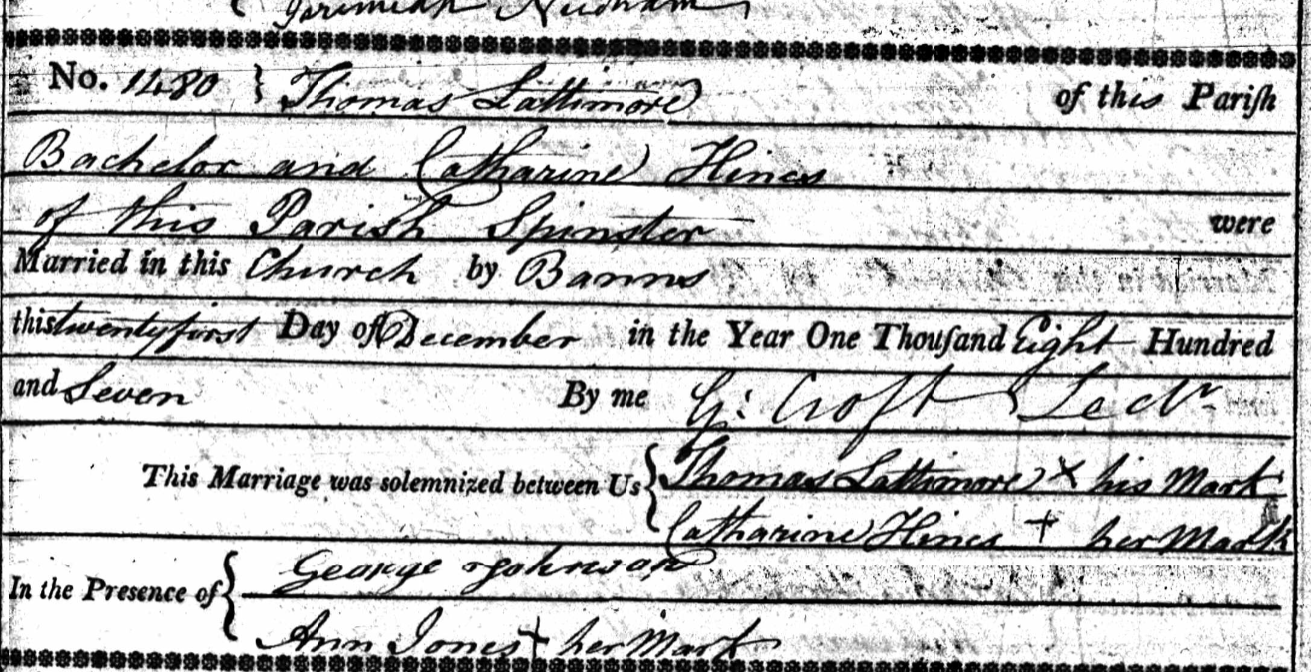
Catherine is my ancestor and has a full biography of her own on this site. Link below.
Catherine was tried at the Warwick Assizes in 1808 for larceny. On that occasion she had been acquitted. At that time she was recorded as Cathe Latimoore and had been with a Sarah Hopkins who was also acquitted. England & Wales, Criminal Registers, 1791-1892
29th March 1813 Catherine was convicted at the Warwick Lent Assizes on a charge of larceny. She was accused of stealing from a shop. Catherine was sentenced to death which was commuted to transportation aboard the Wanstead to the colony of Australia for 14 years. (However on other muster records it says 7 years on others ‘life’.) Reported to use an alias surname of Hines
12 April 1813. Aris’s Birmingham Gazette. Warwick Assizes (Lent). Catharine Lattimore and Elizabeth Jennings, for privately stealing in the shop of W. Avery severally received sentence Death, but were afterwards reprieved.
Following her arrival in Australia aboard the Wanstead, (9 January, 1814) at Port Jackson, Sydney Cove, Catherine was immediately assigned along with 68 other women to the Parramatta Convict Women’s Factory as a Mantua Maker (cloaks for ladies). Tasks included spinning and weaving. The superintendent was William Alcock. Being sent first to the female factory rather than into domestic service was usually because the woman may have been considered to have a difficult character or committed a bad crime worthy of additional punishment.
A mere year later she gained permission to marry John Riley (also found as Ryley) at Parramatta. They married on the 13th June 1814 at St John’s church in Parramatta, by banns. Their marriage was officiated by the colloquially known “flogging parson” Reverend Samuel Marsden. So named for his reputed predilection towards apportioning flogging as a punishment for criminal activity. Noted on the register against Catherine’s name is the comment Prisoner 22 Wanstead. Witnesses Richard Clarkson and Maria Haywood. Maria Haywood the witness on the marriage record is actually Catherine’s sister who was also a convict Maria Hines.
CLICK HERE for the rest of Catherine Hines, Lattimore, Riley biography
William Hines
Baptism, 28 May 1795 • Saint Martin, Birmingham, Warwickshire, England
I’ve very little to go on with William if he was alive when his last parent (his father) died he would have been aged no more than twelve.
This is speculation. There was a William Hines around about the same age who was supported by the parish of St Phillips into an apprenticeship in 1806 Birmingham, aged around seven. Parishes such as St Phillips under The Poor Laws would do this if able if a child was an orphan or their parents were in the workhouse. The next step would be accessing The Apprenticeship Registers by requesting the Overseers of the Poor Apprenticeship Indentures and Registers for the specific span of 1800–1810. These books chronologically log every pauper child handed over to a master. I will leave that to William’s descendants.
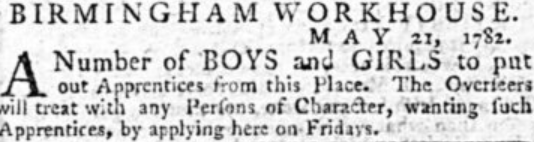
Possibility for further researchers? (below is NOT my work but a link and excerpt to Birmingham History Co UK, Peter WALKER. Please reference owner if using.
https://birminghamhistory.co.uk/ By 1783 there was serious overcrowding in the workhouse, and plans were prepared for a new and larger building, but nothing much was built for seventy years. However an Asylum for the Infant Poor was opened in Summer Lane in 1797, where boys could learn farming or pin-making, and girls straw-plaiting or domestic work. This was the first attempt to reduce high mortality figures amongst pauper children, and
improve the conditions in which they lived. Other children were boarded out in neighbouring villages.
(Source: Extracted from this thread ) https://birminghamhistory.co.uk/for…ham-workhouse-peter-walker.47028/#post-689682)

Nancy Hines
Baptism, 26 Dec 1799 • Saint Phillips, Birmingham, Warwickshire, England
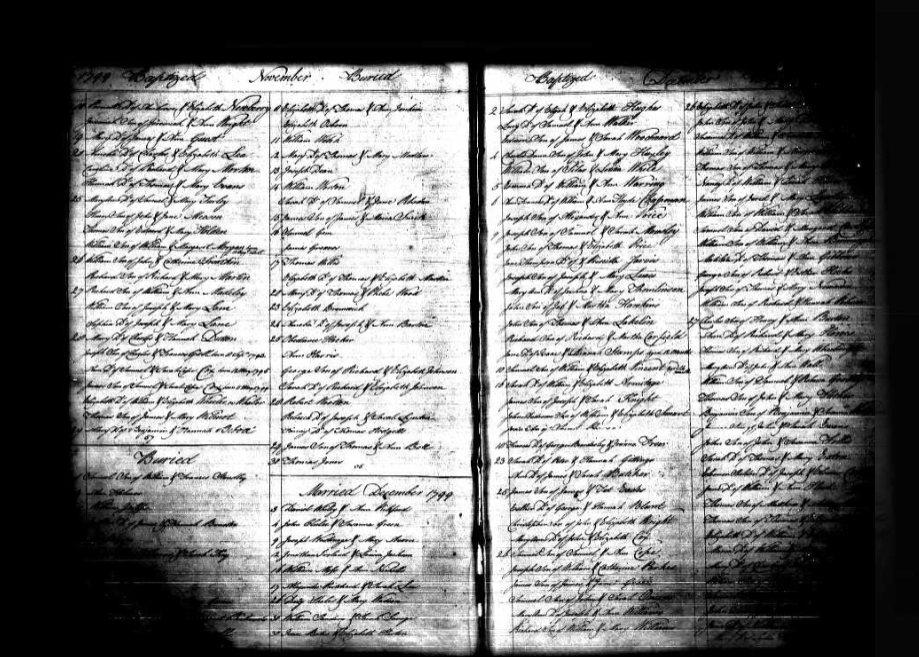
At first check of records I thought that Nancy had died as an infant. Nancy Hines (recorded as Hones) daughter of William and Diana was baptised 26 Dec 1799 at the same DAY that Nancy Hines daughter of Joseph & Ann Hines of same parish was buried. Different people. The only exception to this could be if there was a transcription error in parents name, but both parent names are different. Record checked for accuracy. All Birmingham, England, Church of England Baptisms, Marriages and Burials, 1538-1812 results for Nancy Hines.
Our Nancy if she lived would have been two when her mother died and seven when her father died. For the present, I can’t say what happened to her. Her trail has gone cold for me but in speculating like her brother she could have been ‘sent out into service, likely domestic,’ once old enough or may have resided in the workhouse or could have been taken in by another family member.
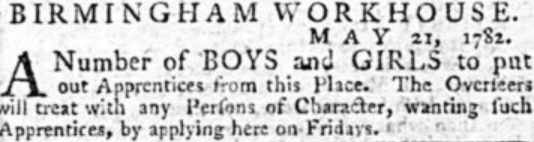
Possibility for further researchers? (below is NOT my work but a link and excerpt to Birmingham History Co UK, Peter WALKER. Please reference owner if using.
https://birminghamhistory.co.uk/
By 1783 there was serious overcrowding in the workhouse, and plans were prepared for a new and larger building, but nothing much was built for seventy years. However an Asylum for the Infant Poor was opened in Summer Lane in 1797, where boys could learn farming or pin-making, and girls straw-plaiting or domestic work. This was the first attempt to reduce high mortality figures amongst pauper children, and
improve the conditions in which they lived. Other children were boarded out in neighbouring villages.