James Hay was baptised on the 5th September 1736 in the village of Tomintoul, parish of Kirkmichael. It is located in the county of Banffshire (also known as Banff). James was the son of Lewis Hay (@1710) and Margaret Watson (@1710). His parents were both from the county of Banffshire.

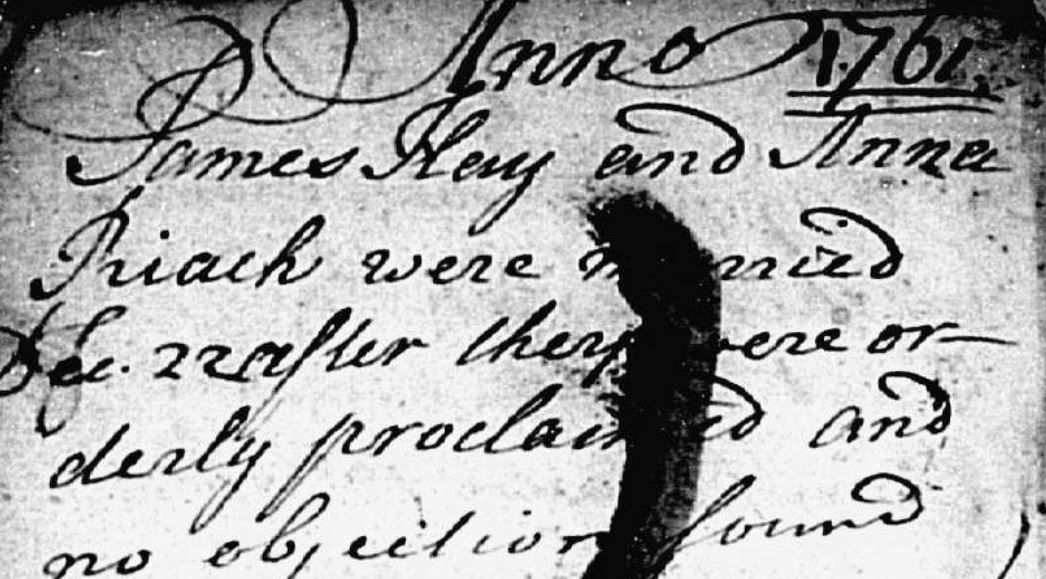
James, aged 25, married Anne Riach, aged 20. She was a native also of the county Banffshire albeit a little further away.
Banns were read in James home parish of Kirkmichael on the 8th of December, 1761. They married at Inveravon Banffshire on 22 December 1761.

Inveravon predominantly in Banff or Banffshire, but also nestled partly in the county of Moray. Resting against the base of the Cairngorms with the parish name references its relationship to the start of the River Aven a tributary of the River Spey.
Inveravon, (I’ve also seen spelled as Inveraven), bounded to its north by the parish of Knockando and on the west by Cromdale . Southwest lay Kirkmichael (where our man hailed from.) To the south by Strathdon.
James and Ann would settle in James home village of Tomintoul with a family quick to follow.
Their children were a baby girl born on the 17th October 1762 who died the same day.
Two years later Isobel Elizabeth Hay was born in 1764.
John Hay was born in 1766.
Nathaniel Hay 1769.
William Hay 1771.
Robert Hay 1774.
James Hay 1780.
Finally, Barbara Hay was born in 1785.
Anne Riach
Anne Riach was born on the 27th May 1741 to John Riach (b.1711) and Janet Stewart (b?). At Tomachlaggan. Banffshire.
In relation to Tomintoul the village, Tomachlaggan was an even smaller hamlet northwest of Tomintoul. From what I can figure Tomachlaggan is in very close proximity to Ballindaloch Estate. An ancient estate owned since 1499 by the Grant family. However, what is now Tomachlaggan is situated nowadays on Glenlivet Estate. At the time our Hay’s were there the land was still owned by the Gordon family. They had done so since the 1500’s. Land was tenanted with rents paid to the Gordon’s.

During James and Anne’s era, Tomintoul & Kirkmichael served as both village and parish names in Banffshire County. This parish contains the highest elevated village in Scotland, which is the village of Tomintoul. Banffshire’s total length being the grand stretch of just over 40 miles. (Pronounced by Gaelic speakers as tom-in-towel.)
An area of mountainous ranges undulate down to the coast thirty to forty miles (depending on which bit of coast your heading for.) Throughout this ancient land, valleys or glens sit alongside the river Aven. The river has run from Loch Aven through the land for millennia. Banff is known for its clear and crystal waters. These waters flow throughout the region in its many rivers and tributaries. Kirkmichael parish area sits in the Scottish highlands. For many generations, it remained a deeply religious area staunchly Catholic. Unusually and long after the changes brought about by the Reformation, this elevated, remote community were able to maintain reasonable tolerance and comfort with acceptance of both sides of the same spiritual coin. Agriculture and farming were the primary industries. The same Duke of Gordon who would engineer the well planned and redeveloped village of Tomintoul equally had a vision of developing a linen industry, but it never quite took off. Agricultural endeavours remained the primary industry. Banffshire has been home to many well-known distilleries over time. It once had the title of malt-whiskey capital of the world. Likewise, it is a county known for its many churches. Its castles are both numerous in ruin and still standing dotting the landscape.
The formal layout of the ‘new’ township of Tomintoul started in 1776. The Duke of Gordon designed and laid it out. The village had earlier been a collection of turf huts. These huts were on modest tenanted farms, like the one where James and Anne may have lived. Tomintoul had sat on the line of an old military road. This was remade into a “soldiers road “during the 1745 Jacobite rebellion.
During the rebellion our James was only a boy of 9 or so. A small garrison English soldiers had been posted in Tomintoul. They were there ostensibly to suppress the rebels. Their mission was also to capture and arrest reviers (cattle thieves). The thieves were known to cross the Aven here with their heisted beasts.
As to where and if and how James and his forbears fitted into the Hay Clan, I cannot bear witness. What I can say is that Banffshire, Morayshire, Nairnshire and Perthshire all incorporated the traditional lands of Clan Hay. Equally these lands of Banffshire and Perthshire were the homelands of our branch of Hay’s. So it is highly likely that our Hay’s were a part of this Clan. Hay being a common name in Banffshire
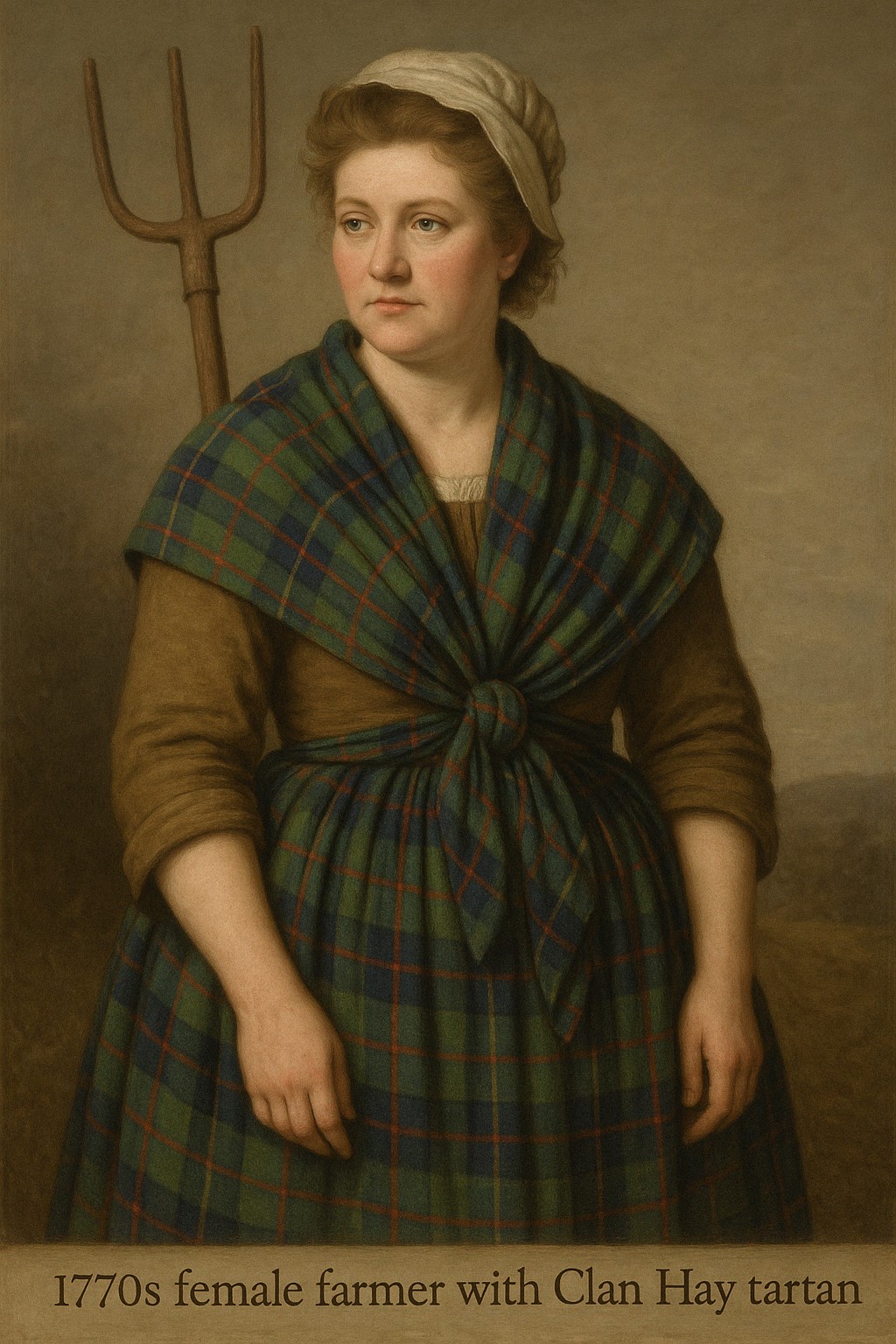
Clan families were somewhat about genealogy but also more by association. People living in the nearby village settlements to their Clan leaders often adopted the clan’s name. This was the clan to whom they identified loyalty, financial contribution, and when needed served in the forces of their clan. In return they were offered a place to live and work, trading security and protection.
The deeply unpopular Pacification Act followed the Jacobite defeat at Culloden near Inverness. The banning of wearing of tartan or playing ‘Jacobite music” were one of the numerous efforts by the British government aiming to bring Scottish clans further under British rule. The dismantling of all clan associations intended to deliberately bring all people of Scotland under British rule. These laws were not repealed until 1782.
Trying to find out the exact date of death for both James and Ann so far is elusive and frustrating to prove.
Our Robert Hay was born in 1774. (convict). His father was James Hay born 1736 in Tomintoul, Banffshire and his mother Ann Riach born 1741 also of Banffshire.
The ‘second’ Jacobite rising started on the 19th of August 1745 concluding on the 20th of April 1746. In those torrid eight months our James would have been eight turning nine years of age. Ann would have only been a little four year old, barely out of babyhood.
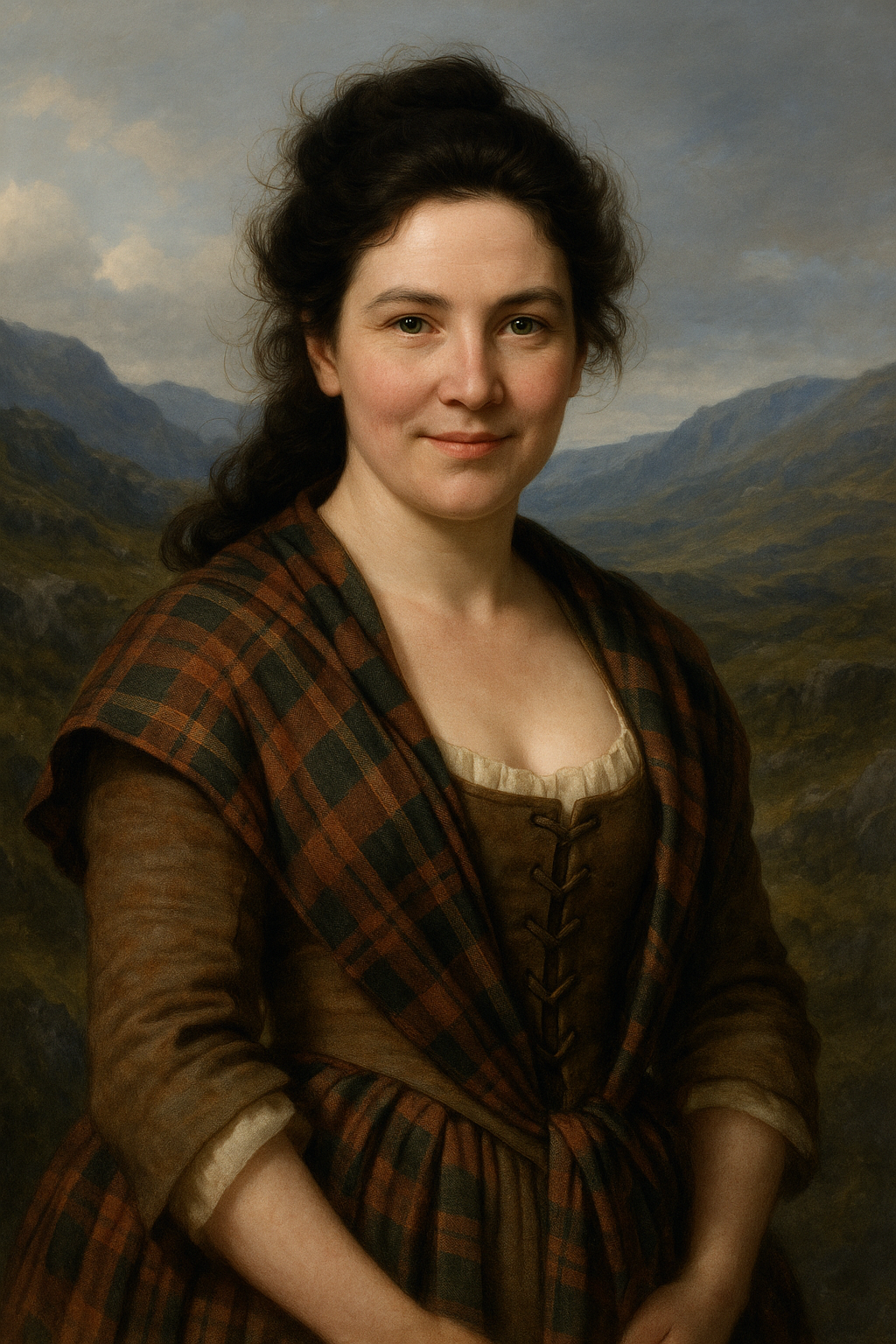
What role did James parents have ? (Lewis Hay, Tomintoul, Banffshire,) and Margaret Watson (also of Banffshire). What about Margaret’s parents? Where did their sympathies lie? And what about Ann Riach’s parents? The truth is at the moment, I don’t know.
 Yews to Eucalypts