William Fowles was born to William Fowles and Mary Ann Gattan in 1826. William’s siblings were Sarah Ann, then himself, Elizabeth Ellen, Alice, Henry (died aged 8), John and Frederick. Elizabeth Ellen and her husband would also come out to Australia some years after William and Hannah.
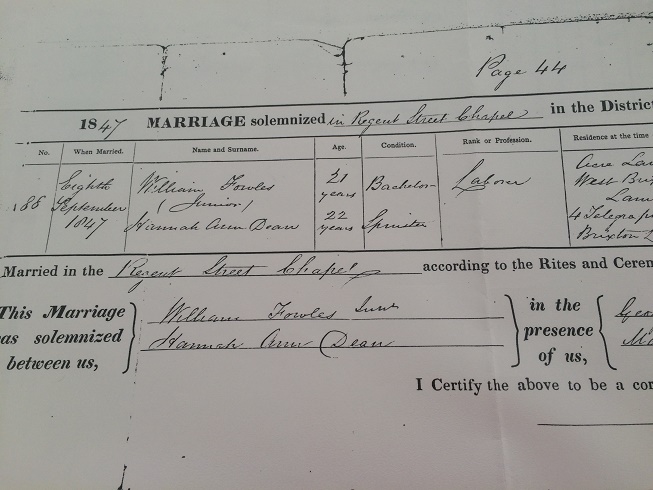
William and Hannah were married on the 27th June 1847. The marriage was held at the Regent Street Chapel in Lambeth, Surrey. Regent Street Chapel was the worship place of the local Baptist community among whom Hannah and William had been raised.
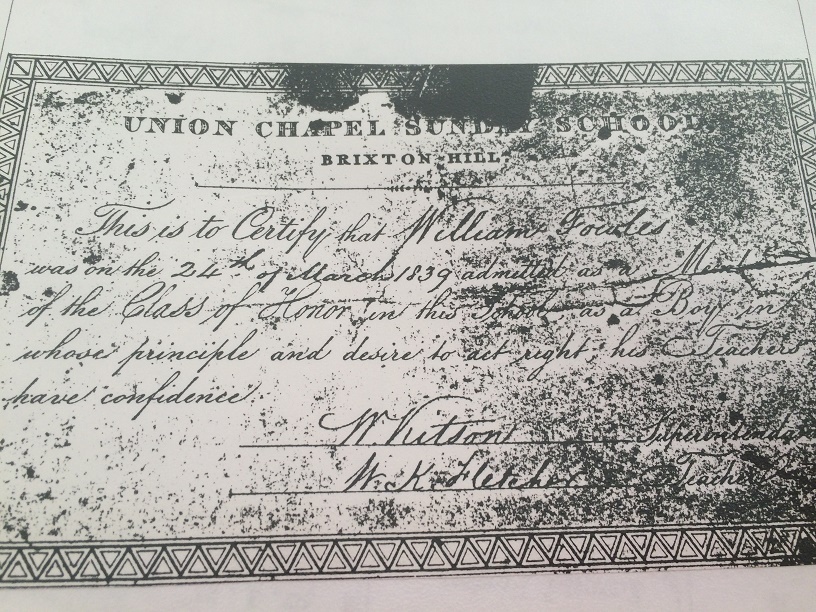
As a young boy William attended the Union Chapel Sunday School in Brixton Hill. During this period, he received a certificate. It reads, “This is to certify William Fowles was on the 24th March 1839 admitted as a member of the class of honor in this school as a boy whose principle and desire to act right his teachers have confidence.” Now there is a glowing testimony!
At the time of their marriage, their addresses were given as follows. William’s address was Acre Lane, West Brixton, Lambeth. Hannah lived at 4 Telegraph Place, Brixton, Lambeth. They were 22 and 24 when they married. (There is an error on their ages on their wedding certificate).
Hannah was the daughter of James Dean and Ann Edser of Walton on the Hill. She was born at Walton on the Hill and baptised on the 26th October 1823. An account was given of Hannah as a very small woman who weighed in at seven stone (44.5 kg in today’s money). She was reported to have jet black curly hair. The Dean’s had been at Walton on the Hill for at least three generations. They were a local family in Surrey like the Fowles family.

The Dean family followed what was considered a non-conformist Anglican religion being Baptists.
In the 1841 census, Hannah was living with a Samuel Colman in Brixton. She was 18 years old at that time. His wife and daughter were also living there. There is no identifying record but it is possible that she was living there in service as a servant?
It would appear from all intents and purposes that both William and Hannah were both from reasonably content families. If not quite middle-class their long established roots in Surrey might have put them into the ‘respectable poor’ class deemed so important by the upper and middle classes of eighteenth and nineteenth century England.
What they did not belong to was the thronging masses moving in from across England in search of work and sustenance so for the Fowles it must have been somewhat easier as they already had social capital in their established connections. The ability to find and sustain work would have been easier at least up until the 1840’s when the famines occurring in Ireland and the vast amount of people spilling in from across the continents of Europe to England with it’s more tolerant approach to minority groups created an overcrowded populace.
It was also around this time that the urbanisation of London progressed with gusto. The fringe settlements that had existed until this time began to merge together into a metamorphosis of mass housing and huge industrial enterprises. The land that the agricultural labourers had used was gradually being enclosed and taken up for other purposes.
Victorian London.
The so called golden age of Queen Victoria and Prince Alfred brought England forward as the manufacturing hub of the developed world and trades and craftsmen alongside labourers began working in the new factories. Technology moved at such a rapid rate it was changing the very fabric that made up England’s society and workforce. For all its good the industrial revolution also did a great deal of damage to the poor and the disenfranchised.
Crime and punishment in London was at epidemic levels. When I have found so many convicts on my paternal line; I never cease to be amazed that I have yet to find one of ours on the Fowles line. I can only think again that this has more to do with the fact that generationally they were already well settled in the area so may have had a better time of it than the poor and transient. I also note that the Fowles were educated to read and write. Both of these resources making it possible to communicate effectively with people in position to affect your opportunities.
This was the time that Dickens wrote Oliver Twist. The great divide between the classes began to be visible to the richer classes for the first time.
Even so the thinking of the day was still very much one of a guilt culture. If you were poor – what had you done to contribute to this? The common belief – persisting that the poor were lazy, a sub-culture of thieves and not to be trusted.
In the ten years prior to their marriage, Queen Victoria had made colonisation an integral part of her rule. She strongly encouraged people to emigrate to the colonies. This was to relieve the burden of overcrowding, unemployment, and general disharmony. The incentives to leave England for the free ordinary people were quite lucrative with assisted passage programs. It is highly likely that William and Hannah saw an opportunity to better their lot and took it.
Australia bound.
Australia was keen to populate and prosper. She wasn’t going to do it on forced convict labour alone. What she needed was tradespeople, agriculturalists and farmers who could open up the land and make it a successful colony. She also needed young families. With this in mind, two problems could be solved at once. Keeping this in mind, the decision to assist the ‘right’ settlers to the colonies was made.
William and Hannah would have stood on the the docks with their infant son getting ready to board the Caroline Agnes for what would be 125 days at sea.
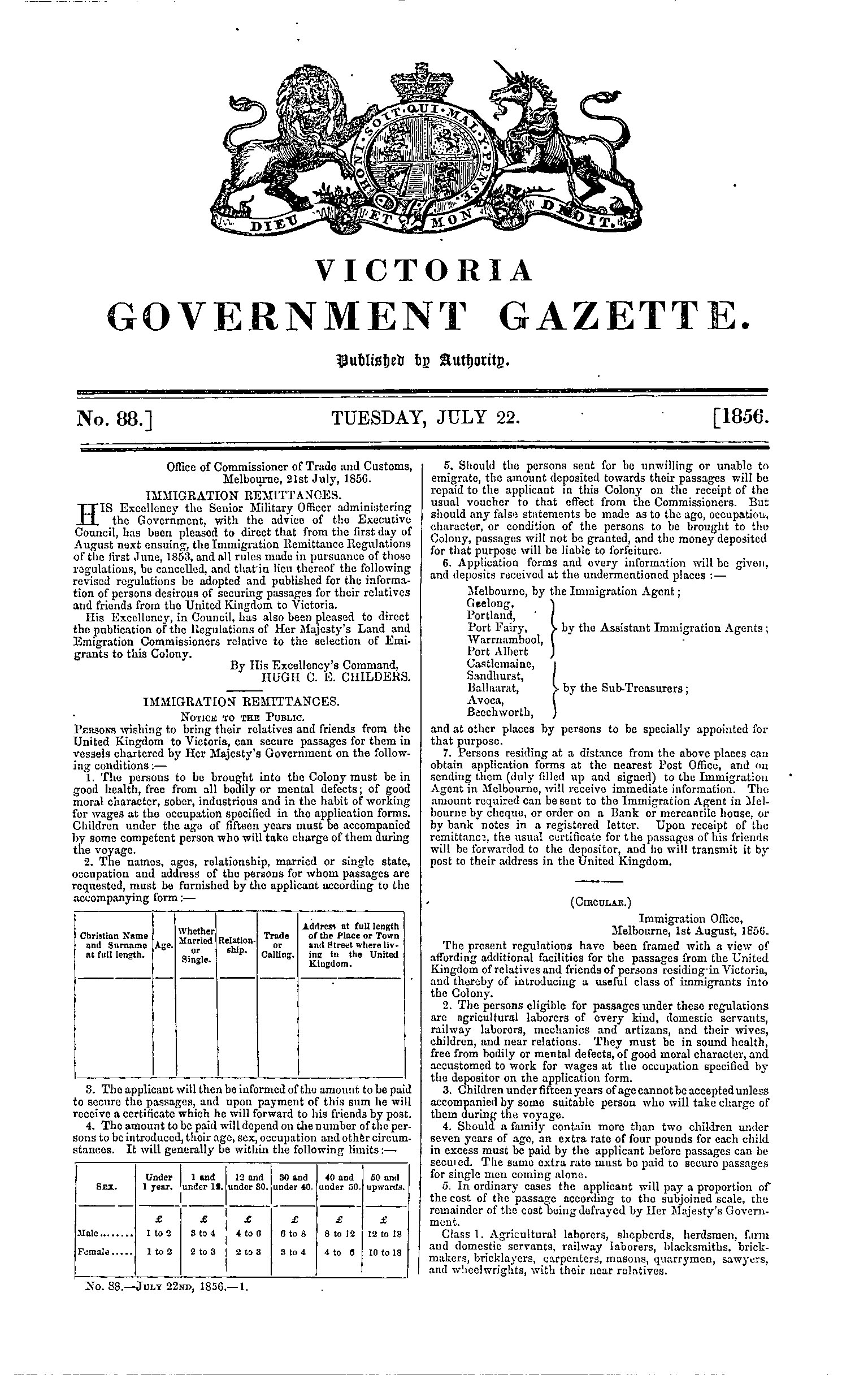
The Caroline Agnes was a sailing ship of 570 tons and on this journey she took 230 people aboard. The shipping register shows that William and Hannah were both able to read and write and owned a bible. They are recorded on the assisted immigrants records as being of the Baptist faith. William’s profession was recorded as farm labourer and brickmaker. Hannah was recorded as a housekeeper. Both of Brixton Hill, Surrey.

Both Hannah and William were assisted immigrants to Australia. Being a young couple with a child, they would have been ideal candidates. The colonies were looking for exactly these types of people to add some ‘quality’ to their growing nationhood.
As most likely steerage passengers the accommodations would have been quite simple and privacy minimal. You would be mingling with people from all walks of life. You would also need to keep a sharp eye on your possessions. Boredom on the journey would have led people to talk extensively about their background. They likely shared their hopes and plans. It is likely that they all got to know each other rather well. People commonly received daily tasks aboard the ship. These tasks were part of their payment for transport.
Twelve month old James Henry Fowles died aboard ship. This happened two weeks after arriving at Port Henry in Australia. Situated 5 kilometres from what we now know as Geelong City. According to the ship’s surgeon he had hydrocephalus (water on the brain). This was a term frequently used in those days. It may not have been the actual medical reason for the little boy’s death. However, it might have been the best description the surgeon could offer. The little fellow was buried at sea.
William and Hannah must have felt bereft in June 1849. They arrived in Geelong during the middle of winter. Instead of landing among excitement, they both came off the ship with empty arms. They carried whatever goods they had brought from England. This would surely feel like an uncertain start.
At their time of arrival, Victoria was not even yet a colony. Ship records show the Disposal List of the Immigrants; (indicating the destination of the immigrants aboard).
Geelong Years.
William had been offered employment in advance by an affluent sponsor in the shape of Mr. F. Champion whose store in Malop Street Geelong sold a variety of much-needed wares. His advertisement in an 1852 copy of the Geelong Advertiser . William was offered employment for three months as a storekeeper.
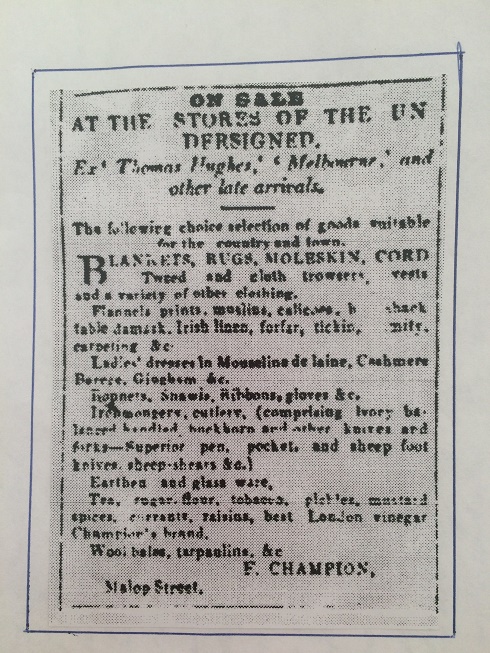
He was offered 35 pounds per annum plus rations. This was a higher sum than usual which would indicate that William had particular skills to offer.
In my notes from my grandmother she had said that her mother had told her that William had been offered a place as a shop-keep or in the term she used ‘miller’ at a shop in Lal Lal. (Which is in the Geelong area).
Witness to murder – Geelong.
In March of 1850 while William and Hannah were living in Geelong they would be witness to murder. From the Argus newspaper, 11 March, 1850. Albert Frost late landlord of the Union Inn in Malop street Geelong shot and murdered his prior friend Mr White by shooting. This followed a disagreement between the men.
The day after the shooting there was a coronial inquest.
“William Fowles, laborer, stated – I reside in one of Cade’s houses, in Gheringhap Street, next to Mr. Jackson’s and next door to where Mr. Frost lived. I knew deceased by sight. I observed him going in and out of Frost’s house frequently, which made me suppose he lodged there. I always thought Frost and White were the greatest friends. Previous to three o clock this morning, I heard frequent bursts of noise in the back part of the house where Frost lives. I was in bed at the time and was awoke by the noise. I could not make out the nature of the noise as it was of a jumbling confused noise. It was more like blowing than talking. While I was lying listening to to the noise, a female came to my window and said, “Please sir, do get up, for the man who has been lodging at hour house swears that he will burst the door open, and my husband says that if he does, he will shoot him. My wife said to me, stay a little longer. I said “no I will call Turner”, who sleeps in the back part of my house. When as I was getting up, I heard the report of a gun. Turner called out to me, “Do you hear that Fowles?” and I said “yes, and I am up.” We then ran out, and I saw the man lying motionless on the ground. Mr Jackson was then standing on the platform of the stairs. Turner called out to him, “He has shot this man, there he lays.” Turner and I then went in again to put on our trousers and shoes. We then went out the front way and saw Mr Jackson and Mr Frost talking. I heard Mr Frost say he had shot him. Then Turner said “we three are bound to take this man into custody or send for a constable.” Jackson then said he would go for constables. While Jackson went Turner and I waited with Frost. While Jackson was gone Turner and I, Frost being with us, went to see deceased. I lifted his hand from his body to see if I could see the place where he had been shot, but I could not. We then tried to persuade Frost that it would be better for him to go down with us to the watch-house and give himself up. He said he would go, just as we were going we saw the constables coming and we thought then it would be better to stop where we were. Soon little time after that Dr. Baylie came down and examined the body. I may mention that as I heard Frost had shot the man because he had broken in his door. I examined the lock and found both sprung. The catch however, did not appear to have been wrenched, but I did not handle the catch. Mr Frost gave one of the constables the gun. I cannot say where he took it from. Previous to coming Dr. Baylie coming Mr Frost was under the impression that the deceased was not dead. But after hearing that he was, he expressed great sorrow for deceased. Saying “Oh poor fellow, I am sorry I have shot you.” Or something to that effect.
At the conclusion of the inquest, Mr Frost was committed to stand trial on a charge of willful murder
Gold Rush.
In July 1851 gold was discovered for the first time at Clunes in Victoria. Then on the 8th August of the same year gold was found at the foot of Mt Buninyong. By September of the same year, people in Geelong and Melbourne were hearing stories. They heard about nuggets being picked up in the creek beds of the Buninyong district. Buninyong was the original name for what would become known as Ballarat.
William quickly decided he wanted to be among the new-found wealth. He took out a license and headed for the gold-fields. Before long a swarm of people followed him and left Melbourne and Geelong largely as ghost towns.
The social up-ending led to some profound changes. One of the most significant was the leveling of the classes. The classes became more equal. Rich alongside poor all sought gold cheek by jowl. Families lived in canvas tents little more than humpy existences. Slab huts soon went up for those with a permanent outlook. As the river of riches flowed among the lucky, towns and flourishing communities developed quickly. Even Victoria’s most earnest pioneers would not have foreseen this.
Those who didn’t drink or gamble it away and managed to hit it big suddenly had real money. They had an opportunity to make a real stake. Traders provided some of the most reliable income from the gold-rush. They saw an opportunity to support the people heading to the diggings. I expect William caught onto this idea.
By 1852 The Argus newspaper in Melbourne was declaring ‘that things have come to a pretty pass indeed’ when it reported the growing crime, lawlessness and indecency that was now becoming prevalent on the goldfields.
William did have some success as to how much I can’t say. What I do know is that he found enough gold to have a gold brooch made up. It was later broken. The gold was made into a series of brooches that were shared among his children.
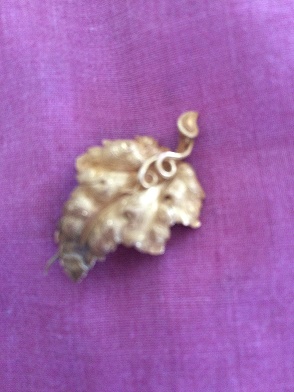
By 1856, William was listed on the Geelong Electoral Roll. A freehold owner of land in Sharp Street, Barrabool Hills. His occupation was given as farmer and market gardener.
Forest Creek, Bendigo and The Ovens were prominent sites of gold strikes during the 1850’s. Three of William and Hannah’s children were born at Barrabool Hills between 1853 and 1855. One daughter was born at Chilwell and three other children born at Gheringhap, Newton and Fyansford. (all in the Geelong area).
By 1878 William and Hannah were living with their family in Yendon. William worked as a bullocky carter and was often away from the home for months at a time. Some of his loads were supplies to the ‘diggings’.
At one stage William and Hannah owned five bullock teams working as carters throughout Victoria. Of their sons, I know that one of them, my ancestor George John Fowles operated one of the bullock teams.
Selecting at Gippsland.
During 1879, William and his son John George traveled to South Gippsland. It was being opened up to select some land at Mirboo North. There they were shown two blocks of 320 acres each and finding the land suitable they lodged their claims.
The selection was on fertile land with good access along the Morwell river and would reputedly have made excellent farming land. However due to an unscrupulous land agent who it is believed had some dodgy dealings with a Mr Black; they found on a further visit that the land they were originally shown and had lodged claims for was in the possession of said Mr Black.
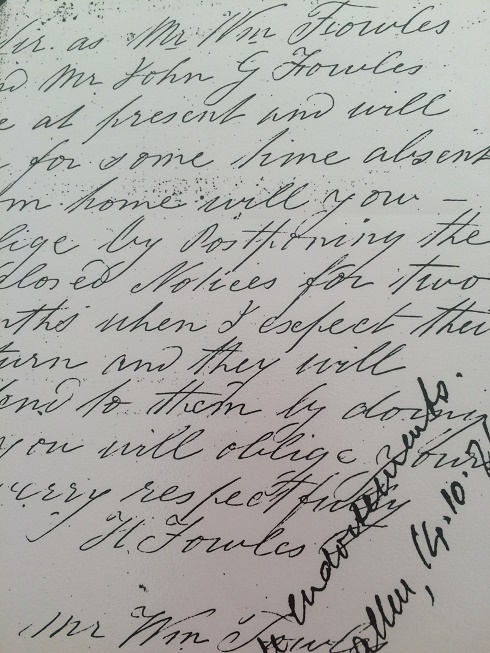
The land agent tried to convince them that another nearby parcel of land was that which they had selected. Of course William and John were not fooled and in Williams words this parcel being shown was ‘terrible land’ and ‘would have been the greatest folly to take land they could not improve’. William wrote all of this in a series of letters to the Office of Lands and Survey. He also wrote ‘we have been grossly taken in and deceived by the land agent.
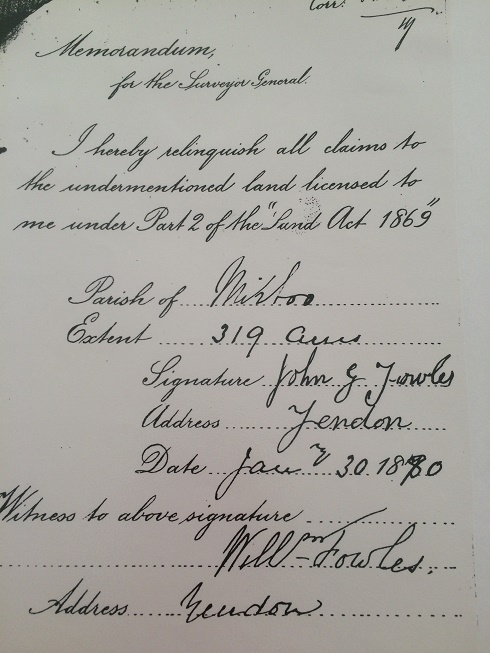
What repercussions fell on the land agent are not known however William and John were forced to relinquish their claims in Mirboo North.

Letters written by Hannah and George at the time concerning the matter are held by the Public Records Office Victoria. One letter from Hannah requests an extension of time to pay the rent as both William and John were away carting and would not be expected back for two months.
Blakeville via Ballan Years.
The Bacchus Marsh Express & General Advertiser, Courts of Petty Sessions, Ballan, Tuesday Jan 11, 1876. Before C. Shuter, Esq., PM. C.F. Chapmans, Crown Lands Bailiff brought William to court charging him with illegally removing split timber from Crown Lands. On the same day his son John Fowles also had the same charge read against him. And then to round it out his other son Henry Fowles also had the same charge read.. Plaintiff deposed that he saw the father and three sons removing split rails on the 19th of last month. The defendant was driving a team. Asked whether they had a license. They said they had none. Could not say what I said to him. Would not swear that i asked him if he had a licence. Mr Ocock for the defendant was employed by Bjorksten, who had a licence and under the Act he was empowered to employ others to remove the timber. Bjorksten’s license was produced and the case was dismissed. All cases were dismissed.
Fencing & Post Rails.
For many years advertisements would be placed in the papers for Posts and Rails, Best Quality, always on hand, and FOR SALE at lowest Rates. Apply to WILLIAM FOWLES Colbrook by Ballan
In 1880 William bought 115 acres of land from James Barr in Blakeville. The family moved to Blakeville Road to what was called Colbrook. Colbrook was the name given by the locals to the Blakeville Road area.
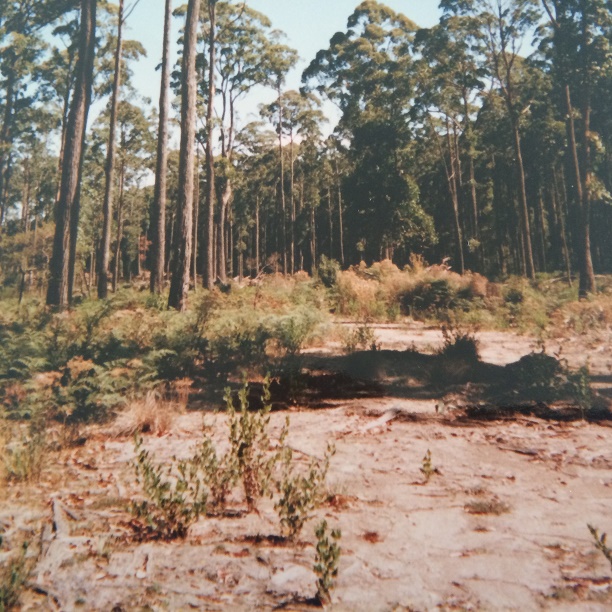
What was left of the original neighbourhood area when I visited last in 1998 was some old chimney stack ruins in paddocks and signage on the road. Tracks leading into the bush harkened back to a day when the area was more know for the large-scale timber felling that was carried out in the area.

Neighbours to the Fowles on Blakeville Road included the Lorkins (who had been Larkin) and Potters, Whelehans amongst others. The inevitable occurred and John George Fowles married Lily Mary Lorkin, his brother Albert Edwin Fowles married Lucy Ellen Lorkin. Both couples would eventually take up selections in Ferndale near Warragul. Henry Alfred Fowles married Sarah Potter and so on.
The following excerpt has been taken from the book; “The Victoria and it’s Metropolis 1888”. A copy of this book can be found at the Genealogical Society of Victoria – which is where I got this from.
FOWLES – William, Blakeville Road, is a native of London who came out to Geelong (Lara) in June 1849 by the Caroline Agnes. He was first engaged in a store as storekeeper and when the diggings broke out he was one of the first to take out a license. He was in Ballarat for a time and then went to Forest Creek and Bendigo but ere long returned to Ballarat, thence going to The Ovens. He next went back to Geelong, where he carried on market gardening for a while and then took to carting on the roads from Geelong. He removed to Blakeville Road nearly twenty-eight years ago and now had 115 acres of land, 60 acres of which he cultivates.
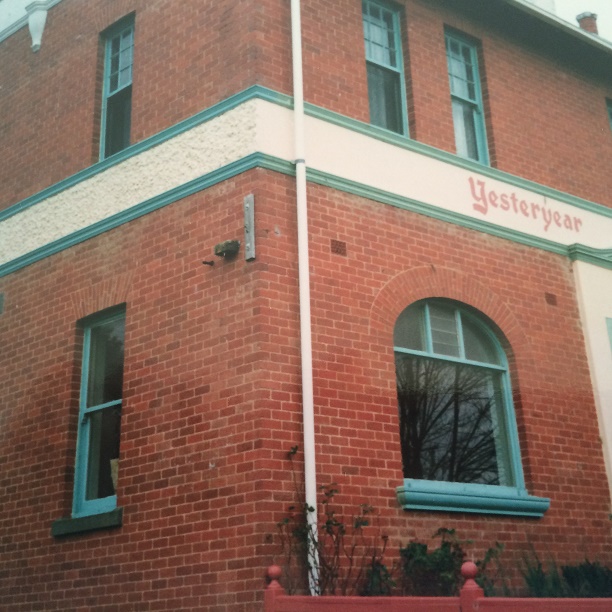
The Fowles family largely stayed in the area before spreading further north-west and south-east into Victoria. By the 1890’s there were at least twenty-three Fowles cousins living locally.

The Bacchus Marsh Express & General Advertiser, Sat 25th April, 1891. Ballan (Before Major Bartrop, P.M., and E. Blake, Esq., J.P.) William found himself in court charged by C.C Fraser who held the title Government Inspector of Rabbits with not having taken necessary measures to destroy all vermin on his land. It must have been obvious that it would have been almost impossible to have destroyed all rabbits. This was borne out with documents he submitted to the court and the verbal support of his witness friend and in-law J.H. Potter who was also a neighbour. William was proved that the court believed he had made reasonable efforts to clear his land. However, because there were still rabbits there, the judge said he had to fine him. This was 2 pound. Which doesn’t seem much but in today’s money that’s about $140 AUD so still a fair whack. However he didn’t charge him court costs. William also had to notify his neighbours that his lands were ‘infested’. At this time William and Hannah’s property was remarked to be 225 acres in the parish of Moorabool East.
William & Hannah’s Children.
Of William and Hannah’s children; William Frederick Fowles was born in 1853 at Barrabool Hills. He married Jane Charlotte Taylor they lived in Mount Egerton which is near Ballan before moving around but staying in the Buninyong, Ballan area before ending up over at Fish Creek. They went on to have nine children. William and Jane would outlive the last four of their children. One, Ernest Roy died as a little boy of three. The other three boys died as a result of the first world war. Herbert Arthur George Fowles and Walter Ernest Fowles were both ANZACS killed at Lone Pine at Gallipoli. Another brother who was also an ANZAC Edward Francis died after returning home as a result of illness and injuries sustained in Gallipoli.

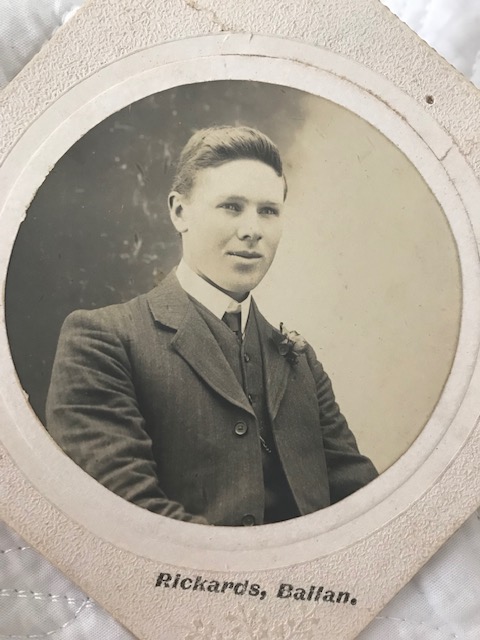
Hannah Elizabeth (known as Annie) was born in 1853 at Barrabool Hills. Annie, as she was known (even on BDM records), married John Hall in Victoria in 1872. At this time I believe their children to be Emmeline Maud Fowles born Ballarat. Alfred Ernest Hall and Amelia Mabel Hall (the latter two born at Hills End in NSW. I have an original photograph of a dapper young fellow taken at Rickards photography in Ballan. Was he visiting with grandparents? On the back is written Jack Hall son of Annie Fowles. Annie died in 1917. Sydney Morning Herald, 5 May. Hall – The friend of Mr. John Hall and family are invited to attend the funeral of their late wife and mother, Hannah Elizabeth to leave her late residence, First Street, Wentworthville this day at 3.00pm for Western Road Cemetery, Parramatta. Friends meet at the cemetery at 3.30pm- Francis Morris and Company, Undertakers, Parramatta.
Emily Alice was born in 1854 at Chilwell near Geelong. She became Mrs. Emily Warne after marrying William Warne. They moved around Ballarat and the Geelong district before taking up selection and moving to Ferndale in Gippsland South. Not only did she have eleven children of her own but she went onto become the much appreciated and highly regarded local midwife. One of her deliveries was my grandmother! Sadly she tragically lost her son Ralph when he drowned aged 19 at Ferndale.
One of her deliveries was my grandmother!
Frances Amelia was born in Newtown Geelong in 1860. Frances grew up alongside her many siblings at Colbrook and would in 1884 marry the brother of her sister in law (Charlotte Taylor). George Henry Taylor had been born in Linton and was the son of Henry Taylor and Catherine Susannah Mero (both from the UK.) George and Frances would have George Ernest Taylor, James Henry Albert Taylor, Alfred William Taylor and Ruby Frances Victoria Alma Taylor. Of these children James Henry Taylor would marry Ida Worringham who would maintain a friendship with the Fowles family (mine) down at Ferndale, in particular my great-aunt, Lila Fowles. Ida very sadly, died young and left two little children, Marjorie Olive Taylor and Wallace Henry Taylor.
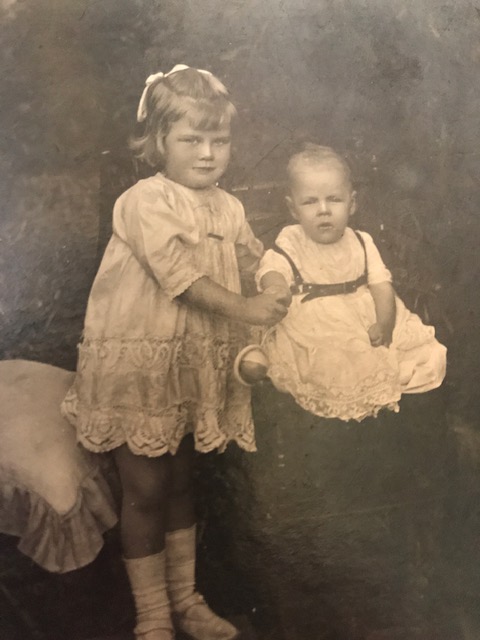
Albert Edwin Fowles was born in 1866 and went on to marry Lucy Ellen Lorkin. After their marriage they settled in Ferndale in Gippsland on their selection “Cadpella” nearby to Albert’s brother John and his wife, (who also happened to be Lucy’s sister Lily). The families remained close throughout their lives.
Quite a contingency had made their way to Ferndale including some additional Lorkin’s.
Albert and Lucy had two daughters, Ellen Margaret known as Nellie and Abina known as Bina. They also had a son Ernest Edwin who would die in infancy. Apparently Albert was a crack shot with the gun and a well known ‘rabbiter’ as well as farmer who won awards back in Ballan as a young fellow. All his life he insisted on being called Bert and never Mr. Fowles. Even by those younger than him. While Nellie would marry a widow Ebenezer George Thomas (known as George) James and Bina would marry Frederick James Kingdom, it does not appear that either Nellie or Bina had children of their own.
The children did have a rather terrifying time during the 1898 fires.
The Warragul Guardian
Tue 8 Feb 1898
THRILLING ADVENTURE AT SEA VIEW
The hairbreadth escape are too numerous to mention. As a sample of sensational adventure, however take the case of the Fowles family at Sea View. Just at the time his homestead was destroyed Mr Fowles was at the house of Mr Purcell. Who is a dealer in cattle and has an extensive grazing property in the vicinity. Mr Purcell’s own words are – “I cannot attempt to describe the awful scene of that awful night. I will therefore simply tell you about Mr. Fowles and his family. Mr Fowles was at my place on Tuesday, and before he could get back his house was completely surrounded by the fire, and he had to return to me. He had left his housekeeper with the children in the home, and felt certain that they would be roasted to death. However, nothing could be done for them that night, and on the following day I made inquiries as to how they had fared. I found that Miss Wright the housekeeper, had made a valiant fight to save the house, but finding the task impossible, she ran into the maize paddock in front of the house, taking the children with her. The house then took fire and the intense heat drove them out of the maize. She then fell down in a faint and all the children fainted from fright and the stifling smoke. Some time afterward they recovred. A man named James Arnup having gone to their relief, he advised them to life flat on the ground so they could breathe. They huddled close together and as the flames gradually crept up to them Arnup beat them with his own waistcoat and Miss Wright took off some of her clothing to assist him. In this way they saved themselves and the children from literally roasted to death. They endured this terrible ordeal until the fire subsided somewhat, and then crawled back to the maize paddock and stayed there all the night.
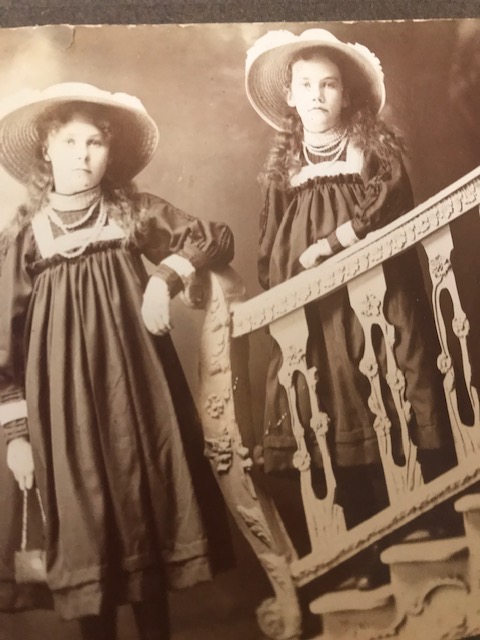
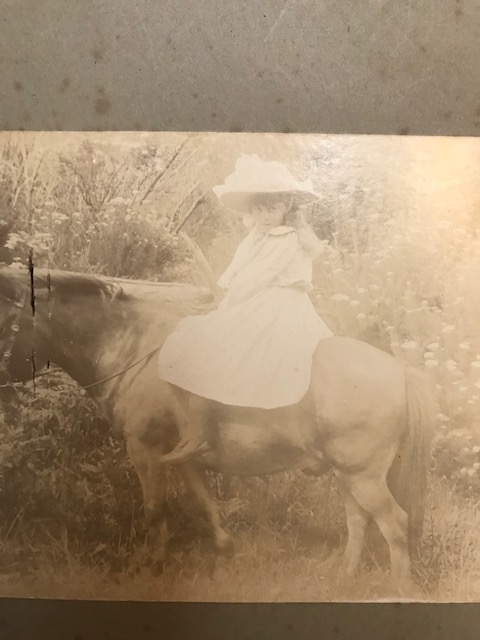
Henry Alfred Fowles married Sarah Potter and moved to Ferndale taking up selections like his brothers and in-laws. Indeed John and Bert were his neighbours. He was known as Harry. After some years he settled in Neerim South in Gippsland. Sadly his wife died in 1892 at a very young age of 31 after a long and protracted illness of ‘dropsy’. It’s quite likely that Sarah had congestive heart failure and dropsy was the common term of the day. She left behind a family of four little children Hannah, Albert, Henry and Margaret and a bereaved husband.
The Bacchus Marsh Express & General Advertiser, Sat 27 Aug, 1892.
Fowles, On the 20th August at her parents residence, Colbrook, Sarah the beloved wife of Henry A. Fowles and daughter of J.H. Potter, aged 31 years. Not dead, but gone before.
Seven years later in 1899 Henry remarried Emma Louise Lay. They went on to have two more children Thomas and Florence, who was known as Flossie.
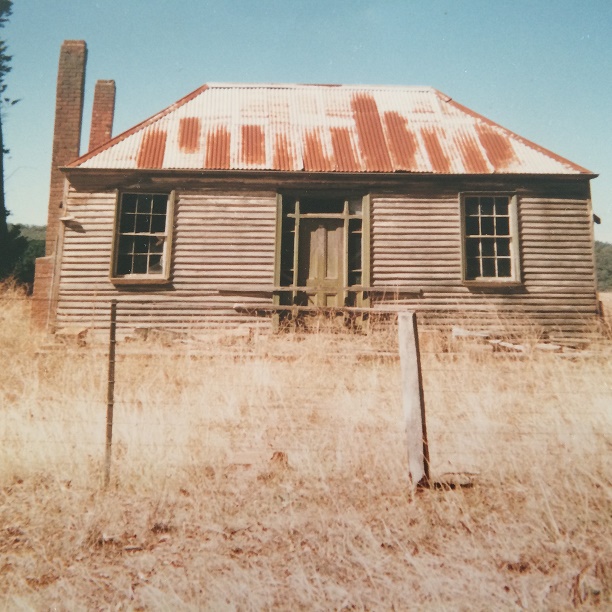
William and Hannah’s son John George was born at Gheringhap near Geelong in 1858. Most of his early adult life he worked alongside his father and brothers as bullocky carter and farmer. He married Lily Mary Lorkin. John pre-deceased his parents as a result of terminal damage done to his lungs following the Gippsland South bushfires of 1898. He left behind nine children and a widow. The oldest child being twelve and the youngest being nine months. John is my great-grandfather on my mother’s maternal line.
The Great Southern Advocate, Thu, 02, April, 1903 – Death – Fowles – On March 21st, at Ferndale South Warragul, John George, third beloved son of William and Hannah Fowles, of Blakeville, and beloved brother of W.F. Fowles, Woodleigh. Aged 45 years. Leaves a wife and nine children to mourn his loss.

William died at Colbrook on the 6th August 1907 aged eighty one years. His cause of death was given as carcinoma liver asthenia, (cancer of the liver).
A very old resident of Colbrook in the person of Mr. William Fowles died on Tuesday morning aged 81 years. The funeral took place this afternoon, the interment being in the Ballan New Public Cemetery. – Ballan Times August 8th 1907.
After William’s death Hannah moved to Ferndale to live with her eldest daughter, Emily Warne. Most of her daughter’s were living in Ferndale at this time.
In a letter to the Supreme Court of Victoria Albert had written (as the executor of his father’s affairs); ‘that my mother Hannah Ann Fowles resides at Blakeville Road Colbrook – six miles from Ballan. She is eighty-three years of age and very feeble and unaccustomed to business and is desirous that letters of administration of the above estate (his father’s) should be granted and committed to me.’
Hannah died on the 9th May 1908 aged eighty-four years. Her cause of death was given as senile decay with heart failure. On the death schedule her name is given as Ann Hann Fowles
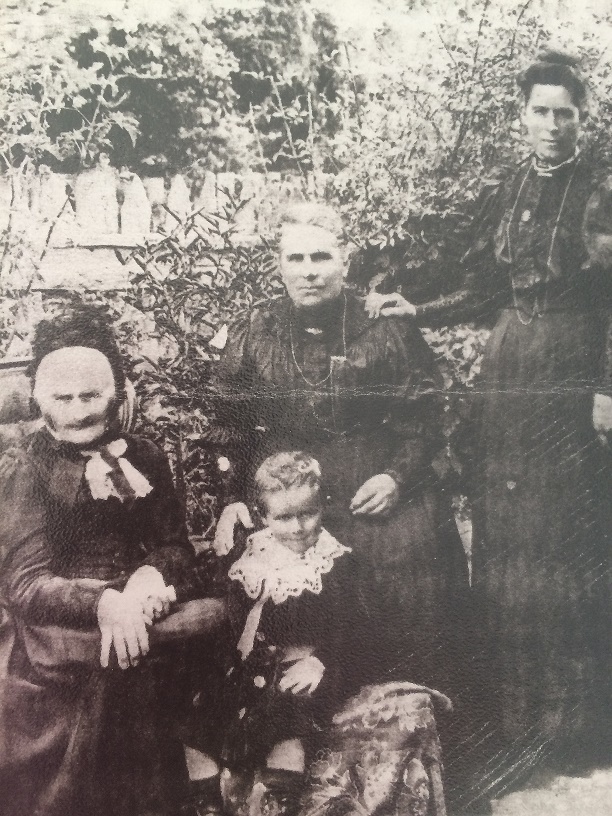
Death – Fowles, Mrs Hannah Ann, died on 9/5/1908 at Ferndale, South Gippsland. Hannah Ann relict of the late William Fowles, late of Colbrook via Ballan, aged 84 year 7months. – West Gippsland Gazette May 12th 1908.
Hannah’s family arranged for her body to be taken back to Ballan to be buried with her husband in the Ballan New Public Cemetery.
Both are buried in the Anglican section. Both are recorded on the death schedules as being Church of England.

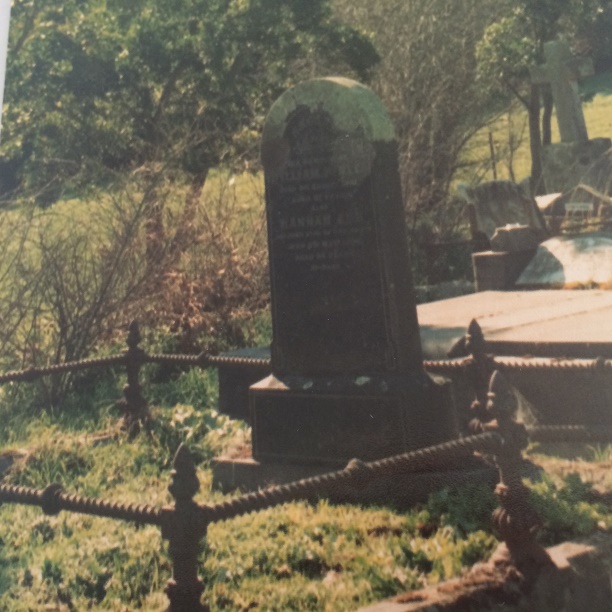
A memorial erected to William and Hannah in the cemetery is still able to be clearly read, ‘Sacred to the memory of William Fowles died August 1907 aged 8 years. Also Hannah Ann beloved wife of the above died 9 May 1908 aged 84 years.
 Yews to Eucalypts