William was born (according to death records) would have been @ 1775.Was he born in Croydon, Surrey, England? I don’t know. I’ve gone through the records from 1773 to 1777 in Surrey Church of England Baptisms. I can’t find a record for William. Who are his parents? I don’t know.

Mary we assume was born around 1775 or near to it. Based on her age at year of death on her burial record. Who were her parents? I don’t know.
Could this be them? I’d need more evidence. A William Fowls married Mary Goldsmith 31st of July 1898. This was by banns in the Church of England at Saint Giles in the Fields Holborn, High Street, Camden. This was an adjacent county to Surrey. Travel between the two was reasonable for the time, being around twelve mile give or take. Both were recorded as being ‘of this parish’ indicating Saint Giles in the Fields was their ‘home’ parish. The spelling “Fowls” is of no concern. Neither party could read or write signing with an X as their mark. I’ve scanned through the Church of England Marriages and Banns in the relevant time period. This is the only one that would fit. I just can’t be 100% certain.
To put some context around their lifetime, in the year that William was born, the American Revolution began. England’s king was the often mocked “mad” King George III. Catherine the Great had freed the serfs of Russia and Wolfgang Amadeus Mozart was a celebrated musician in Europe. Marie Antoinette had become the Queen of France and fashion was in the Rococo style. These styles were often outlandish and extravagant among the wealthy. They bore no relation to the everyday lives of our Fowles family. As everyday folk, their dress was more simplified. It was functional to meet their lifestyle and financial ability as agricultural laborers and common folk. Of coarser cloth, wool or homespun. Clothing and footwear had to last a long time before they could afford to be replaced. Often handed down or patched and remade.
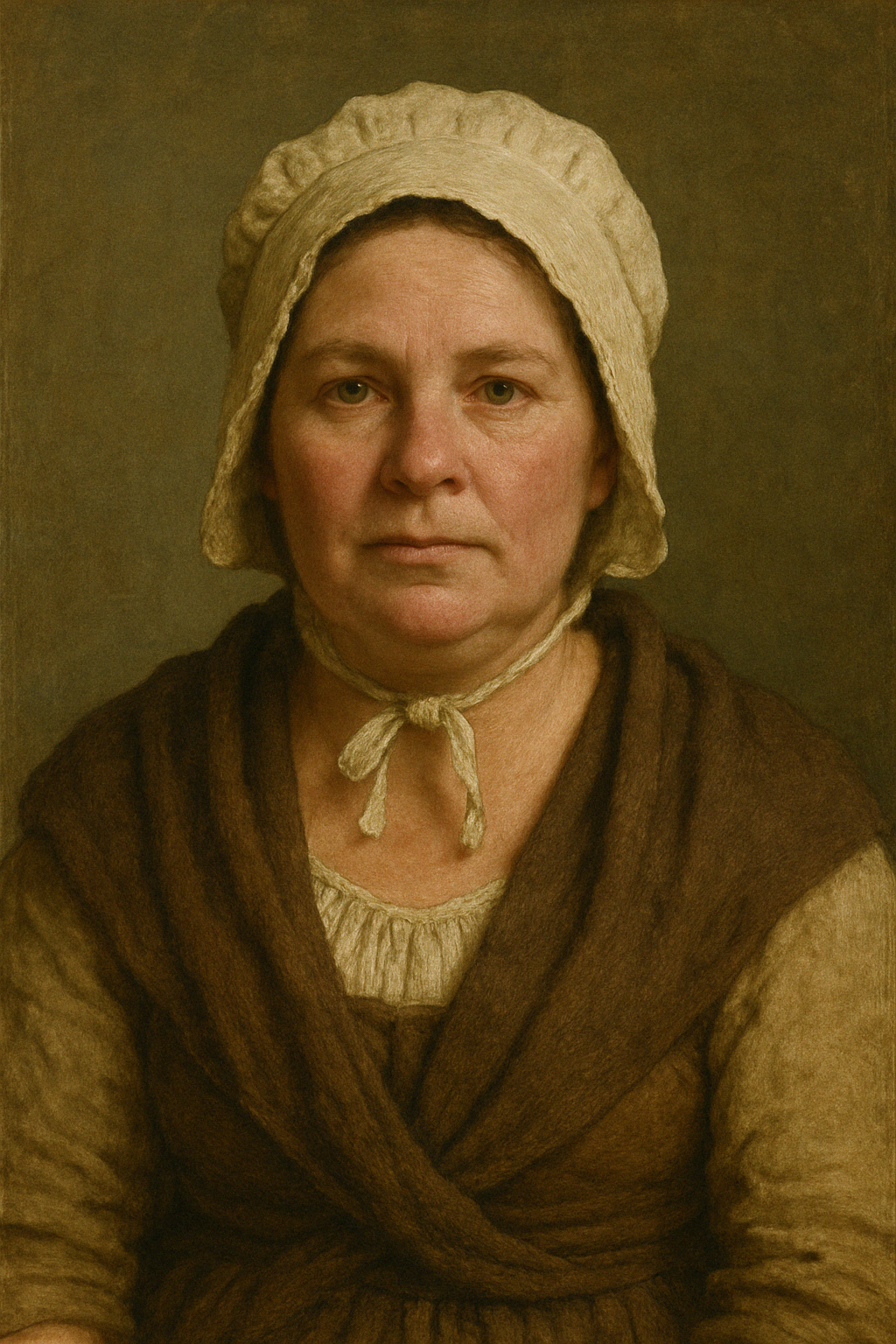
William and Mary were married around 1798 which would have made them around 23-25 years of age. Their first child was born the following year. Finding information about Mary to date has proved very difficult. She is recorded on records as Mary with some question around whether Mary Anne or Anne. Personally I suspect she was Mary Anne but went as Mary.
Croydon had a primary occupation featuring small plot agricultural farming. These were predominantly food crop based, including dairying, market gardening, and the cultivation of wheat and oats.
The Land Tax records of Surrey, England (1780 – 1832) provide valuable information. Detailing who owned land and its value. They also indicated who it was tenanted to, if applicable, and what their rent was. A tenanted occupier could not sell the land. They also could not change the land for any purpose unless agreed by the landowner. It had to stay as it was leased to them by the landowner.
This model of land management put the tenant at a significant disadvantage. The tenant was entirely reliant on the good grace and instruction of the landowner. The ever constant risk of immediate eviction regardless of the reason. The landowner paid taxes to the crown dependent on the assessed value of their properties.
A William Fowles in 1801 was leasing land from George Smith of Croydon, Surrey. Was it our William. Very likely. Can I prove it beyond doubt. Not so easily. William and Fowles were names thick on the ground in Croydon Surrey. However, church baptismal records for the children of William and Mary place them directly in this area. The records have the right dates and the right occupation, Labourer. Before 1882, women, especially married women, had no legal control over their financial affairs. Thus looking for Mary’s name in these matters is pointless.

1796 brought an unwanted and permanent change to the ordinary villages and people of Croydon. Croydon today bearing no resemblance to what it was then. Croydon was a fertile, well watered, agricultural land. It had been farmed since ancient times in small holdings featuring shared common areas. Like its neighbouring county Kent, Surrey was often considered the food garden of London.
Subsistence farming produced enough to feed your family. Workers also employed by the landlords provided labour for the larger commercial crops. Having small plots enabled families to enjoy an ordinary but reasonable lifestyle. People didn’t move very far, families and village life had simple rules governing social status. Church on a Sunday wasn’t a hobby. It was an immutable fact of life and served as the central communication point for the inhabitants. Our Fowles people like most of their neighbours were Church of England.
In 1796 a group of wealthy existing landholders of Croydon introduced a bill to parliament in 1796. They wanted to enclose the land for their private use. This involved purchasing land from the Crown that had until then been available for use for all as ‘common land’. Names of the petitioners included John Cator, the Lord of the Manor of Bensham. Richard Carew, the Lord of the Manor of Norbury. Other non-gentry petitioners included men of private means, Mr John Brickwood and Mr Richard Walpole. Despite opposition, this act of parliament was successful. It was passed in 1799. From then, the ordinary families of Croydon, Surrey experienced rapid changes.
For a more thorough explanation I recommend you go here.
By 1801, access to the now enclosed land was lost to the villagers. They had relied on it for many of their basic needs. For example collecting and cutting wood for burning for heating and cooking. Access to pastures and streams for animals to forage. Access to move from one place to another unimpeded. Access to land for small cropping. A further loss was being barred access to gravel pits near Broad Green and Parson’s Mead. These had long been supplies of raw materials used in buildings. Woodlands that had provided forested wood were no longer available. The ‘new’ owners of these valuable resources would of course turn these into considerable personal fortunes. By 1806 the previously inhabited areas had been completely enclosed by acts of parliament. An immutable stranglehold on the common people by the landowner now controlled their ability to survive.
Future growth industries would emerge with the coming manufacturing and industrial revolution . Including starch, tobacco, gunpowder, paper, vinegar, pottery, and hats. There were extensive distilleries, breweries, bleaching and printing works. There was also a large contingent of the East India Company stationed in Surrey. It is not impossible to imagine that some Fowles joined Indian contingents during their travels.
Much has been recorded about the undesirable working conditions for the lower classes. The onset of poverty the industrial revolution would introduce to this cohort would explode in England in the coming years.
Sarah Fowles was born 28 Jan and baptised 24 Jan 1799 at St John the Baptist, Croydon Surrey England.
Thomas Fowles born 31 May 1801. Baptised 28 June 1801 at St John the Baptist, Croydon Surrey England.
Elisabeth Fowles was baptised 8th May 1803, St John the Baptist, Croydon Surrey England.
William Fowles (my ancestor) was baptised on the 20th October, 1805 at St John the Baptist, Croydon Surrey England.
John Fowles was baptised 28 March 1810, St John the Baptist, Croydon Surrey England.
Mary Ann Fowles was baptised 7 Feb 1813 daughter of William and Mary Fowles of Broad Green, Croydon. Father William occupation, Labourer.

Henry was baptised 25 April 1817. Sadly he would die as a five year old and was buried 28 July 1822. St John’s Croydon Surrey.
William and Mary had seven children that I know of for sure. There may have been more. These are just the ones I located definite records for.
William and Mary raised their family in the area known as Broad Green. A small village hamlet near to Thornton-Heath in Croydon. Broad Green was enclosed by private act in 1823. This was around the time when William and Mary had no choice but to be moved on. Ordnance maps completed in 1895 omitted these historical individual village spaces. These were the common greens that had supported Broad Green and Thornton-Heath. An area covering roughly twenty acres. They had long ceased to exist after the land enclosures.
During the time William and Mary were living in Croydon it was a main thoroughfare from the south into London. The area was notorious for sheltering highwaymen and smugglers. They used it as an opportunistic location to waylay unfortunates. It was also used to move contraband. Plentiful woods and hills provided many opportunities for hiding places.
The Laughing Highwayman, Jerry Abershaw was known to target unwary travellers. His popularity and folklore spread because of his irreverent and jovial personality. He would be tried and sentenced to death for murder at Croydon Assizes 30th July 1795.
The more well known highwayman Dick (Richard) Turpin (1705 – 1739) was reputed to keep a safehouse in Thornton Heath. It was reportedly owned by an aunt. Of course this was well before the time of our William and Mary but they would have heard the tales.
In the 1841 census, William and Mary were living with their daughter Mary-Ann Fowles. Her husband, Edward Bance and their family in Thornton Heath, Croydon. William and Mary were both 69 and both died within a month of each other in 1842. William was buried on the 21st August 1842 at St John’s Croydon Surrey. William was recorded as aged 67. Mary was buried on the 4th September 1842 also at St John’s Croydon Surrey.


By 1965 Croydon with urban sprawl would become a borough of London city permanently losing its agricultural identity.
 Yews to Eucalypts