Drogheda Years
James Mohan was baptised in Drogheda on the 21st of March 1848. His father was Joseph Mohan and, his mother Alice Walsh. Sponsors or Godparents at his baptism were Matthew Murphy and Mary Mohan. My g/grandmother would later name two of her sons James and Joseph. I would suggest she did so after her father and grandfather Mohan.
My research to date is trending toward supporting a hypothesis. It suggests that the Mohan and Duffy families have enjoyed an inter-generational connected history. They have an association with Drogheda and Dublin. Drogheda being an ancient town in County Louth. At the time James and Bridget were raising their family in Drogheda, it was a predominantly Catholic town. It was still under British control. It was a time in Ireland full of agitation. People were seeking total separation from England at any cost. Alternatively, they were aiming for Home Rule.
In 1886, George Henry Bassett compiled the Louth County Guide and Directory. He had it printed in Dublin and included information about the town and county of Drogheda. Drogheda had a lot going for it. This compendium holds a great deal of information about the area and the people of the day.
Bassett remarked that the County of the town of Drogheda is the smallest county in Ireland. Nonetheless, it deserved to be ranked among its most prosperous. He described the boundaries of the Irish Sea, Drogheda, Dundalk and Greenore featuring extensive and diverse industry. Bassett described the area before English plantation as an ancient independent principality named Orgial. The Sept of the O’Carrols were its princes. In 1138, John de Courcy and de Lacy brought English settlers to the region. They occupied the land and renamed it Uriel and Oriel. Here is a small bit of trivia. Hundreds of years later, on the absolute other side of the word. I am married to a man from this O’Carrol lineage. After being removed from Ogiel the O’Carrols moved south to near what is now Roscrea. My connection is descent from families who would call Drogheda home. A fact we have only recently discovered. It is indeed a small world.
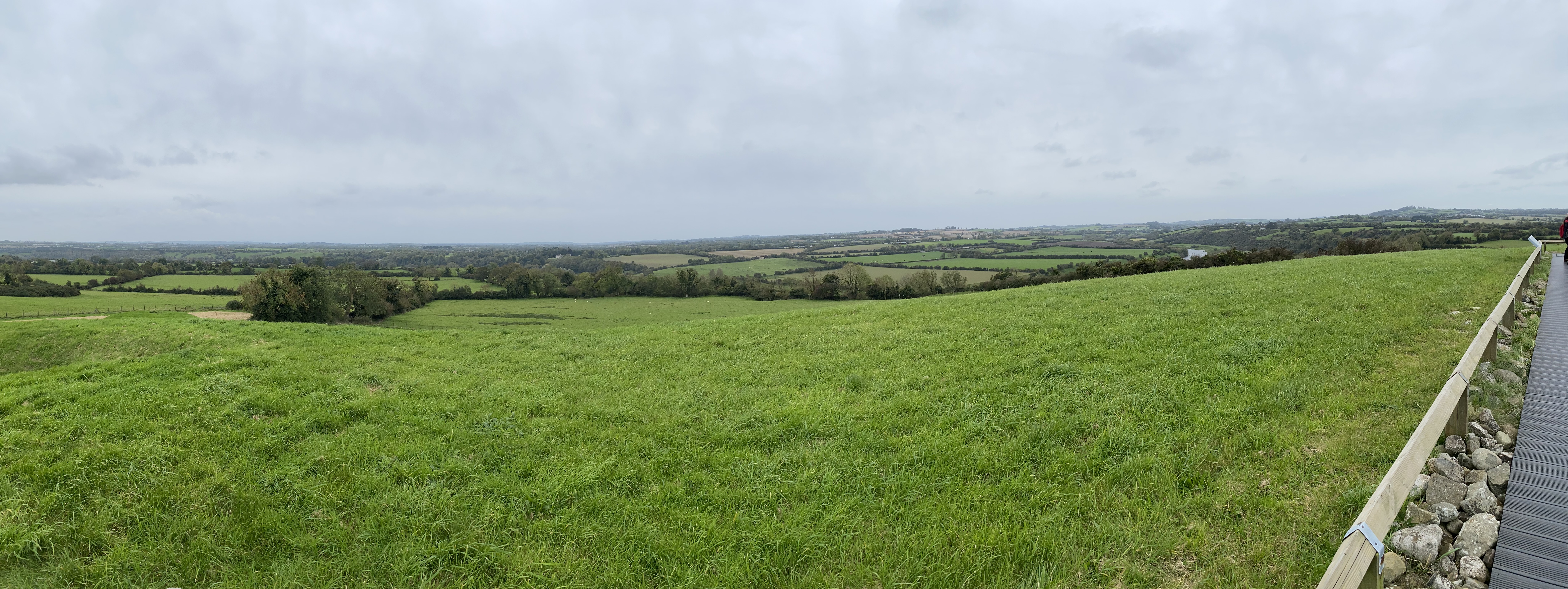
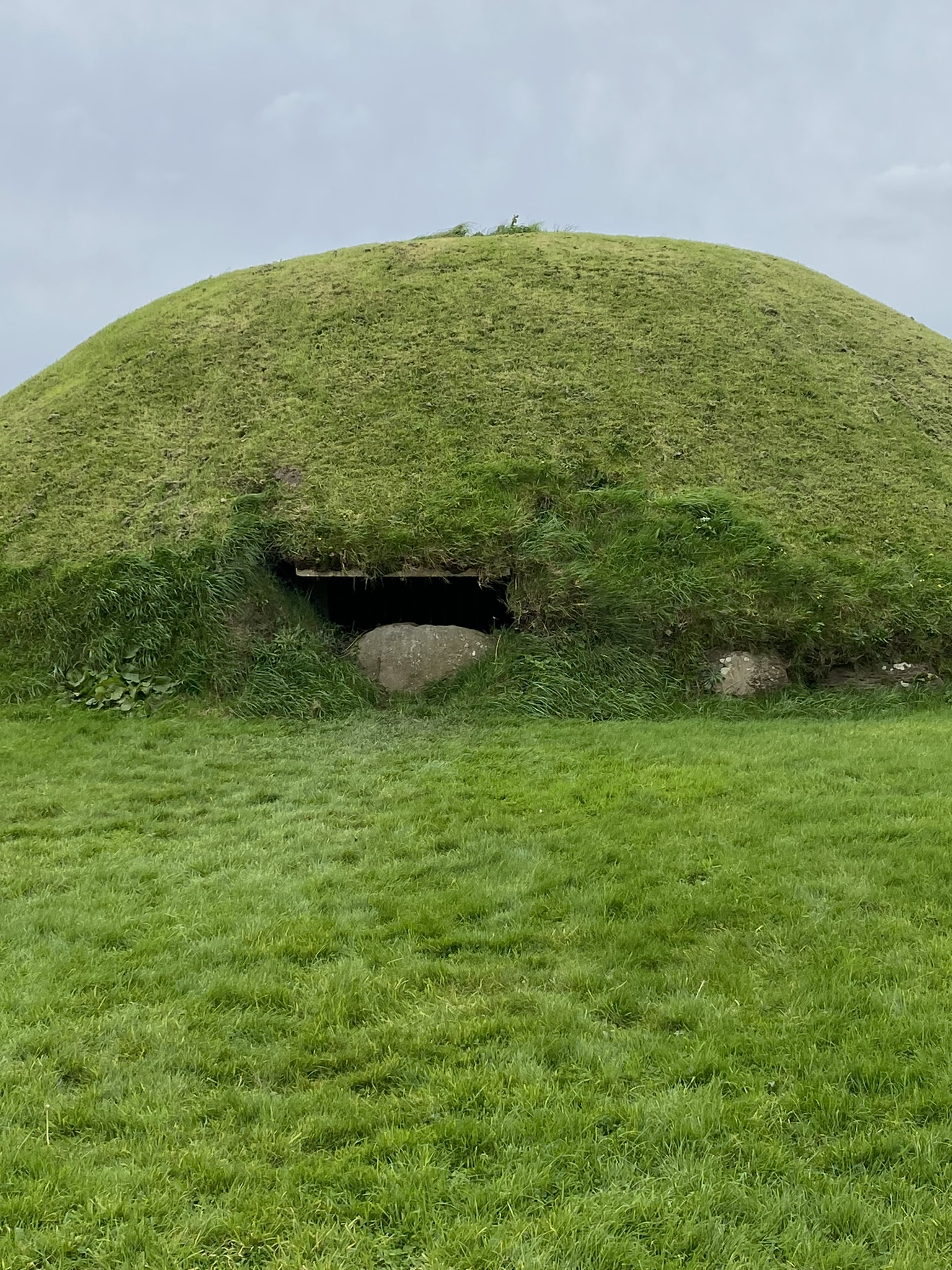
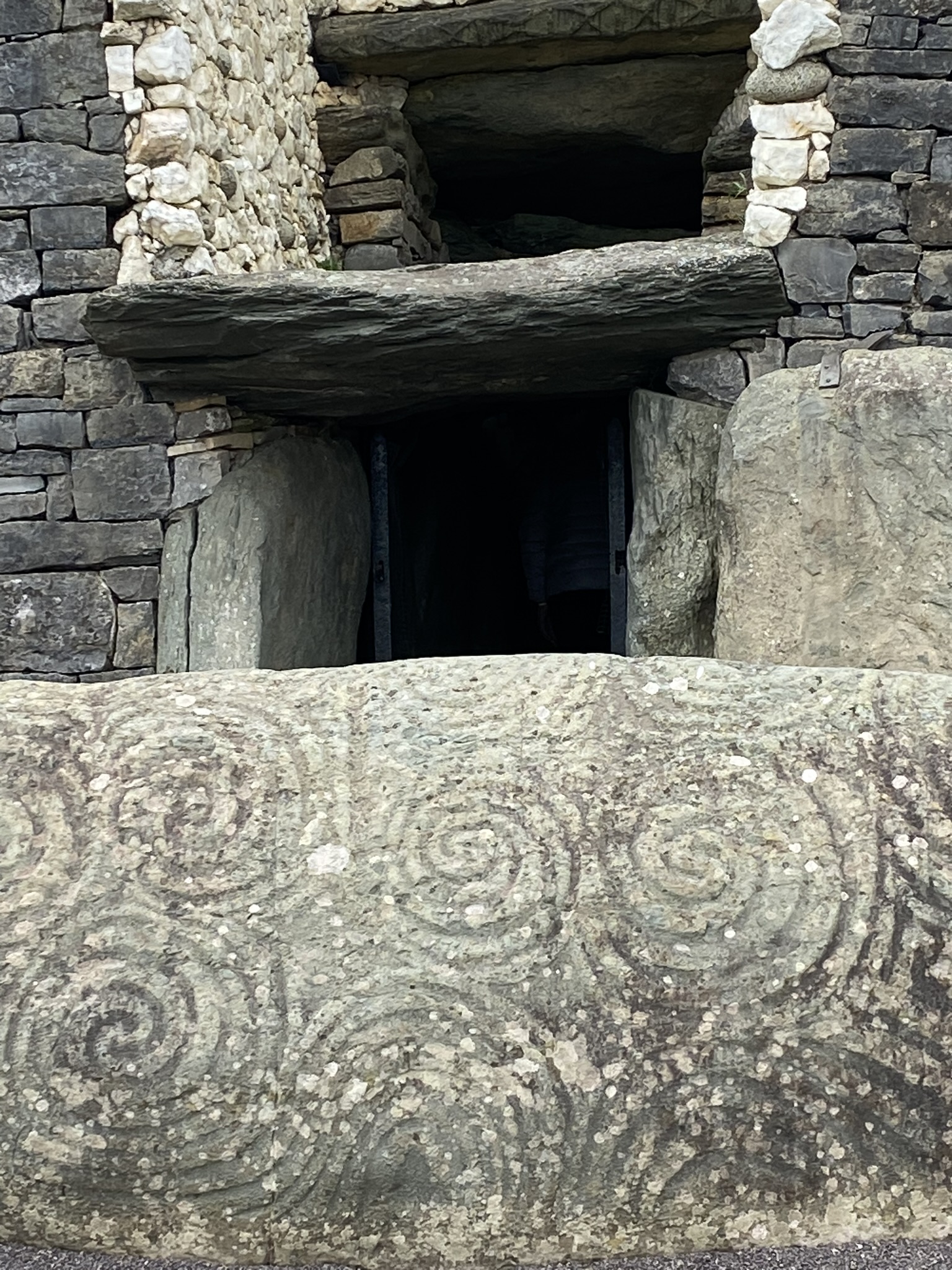
In 1210 King John of England declared Drogheda part of Louth. The English settlers were encouraged to build large castles to intimidate the indigenous Irish. These castles also defended the vital ports exporting and importing into Drogheda. At the time that Bassett was in Drogheda it also had as thriving fishing industry. The indigenous Irish inhabitants had been residents since early Celtic times. Evidence of this was found in the many druid stones. The archaeology of early Celtic people was preserved for future generations. These artifacts were being found as early as 1835, which Bassett recorded. We visited Bru Na Boinne, Dowth and Newgrange in 2023, all very close to Drogheda and not to be missed! Book ahead as its access by pre-book only.

Invasion and occupation was not a new concept for the Irish people. Drogheda had earlier seen both Viking (Danes) and Roman occupation. The English organized themselves. They included Drogheda in what was then ‘The Pale.’ This was the boundary of the part of Ireland considered England. This wouldn’t last. In 1649, Cromwell gathered an army of mercenary troops. It is believed that his forces numbered ten thousand. They besieged and entered Drogheda. The troops butchered thousands of men, women, and children. Generations later, I still remember my grandfather’s words. He said, “In his mother’s family, the worst insult was ‘the curse of Cromwell be on you’. Harsh.
Our James Mohan had a blacksmithing forge in Bachelor’s Lane. He lived with his family at 31 Millmount Terrace for a time. At different times he advertised himself as a boilermaker. I’ve discovered that James was one of seven tradesmen who tendered to make 100 wrought iron field gates. These gates were for the front of labourers plots throughout the Ardee Union. Sourced from, The Irish Builder 1/11/1890. By the time the successful tenders were announced, James had already died. He was not successful in his tender anyway.
I did find a C. Mohan with board and lodging at 9 Bull Ring Drogheda. I found James Mohan living in Bachelors Lane with his family. A note on Bachelor’s Lane, there were quite a few businesses operating forges and metalwork’s in this dockside area. Which makes sense as they were supporting the busy shipping industry in Drogheda. I’ve now walked those roads (hills/stairs) and can testify you needed fit legs to get around this hillside town. I believe you still need them. Parts of the original protective city walls still meander visibly through Drogheda. Aside from the family history connection, it is a fascinating place. The town is full of friendly people who are happy to help you on your journey.

Bachelor’s Lane Area, Drogheda Oct 2023 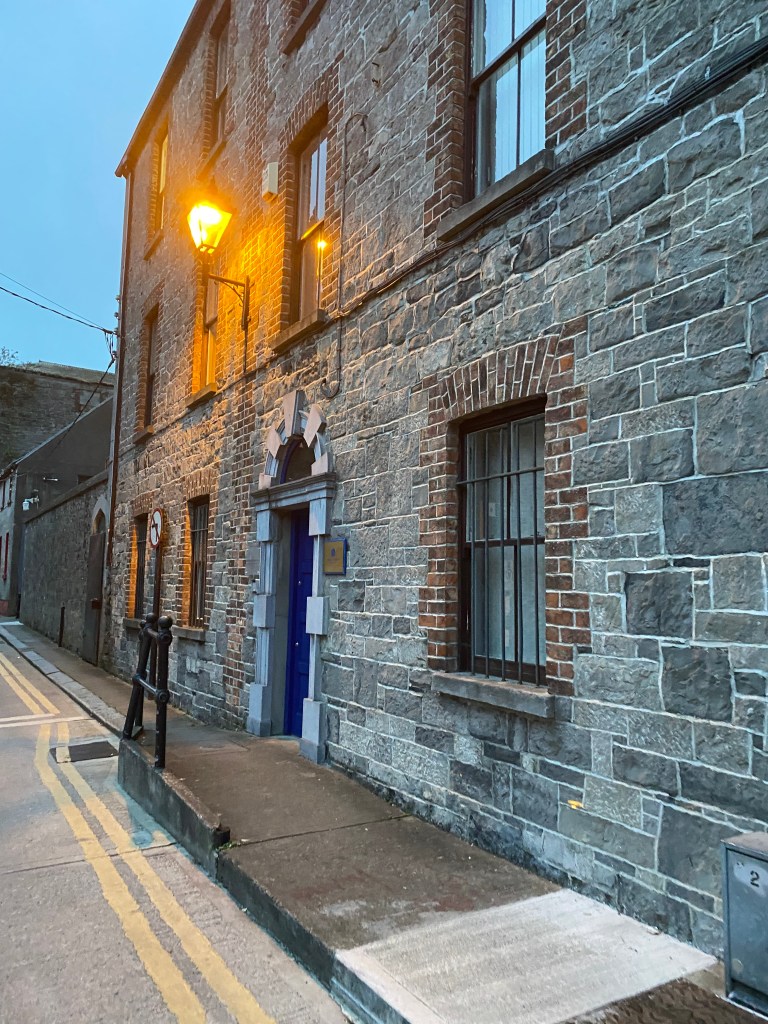

Drogheda Oct 2023 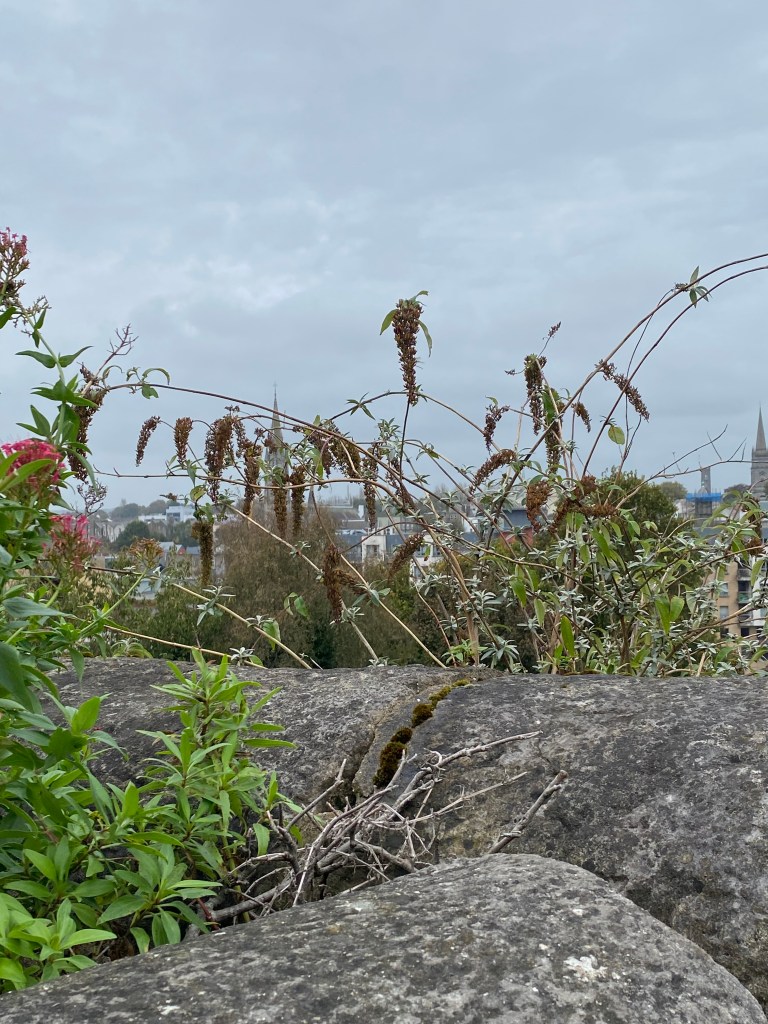
Drogheda City Walls Oct 2023 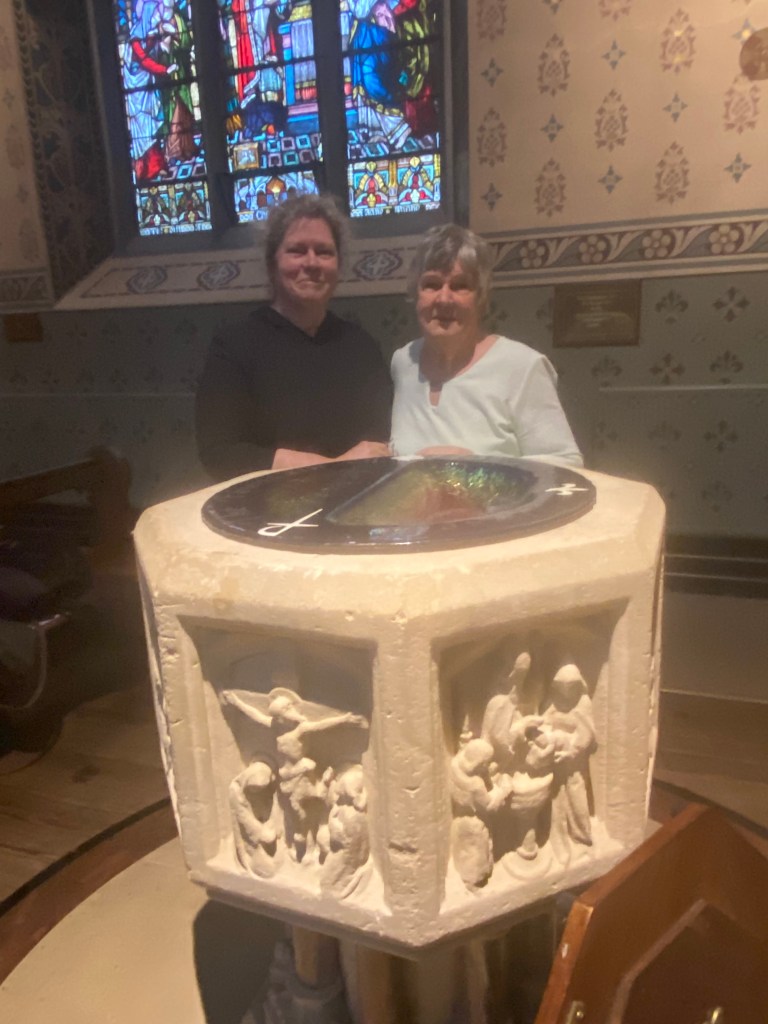
Granddaughter and Great Granddaughter at Font (base) where Mary Alice Mohan was baptised in Drogheda. Oct 2023. 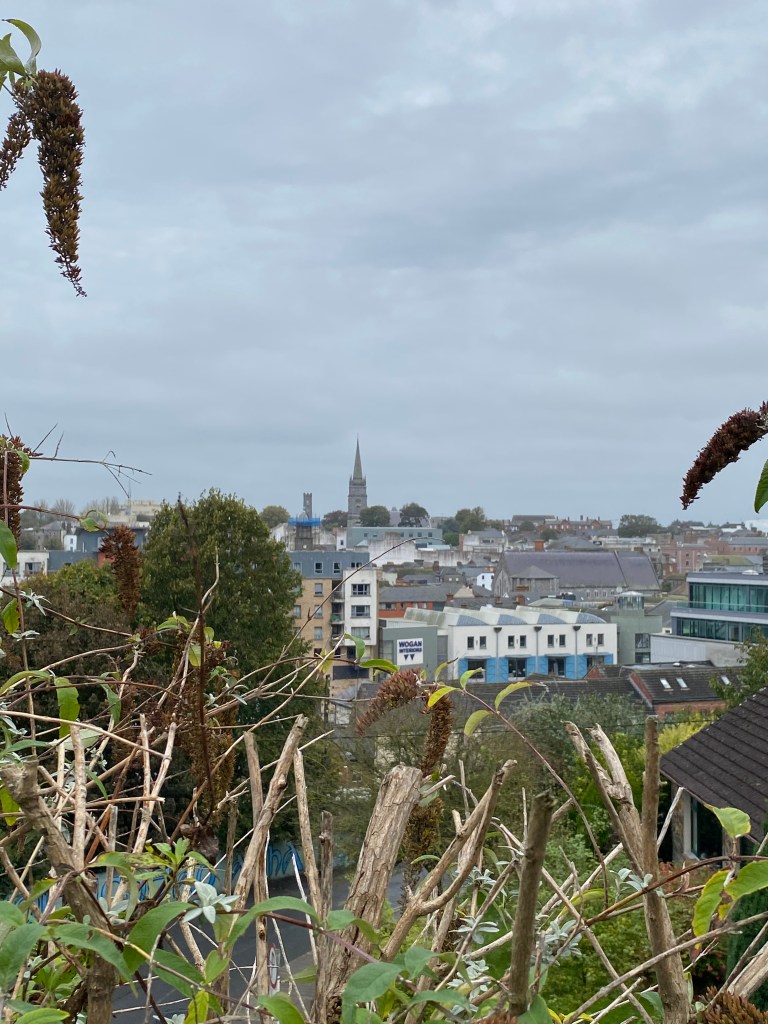
Drogheda City from Millmount Terrace Oct 2023

Mum and I attended mass on the Sunday we were there in 2023 at St Mary’s Church, where we participated in a requiem mass for Mary Alice Mohan.

Duffy’s I found in Drogheda at this time were, A Duffy and Son, bootmakers, in Abbey Ln. A Mrs Catherine Duffy Trinity St who had a grocery shop. A Mr John Duffy at 37 Peter Street a plumber and gas fitter. Henry Duffy, Master Union (Employee) at the Drogheda Workhouse on Dublin Road (which was in operation at this time).
Eleven mile down the road in Ardee there were substantially more Duffy’s to be found. Mrs M Duffy proprietor of the Ruxton Arms Hotel and General Posting Establishment. A sizeable proprietorship of general grocery, team, wine and spirits and stationary etc. James Duffy who worked some land (Glebe). A John Duffy who was a borough inspector residing on Bridge Street, Ardee.
The nearest operating ‘big house’ to Drogheda was out on Platten Road being Platten Hall. Platten Hall was built around 1700. At the time of our family, the English/Irish Gradwell family owned it. George Gradwell, Justice of the Peace, was the current resident. A nearby flax industry was owned and operated by the Gradwell family along with agricultural business. Many castles dotting the Drogheda area had fallen into ruin. Similarly, Platten Hall would fall into utter disrepair. It was eventually demolished in the 1950’s.
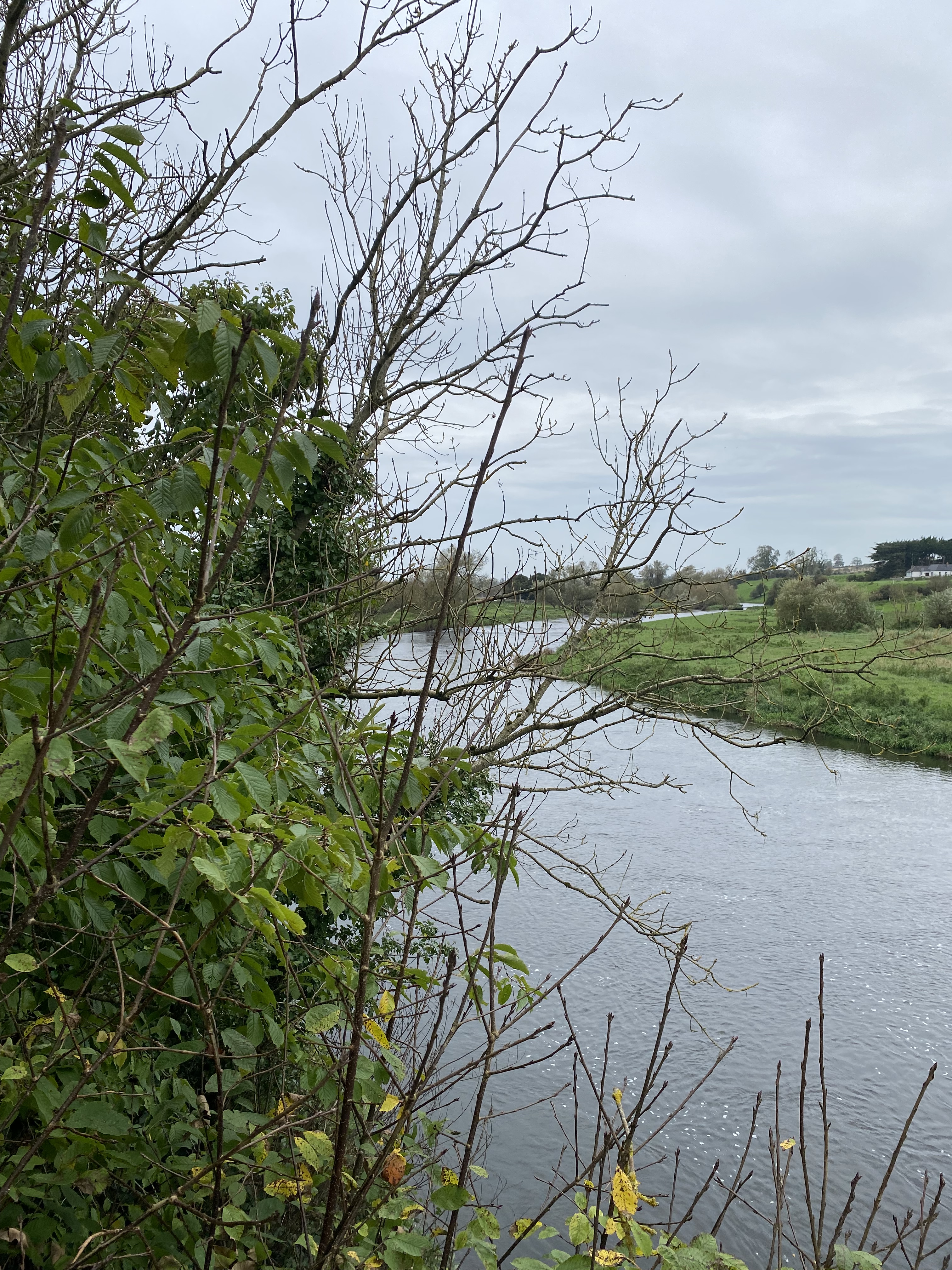
The River Boyne, Co. Meath. Bru Na Boinne, near Drogheda. Oct, 2023.
Bassett remarked in his book that Drogheda, Ardee and surrounding lands were rich in minerals and proved excellent for agriculture. The natural richness of resources of the Boyne valley protected Drogheda a little. It shielded the area from the total obliteration. Many Irish people, especially in western Ireland, suffered this devastation during the famine of the 1840s.


Holly bushes in Co. Louth near Drogheda and St Laurence Gate in Drogheda (Oct 2023).
James and Bridget’s children were baptised in the local family church of St Mary’s Drogheda. James’s occupation was that of a blacksmith. James and Bridget had seven known children. I say that because there may be more. Mary Alice Mohan (b. 1872), Joseph Mohan (b. 1873), James Mohan (b. 1875), Francis Mohan (b. 1877), Peter Mohan (b. 1879), Isabella Mohan (b. 1884), Alphonsa Mohan (b. 1887). From records, I can find out they lived mostly in the area of Mill Mount Terrace in Drogheda. This was during those earliest years. In 1886 James was recorded as a blacksmith living in Bachelors Lane in the Drogheda City and Regional Directory.
Later the family (and at the time of James death in 1898) were living in Coola (Coolagh?) Street in Drogheda. One of their neighbours in Coola Street would have been the Burke family. Tom Burke the famous Irish revolutionary and sportsman was only a little boy when the Mohan family were there. He would go on to form the Drogheda branch of the Ireland Volunteers. His little brother Christopher (also a revolutionary and hunger striker) was a baby when James Mohan died. Like the Mohan’s, they lost their comfortable early life on Coola Street when their father died in his forties. The loss of the family income meant they had to move to cheaper accommodation. The Mohan’s would have known of Tom and Christopher Burke. It is probable that their sympathies ran alike.
Finding records for James and Bridget in usual records such as census records has proven frustratingly challenging. As below quoted directly by National Archives Census Records Ireland
“The original census returns for 1861 and 1871 were destroyed shortly after the censuses were taken. Those for 1881 and 1891 were pulped during the First World War, probably because of the paper shortage. The returns for 1821, 1831, 1841 and 1851 were, apart from a few survivals, notably for a few counties for 1821 and 1831, destroyed in 1922 in the fire at the Public Record Office at the beginning of the Civil War.“
On the 27th of July 1898, James Mohan, a blacksmith, died at home in Coola Street. He had been acutely sick with pneumonia for more than five days. He was forty-six years of age. His son Francis reported his death. To say that life changed significantly for the family would be no understatement.
In October 2023, I visited Drogheda. I did have trouble finding some of these original places. This is a natural occurrence as towns and cities develop and reform over time. I was extremely grateful for the wealth of information supplied by the Old Drogheda Society while we were there. Their tour of Millmount Tower and Millmount Museum was a highlight of our trip. Their knowledge of Old Drogheda was invaluable. This experience is not to be missed!
Dublin, North Dock Years
Bridget was not isolated in Drogheda. I believe it was more likely that she did what families in hard times typically did. She, along with the remaining family at home, went and lived with other family members. In Bridget’s case, I believe she took her four children at home. She moved the twenty-eight miles south to Dublin city. Her son James, who was 25, lived there with his wife, Margaret O’Sullivan. Their children were at 58 Lower Gardiner Street, North Dock, Dublin North. His sister Mary Alice Mohan would be godmother to one of their children (her niece) Catherine Ethel Teresa Mohan (b. 1898 – d.1900) who died aged one year following two days of convulsions. James and Margaret’s home was bustling. It accommodated their own little family: Matthew, Michael, James, Patrick and Winifreda. I imagine James and Margaret gave Bridget as much support as they reasonably could.
By the time of the 1901 census, Bridget Mohan and four of her children had relocated to 61.8 Lower Gardiner Street, North Dock in Dublin North (north of the river Liffey). This was an area that included tenement buildings. It was in one of these tenement buildings that the Mohan’s now resided. They rented two rooms with the five of them living there. Mary Alice was 25, Isabella was 17. Francis 23 had assumed head of house. Alphonsa 14 was a scholar. Bridget marked as married, 50 years of age. Francis gave his trade as blacksmith which had been the same as his father. They could all read and right and except for Bridget they spoke Irish and English. These were not the only family that Bridget had, the area of North Dublin which was well represented by Mohans. On 28 October 1902, Thomas Mohan lived at 42 Lower Gardiner Street Dublin. He married Alice Byrne, who also resided at the same address. Thomas gave his father’s name as Sylvester Mohan and his mother as Anne Coyle. Bernard Mohan and his family (daughter Catherine Mohan) at 44 Lower Gardiner Street. She married Hugh Jackson (Bookbinder) 14 February 1900 her father Bernard’s occupation was recorded as a Manager. I think Bernard might have been a brother to James Mohan Snr (Bridget’s late husband.)
The 1901 census revealed Bridget and the children at 6.18 Lower Gardiner Street were:
- Mohan Isabella Lr. Gardiner Street North Dock Dublin 17 F Drogheda Traveler – Boots, Roman Catholic Read and write Irish and English Daughter Not Married
- Mohan Bridget Lr. Gardiner Street North Dock Dublin 50 F Drogheda No Business at Home Roman Catholic Read and write English Mother Married
- Mohan Alphonsus Lr. Gardiner Street North Dock Dublin 14 M Drogheda Scholar Roman Catholic Read and write Irish and English Son Not Married
- Mohan Mary Alice Lr. Gardiner Street North Dock Dublin 25 F Drogheda Traveler – Boots, Roman Catholic Read and write Irish and English Daughter Not Married
- Mohan Francis Lr. Gardiner Street North Dock Dublin 23 M Drogheda Black – Smith Roman Catholic Read and write Irish and English Head of Family Not Married


With a note to the comment on both Mary Alice and Isabella being ‘traveler boots’ in the census. Initially I thought this meant traveling salespeople. But that just seemed odd for women. A bit more digging could mean that they were with or identified as Irish Travelers? I needed more information for this hypothesis. Family group names and some peer reviewed genealogical papers I obtained online gave me some more clues. Most common historical Irish Traveler names included Ward, Connors, Carty, O’Brien, Cash, Coffey, Furey, MacDonagh & Mohan. Maybe that was the reason I couldn’t find a well established cohort of Mohan’s over generations in Drogheda. Some more digging showed that Drogheda is on the coast. It is on the way to Dublin and also near enough to Belfast. It was not an uncommon place for travelers to go through as they moved up and down the east coast.
My grandfather said his Irish mother had told him that she was from a long line of Irish royalty. My grandfather also used to say his mother was the most wonderful story teller too! She was remembered by my grandfather as a person knowledgeable in spiritual matters. She was exceedingly devout in her prayers and praying routines. When Mary was talking about being a traveler on the census, was she talking about being an Irish Traveler? Irish Travelers are a distinct group not related to Romani or other European traveler communities. The original Irish Travelers were believed to have emerged as a group that formed following Cromwellian invasions of Ireland. They further solidified as a group after the 1840’s famine. At that time, families of lower incomes were forced onto the road to travel for work. Thus becoming the Irish Traveling community. Work in repairs and constructive or agricultural work and tin/metal smithing were notable features of this group. James Mohan worked during his time in Drogheda as a blacksmith and was also recorded as a boiler maker. Both metal working.
From my perspective, it would be reasonable to consider if Mary Alice and Isabella were related to Irish Travelers. Dublin was not an easy place for the very poor to earn a living. Tight living conditions and a mother who also had younger children to support would make it difficult.
It is also important to know that my great-grandmother kept silent about the difficulties of living in Ireland. For them it was always stories of how wonderful everything was. The stories were embellished shall we say. There was never much of a mention about the old people. I have gathered much of what I know through over thirty years of committed research. Putting a ‘face on the place’ was achieved in 2023 and 2024 when I was able to visit in person.
Tragedy struck again. In May 1902, 15-year-old Alphonsus Mohan was admitted to The Hospice Harold’s Cross in Dublin. He had been suffering from Phthisis for one month. This was tuberculosis. Almost every entry on the same page of death’s register with Alphonsus was from the same or a similar description. It was the same diagnosis of this highly contagious and terminal disease, rampant in the tenements. The death toll from tuberculosis in the Dublin tenements at this time was astronomical. The National Archives of Ireland record Dublin as having had the most deaths due to tuberculosis in the early 1900’s. The city also had the worst housing conditions of any other city in the whole United Kingdom. Nat Arch London. Alphonsus was buried at Glasnevin cemetery in 1902. Finglas Road, Glasnevin, Dublin.
To put this loss into real terms that could explain the gravity of this loss. I’ve located the following Mohan children who resided in Dublin North Dock who died young. This is where our family were living who’d lost children at this time.
1900
Annie Mohan died less than a year, 1900, Dublin North
Ellen Mohan died less than a year, 1900, Dublin North.
Catherine Mohan died aged one. 1900. Dublin North
1902
Alphonsus Mohan died aged sixteen, 1902. Dublin North.
1904
Ellen Mohan died aged less than one year. Dublin North 1904.
Margaret Mohan died less than one year 1904, Dublin North.
1908
Bridget Mohan died less than one year 1908.
1909
Moira Mohan died aged 2 Dublin North 1909.
1910
Patrick Mohan died less than a year 1910 Dublin North.
Matthew Mohan aged eleven. Died Dublin North 1910.
1911
Kathleen Mohan died aged one, 1911 Dublin North.
Kathleen Mohan died aged less than one year 1911, Dublin North.
Edward Mohan died aged less than one year. Dublin North 1911.
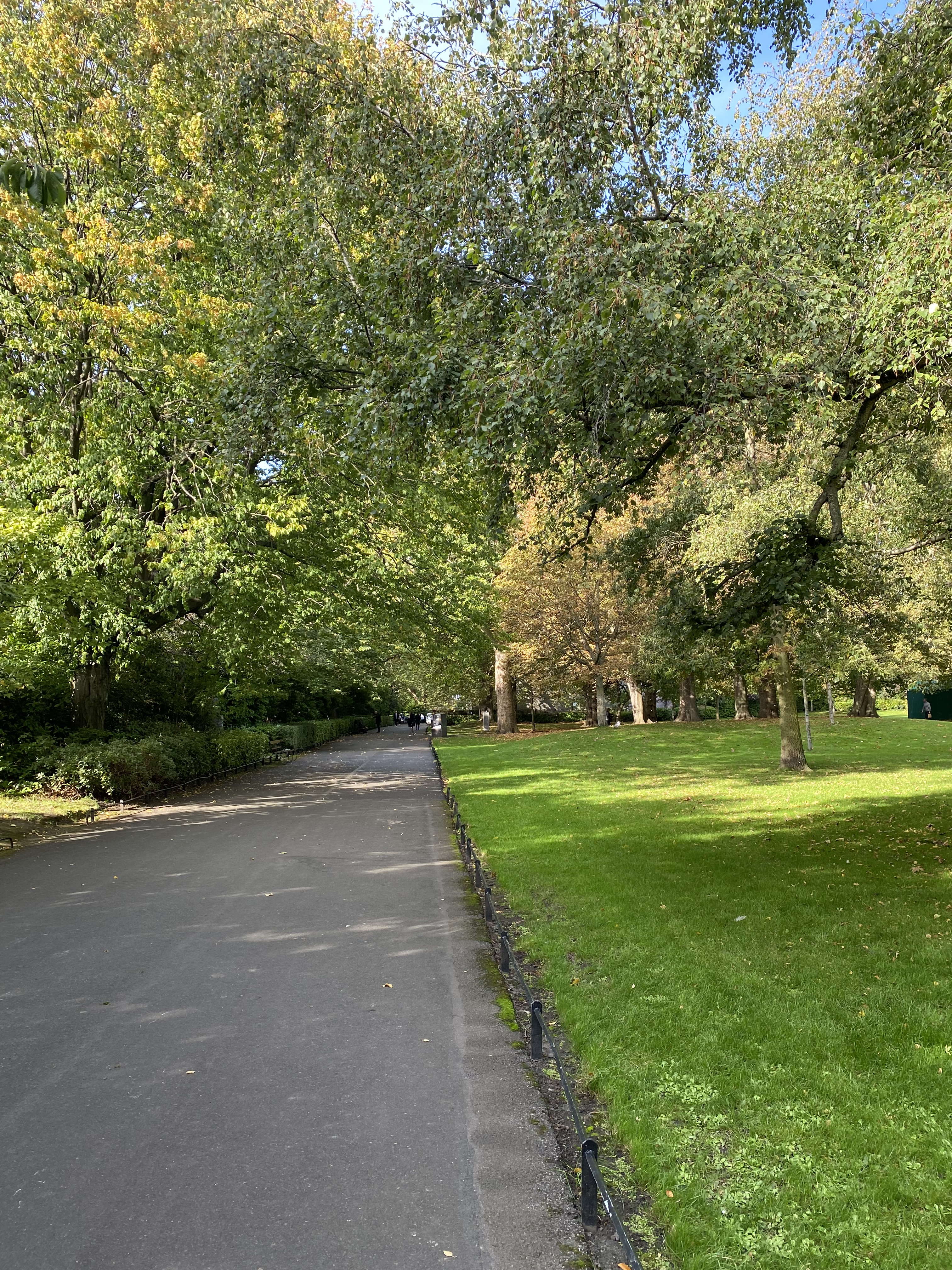
St Stephen’s Green, Dublin, Oct 2023.
Mary Alice had three known children of her own from 1902 to 1911. Her husband was George Harold or Harold George Cave. These included Evelyn Alice Cave who was born in 1909 in Ireland. This is per her death record. Harold George Cave was born in 1910. George Alphonsus Cave, known during his life as Roger, was born in 1911. Born in Ireland at the Rotunda Hospital in Dublin with his father’s name recorded as Harry Cave a Labourer. The family understood that Mary had married Harold George Cave. He was a protestant. He had been lost in a snowstorm when the children were small they recalled being told. When Mary’s son George Alphonse Cave was born in 1911, she recorded her location as 25 Synnot Place. In 1915 at the Rotunda Hospital, Mary’s son James Henry Moss was born. Mary provided her address as 25 Synnot Place, Dublin. She listed her spouse as John Henry Moss, who was 41 years old. During these periods of time Mary Alice was not ‘living’ at Synnot Place. She was coming and going. Synnot Place was her mother’s home. She came back to Synnot Place on three definite occasions to have children. I have not managed to find any records of George Cave in England. I also have not found records of Mary Alice being in other parts of Ireland. Which is probably not too unusual given that many essential records were destroyed in the uprising.
The 1911 Census showed Mrs. Bridget Mohan, aged 67, resided in a large, converted house at 25 Synnot Place. She was recorded as a widow. City of Dublin, North Dublin, Inns Quay, St George Parish, College Green. Bridget reported that she could read and write and was a native of County Louth. That she had had eight children, two of whom were living (?) The building was recorded as a private house with sixteen windows and a permanent dwelling. What’s important to note is that this was tenement housing. Seven families lived in this house conversion. Mary Hamilton occupied one room with a family of three. Mary Reavey occupied one room, a family of one. Kate Hand occupied two rooms a family of two. James Collins occupied two rooms, a family of three. John Keane occupied three rooms, a family of three. Thomas F. Walton occupied one room, a family of two. Bridget Mohan occupied one room a family of one. Mary O’ Kelly occupied twelve rooms a family of three. I have researched the history of Synnot Place. I’ve located some records detailing some of its residents. These records cover the years the Mohan family were linked to it.
- 1899 25 Synnot Place, Dublin. Elizabeth O’Neill. Rated Occupier,
- 1908 25 Synnot Place, Dublin. House and yard. Michael Sullivan. Rated Occupier,
- 1910 25 Synnot Place, Dublin. John Kane. Rents top floor.
- 1911 25 Synnot Place, Dublin. John Kane. Top floor inhabitant.
- 1912 25 Synnot Place, Dublin. House and yard. Michael Sullivan. Rated Occupier.
- 1913 25 Synnot Place, Dublin. House and yard. Michael Sullivan. Rated Occupier (crossed out),
- 1913 25 Synnot Place, Dublin. James Collins inhabitant/householder. First Floor.
- 1914 no entries for number 25.
- In 1915, there were no entries for number 25. Mary Alice Mohan gave this location as her home address when her son James was born.
In the 1911 Census, Mary Alice’s younger brother Francis Mohan lived at a house numbered 14 in Abercorn Road. It was off Sheriff Street, Upper, in North Dock, Dublin. Along with his wife Mary, aged 34 and also of County Louth. Their children, Mary Frances (aged 8) a scholar born in Dublin City. Their son William (aged 6) a scholar born in Dublin City. A son Francis aged 3 born in Dublin City a daughter Annie aged 2 born in Dublin City. They also had a boarder Patrick Curran aged 31 who resided with them. Francis had three rooms and seven of them living there. He gave his occupation as a blacksmith.


Below is an amazing one-hour documentary from RTE Eire on YouTube. It is not my work at all. It provides insights into the Dublin lockouts. It also explains what was happening in Dublin when Mary Alice Mohan and her family were there.
Mary Alice Mohan – South Africa.
Around 1914 Mary Alice Cave (Mohan) went out to South Africa with her cousin a Mrs Duffy. The story was that Mary Alice was to be her traveling companion. On the way, her cousin died onboard the ship. She was unceremoniously tipped over the ship with her belongings. She had a communicable disease that the captain feared would infect everyone onboard. Mary was stuck in South Africa. She had left her three children with her mother in Dublin in Ireland. A family story was that she answered a newspaper advertisement for a housekeeper for a Mr J.H Moss whom she would have two children with. James Henry Moss and my grandfather Joseph Patrick Mohan Moss. Her story continues in further detail under Moss Family Tab on this website.
 Yews to Eucalypts