Michael Larkin and Mary Cantwell were both from families in and around the main town of Ferbane. I propose this hypothesis based on records indicating this and also the recurrence of their surnames at the right time (dates) and in the right locations. Specifically the smaller area farming area known as Kilcolgan More. Interestingly in 2024 upon visiting the specific farm area where they had lived, the property is on a small lane called Cantwell Lane in Kilcolgan More.
Michael Larkin of Kilcolgan More, King’s County married Mary Cantwell whom I believe was from the same area at St. Mary’s Church, Ferbane, Saturday the 14th of June 1823.
Three known sons John Thomas Larkin (born between 1828 – 1830, dates recorded vary, but I am pretty sure 1828 is the correct one, (this one is our fellow), Michael Larkin 1832, and Thomas Larkin 1835 all at Kilcolgan More, (in Irish, Cill Cholgan Mhór), a small agricultural area of farming just east of Ferbane Village. It’s possible that there were other children, I’ve just yet to prove or disprove this. However, it is worth noting that the boys mother did die quite young, when Michael and Thomas were still minors so it’s possible that there were only three of them. A small family for the time. My understanding is that their mother Mary died on or near the 11th of August 1845. Taken from register of death in Ferbane. At this time John was 17, Michael 12, and Thomas 10, all young boys in the care of their father.
Mary Larkin nee Cantwell died at Kilcolgan aged 45 in 1845.
Trying to find documentary evidence for Michael Larkin and Mary Larkin nee Cantwell, has proven exasperatingly difficult with all wins done incrementally and with concerted effort of family researchers spread across the globe sharing what they’ve been able to find. The main reason for this dearth of good records is explained succinctly by the National Archives of Ireland. ‘Two volumes of parish registers (St Mary’s Ferbane) comprising baptisms, 1819-1863; marriages 18191849 and burials 1821-1876, were destroyed in the Public Records Office of Ireland in 1922’. This is precisely the timeframe for evidence that we need to get ‘further back’ in family research. We know that Mary Larkin died in 1845 in Kilcolgan. Records which were mis-transcribed recorded it as Kilolyn but we’ll give the old rule of thumb re spelling of the times here, it was Kilcolgan. We estimate that Michael was born around 1799/1800. If Mary was 45 when she died in 1845 then we know she was born around the same time 1799/1800. We don’t know yet when Michael Larkin Snr died. We know he was alive in 1858. Shared correspondence between his sons John and Michael Jnr provided context for this. John remarked to Michael that in a letter received by John from his father, Michael Larkin Snr wrote he was ‘quite well’, the fact remains however that he was fifty-nine years, and statistically in rural Ireland of the time this was considered elderly.
Of Michael and Mary’s sons, John would leave for Australia ten years after his mother’s death aged twenty-six in 1855. He would correspond with his brother Michael who had also left Ireland but in 1854 aged twenty-two/twenty-three instead emigrating to America. Michael would go on to marry the widow Elizabeth Hosey in Rochester, Monroe, Unites States just two years later and remain living in the United States. Elizabeth already had two children and she and Michael would go on to have nine more.
John and Michael’s brother Thomas, would stay in the nearby area at Kilcolgan Beg as a farmer and died in the area as an older widowed man aged 68, with his death registered at Ferbane in 1903. Thomas would marry, very likely twice. First wife if I have this right, was Margaret Mary Carroll in 1867 and then Bridget Cleary in 1876. Thomas and Bridget are buried at nearby Kilrehan Cemetery. Thomas would have two sons Thomas and Michael and a daughter Catherine with Bridget who were born and raised in the local area. In the 1901 census Thomas is listed as aged 50 (don’t think that’s quite right) and his wife Bridget 45, eldest son Michael aged 21, Catherine aged 18 and Thomas aged 16. Catholic, could read and write and a farmer at Kilcolgan More.
Catherine would later marry a man named Owen Egan. Thomas Jnr would marry Agnes Cloonan after he emigrated to Rochester, America, like his uncle Michael before him. Whether it was a spelling anomaly or not, which is very probable given this was common at the time, this branch of US Larkin’s I’ve since found recorded in the US as Larken’s. So now we’ve got Larkin, Lorkin and Larken as spelling across the globe but all from the same progenitors.
Michael Jnr as best I can work out to date was born around 1880 and remained living in the area like his sister Catherine. These would be the last of our remaining Larkin line in Ferbane as the others had left for Australia and the United States prior, where subsequently large families have sprung up. I was told when visiting Kilcolgan More in November 2024 that the last of the Larkin’s of Kilcolgan More had passed on over twenty years ago.
In 2022 the Offaly Independent https://www.offalyindependent.ie/2022/05/18/survey-of-kilreaghan-cemetery-in-ferbane/ reported that Kilreaghan Cemetary in Ferbane had been undergoing a near completed survey of the believed 2000+ graves at Kilreaghan Cemetery , Ferbane. The surveyors acknowledging that it was not believed possible to identify all of the now very old graves unless families or record holders who had evidence could provide this. I believe it is entirely reasonable that at least some of our family members would have been buried here. I’ve found seven Larkin’s and two Cantwell’s but these are to recent in the context of matching our people.
The Great Hunger in Ferbane.
Much has been written regarding the occupation by the English of Ireland, the tragedy of the Irish Potato Famine and the subsequent destruction it caused to the Irish. The famine between 1845 and 1852 having a permanent historical impact on where the Irish people would live throughout the western world. Similarly much is known of the profound and deep-seated discontent between the Irish and the supplanting English. It was the English government who had control of Ireland, her resources, finances, governance, religion, education, and indeed the Irish people during this time of occupation. From 1537 onward the English government had tried to eradicate the traditional Irish culture by banning the teaching and use of the Irish language in ever increasing limitations of its use. These were political attempts to quash the Irish language and culture permanently. To force a homogenisation of English culture and Irish culture. Prior to the famine the estimated number of people in Ireland who spoke the traditional language was believed to be 40% with a rapid decline that followed the famine. This would continue into modern times with only this century, national recognition that the Irish language was at real risk of being lost permanently without a national address to reverse this. Currently 3.7% of Irish are believed to speak Irish on a daily basis.
It should then come as no surprise then that we have been able to find at least some of the role that our Larkin family played in resistance during these darker times. Our Larkin’s were agricultural farm people. Small tenant farmers in the county now known as Offaly but at the time King’s County in the province of Leinster. The area is located in the Irish midlands. Ferbane itself being a small land-locked rural village near the river Brosna. Eighteen-forty-nine found the Irish deep in the grip of the famine. Food was scarce and similarly the more-wealthy landlords were now actively using their agents to forcibly remove tenant farmers and their families from their small-holdings and were ‘throwing-down’ their houses once they were emptied. The term throwing-down meaning to destroy the home so that it could not be re-inhabited once the agent and constables had left. A widely unpopular move that caused extreme hatred among the poorer people towards these agents and indeed the land-lords. The constabulary of the day were engaged in carrying out these reprehensible actions. The newspaper I have used for research here discusses in other articles the wide practice of night-time raids on properties of wealthier farmers and land-lords and ‘carrying away their corn’. This meaning that bands of the poorer people would gather under the protection of night and in numbers raiding these crops and stealing away the food for their own and neighbours use. A highly risky activity that if caught would see you most likely shot at and if you were taken into custody you would appear before the quarter-sessions. The sentence could range from imprisonment, hanging right through to transportation to the colonies. Within the English government, there was a truly unbelievable lack of compassion for the plight of the Irish, which exceeded even the grim attitudes they held towards their own English poor at the time in its cruelty.
From the newspapers of the day; Raid at Killoughey.
One night of the 14th October, 1849 around 1am a group of about thirty-men from the local villages travelled to Killoughey. They were not meaning to carry away in their arms the crops either. They took with them horses and carts so they meant business. The property they assailed was that of a tenant named John Keys who asked the constables who attended to let this be, however the constable would not and a fight ensued. Keys was a tenant of the Reverend John Baldwin so who knows whether this had been set up beforehand? Gunshots rang out between both sides and one constable was killed with four more wounded in the affray. The constables wounded were Balfour, Gleeson, Doyle, Hall (who had argued and scuffled with Keys) and sub-constable Patrick Mortimer who was shot dead. By this time the mob who appeared to be well organised and well armed had swelled to about fifty. The constables retreated to their barracks and it was believed that some of the mob members must have been injured, some perhaps grievously as blood marks were later found along the roadways in the light of day. Following the mob outbreak significant numbers of armed reinforcements were brought into the area and stationed whilst a thorough search was done in the district for any who might have participated. A coroner and magistrates were also brought in. Offenders located were brought to Tullamore where they were held pending their appearance at the assizes. A hand-picked ‘suitable’ jury was rapidly put together. Eleven Protestants, eleven Catholics and one Quaker (all deemed to be respectable men, made up the jury). During the court-case the witnesses for the prosecution stated that about thirty shots had been fired in the affray to the best they could recall.
The witnesses would also state that they did not fire until they were fired upon and that they had thought it was John Keys who gave the mob the order to fire upon them. They also stated there were between 100 and 300 people in the field and on the roadways they felt that night. Men who were charged with being at the affray were relatives of John Keys, being Joseph Keys and Michael Keys. Joseph Keys property was searched, a gun was found, the coroner stated that the gun was the gun used in the murder of Mortimer (bullet matched gun and recent evidence of firing). As a result Joseph Keys was committed to stand trial for his murder.
Following the incident, a head constable and ten constables, were brought in from Dublin and stationed at Killloughy. Now here is where it gets interesting. John Keys was located in the searches. He was found and believed to have been ‘being hid’ by Patrick Larkin at Cornamona near Shannon Harbour. Another prisoner was found hiding at Michael Larkin’s home in Ferbane. (We have to think that this is our Michael Larkin, father of John Larkin (who came to Australia). Given the rapacity with which the constables were gathering together any and all offenders or those they believed to have been involved it is highly likely that the Larkin’s found themselves swept up into this mix. Particularly as they were harbouring fugitives. Killoughy to Ferbane is 26 mile.
 Ferbane Bogs, Oct 2023
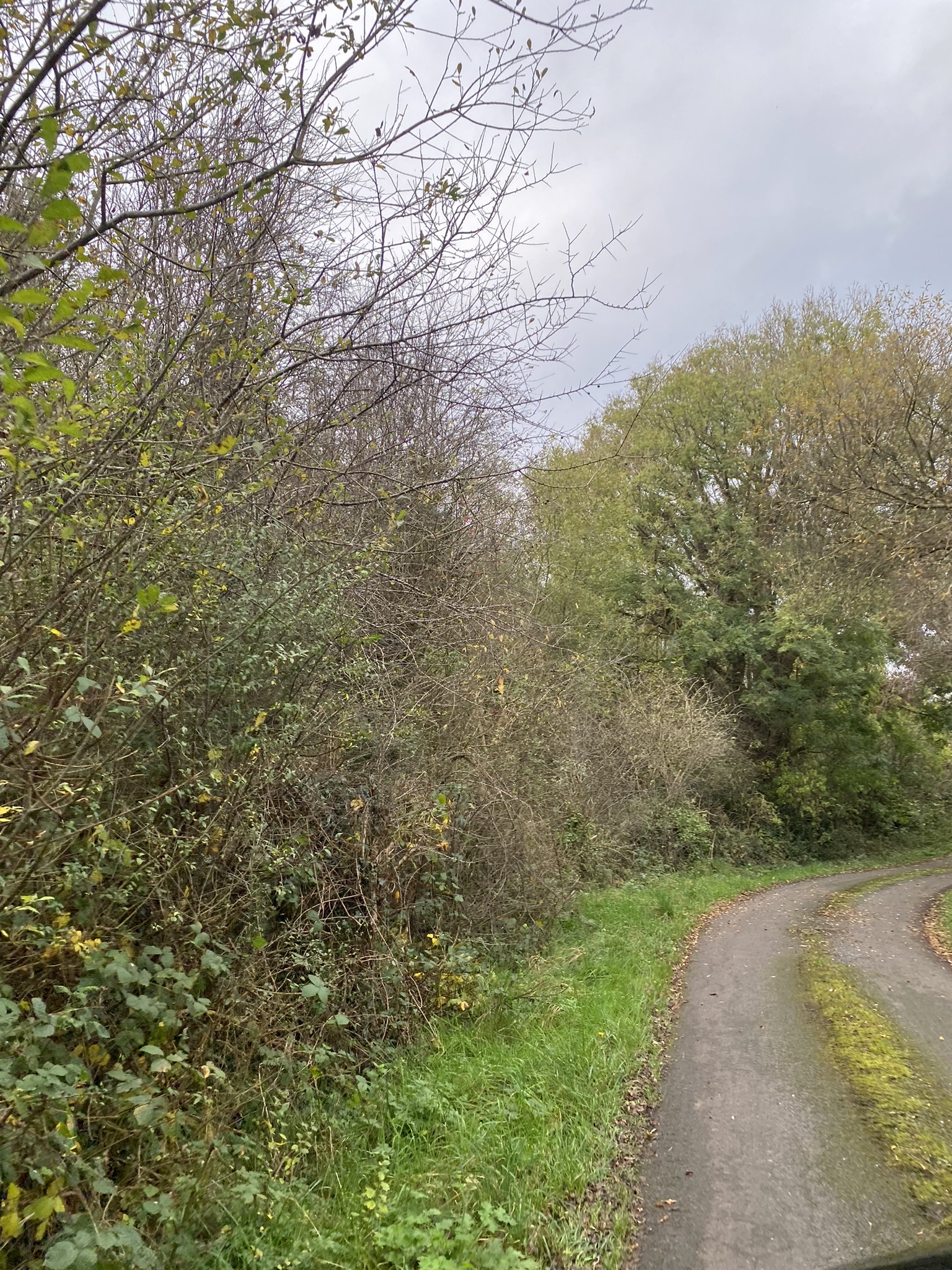
The Cage Murder; On the day preceding the nights affray an agent of Sir Gore Booth, Charles Gage, Esq (denoting that he was considered a man of respectable means) was shot dead on his way to prayers by assailants who were believed to have waited in ambush of him along the roadway near to Ferbane. (There was an old ancient road that connected Corr townland to Ferbane. That road was later replaced with a road that connected Athlone and Ferbane.) The picture below showing the narrowness of the lanes and the height of the hedges, it would not have been difficult to hide and lay in wait.
Sunday, October 14, 1849 – This morning as this unfortunate gentleman (Cage) was riding to prayers on one of the tenants’ horses, he was shot dead on the road coming out of Creggan town land, a little above the bridge which divides Ferbane town land and Curraghdown. He fell dead off his horse, and was completely riddled from under his ear down to the lowest rib, on the left side. There were two shots fired at him both at the same instant. It is supposed three men were engaged in the dreadful affair; they were behind the ditch on Ferbane or Corr side, a place well selected for such a villainous deed. There was a country-man chatting him along at the time, and he fell completely over on the man, who being on his right side, received no injury. It is an awful sight. I was out and saw the poor fellow lying on the road just as he fell. His neckerchief was blown into bits, and some of it got in Royston’s field on the opposite side. As yet (4 o’clock p.m.) no clue to the murderer. The police are all out. The fellows fled in the direction of Corr (did they mean Clonony?) or Ballynahown. Escape of Mr. Cage was impossible, as he could not have been more than five yards from the muzzles of their deadly weapons; and the villains were so completely concealed behind the hedge escape was impossible. We are all excitement here. – The Kings County Chronicle and General Provincial Intelligencer
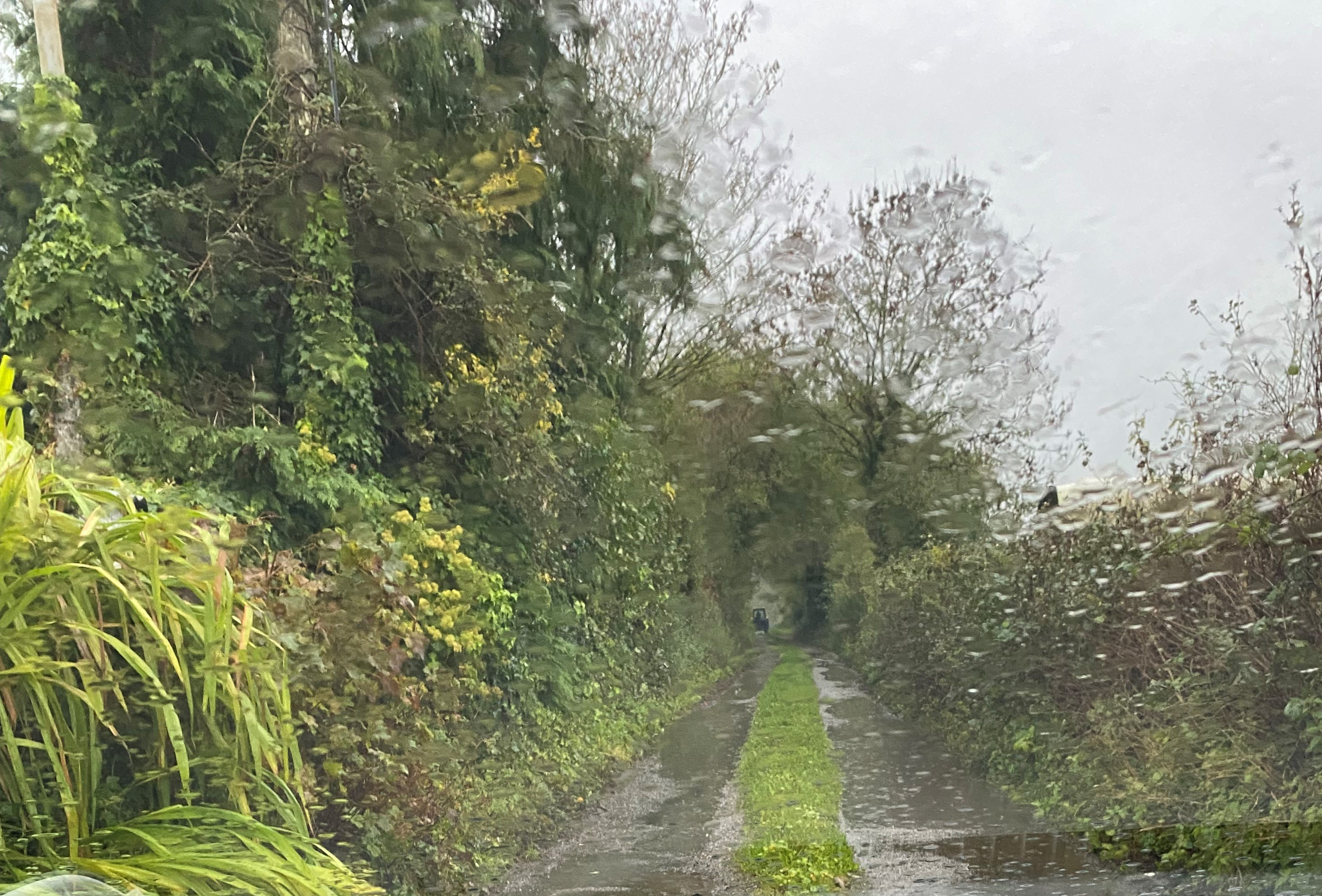
From having actually seen the area now, I am assuming that those involved headed west toward Shannon Harbour likely via Clonony which was not so far and then some may have headed northward toward Ballynahown again not so far and may well have had pre-arranged or sympathisers that they knew would hide them.


Wednesday 14th November 1849.
Edward Farrell, Patrick Kelly were charged with aiding and abetting in the murder of Cage. Additional men held in suspicion of being associated with the murder were Duffy and Grunning. Prisoners Cahill and Daly were discharged with the other four being sent to Tullamore Gaol.
Notable relatives? There was another Michael Larkin born at Lusmagh, near Parsonstown, Kings (now known by its proper name Birr), (his mother was a Quirke) in 1835. As the location is very close to Ferbane, I’m making a fair estimation that his branch would have been relations to ours. This Michael Larkin would later be hanged as one of the Manchester Fenian Martyrs in 1867. See link https://www.dib.ie/biography/larkin-michael-a4686
It would be incomprehensible to believe that families and friends whose sympathies and politics in the same social and financial class would not have been shared. Especially at a time where basic survival in Ireland was so uncertain.
Neighbours, friends, family? From the Griffith’s Valuation Killaghally or Wheery, County Offaly at this time, I’ve been able to compile a list of neighbour’s who lived very close to our Larkin’s and who would of certainly known of each other. There were more families in the extended area and into Ferbane who no doubt were all known to each other, for this however, I have just selected families who lived either in Kilcolgan More or Kilcolgan Beg. These were not towns so much as localities where people all farmed and lived on as little as an acre to a more substantial plot. Most of them being tenant farmers.
The area was named for it’s proximity to the now removed Kilcolgan Castle (Offaly). John Boland, John Burke, Matthew Cantwell (KB), Matthew Cantwell (KM), Bridget Cloonan, Stephen Cloonan, Michael Coghlan (KB), Michael Coghlan (KM), Margaret Day, John Devery, Peter Guinan, Bernard Hennessey, Patt Holloway, Michael Horan, Michael Kelley, William Kelley, Catherine Kelly, Christopher Kelly, Michael Kelly, William Kelly, Andrew Kenny (KB), Andrew Kenny (KM), James Kenny, Laurence Kenny, Rev. H. King, Martin Lyons (KB), Martin Lyons (KM), John Maher, Matt Mc Glughlin, Patrick Mc Glughlin, Peter Redmond, Peter Redmund, John Rourke, John Rourk.

Main Road, Ferbane Village Oct 23 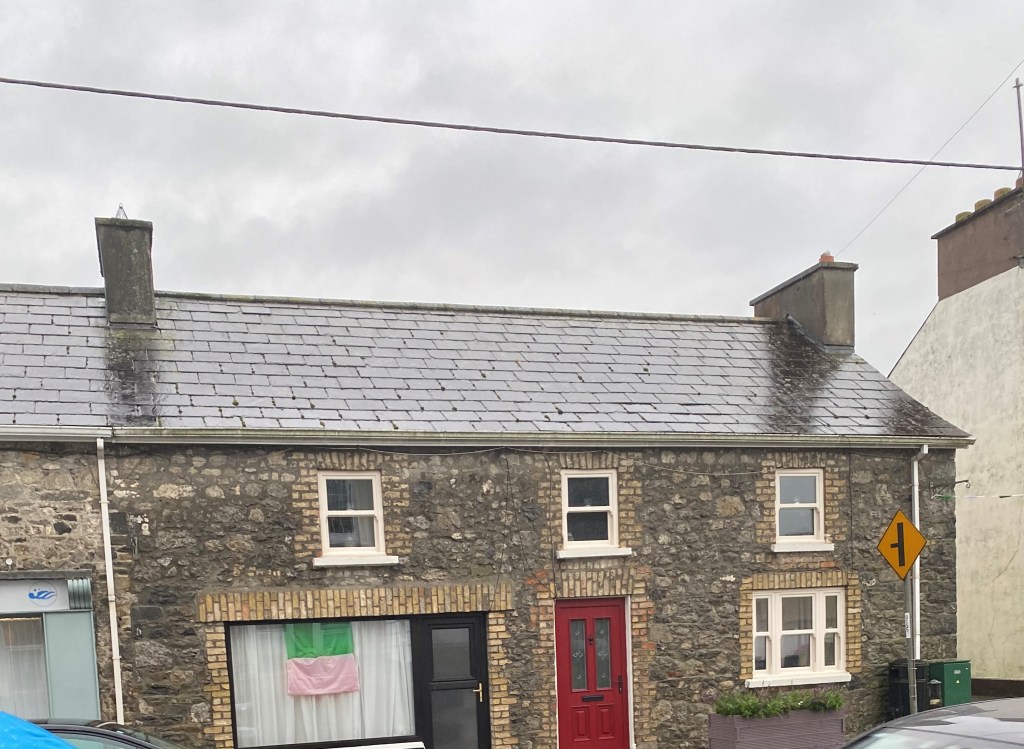
Ferbane Oct 23 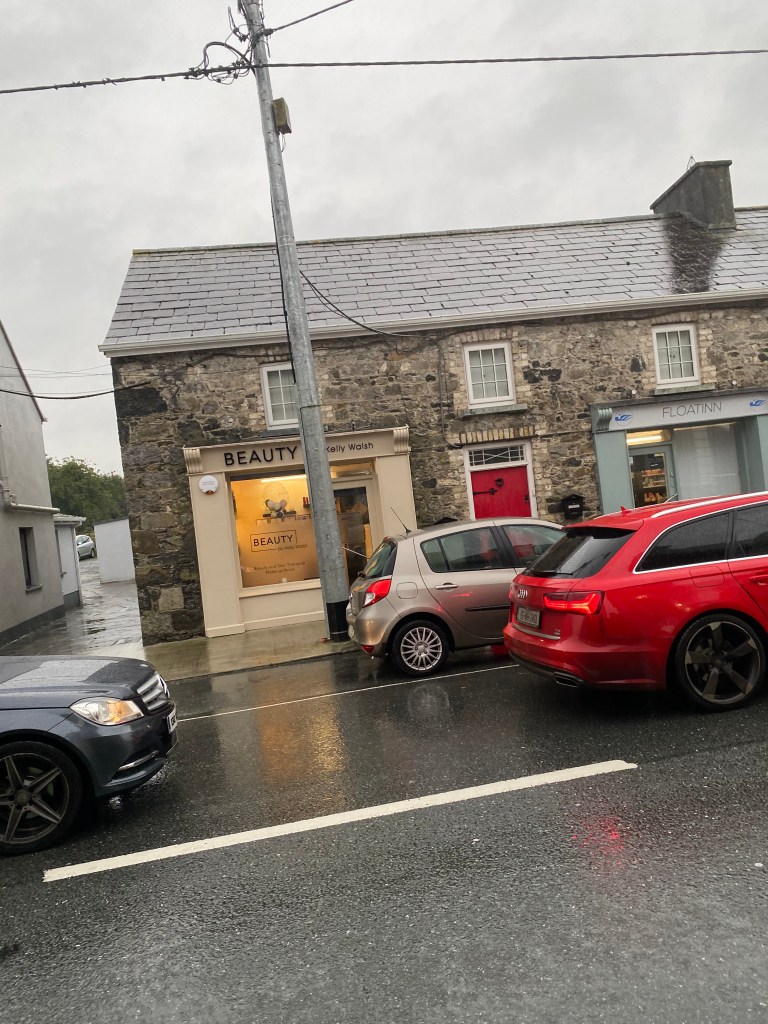
Ferbane Oct 23 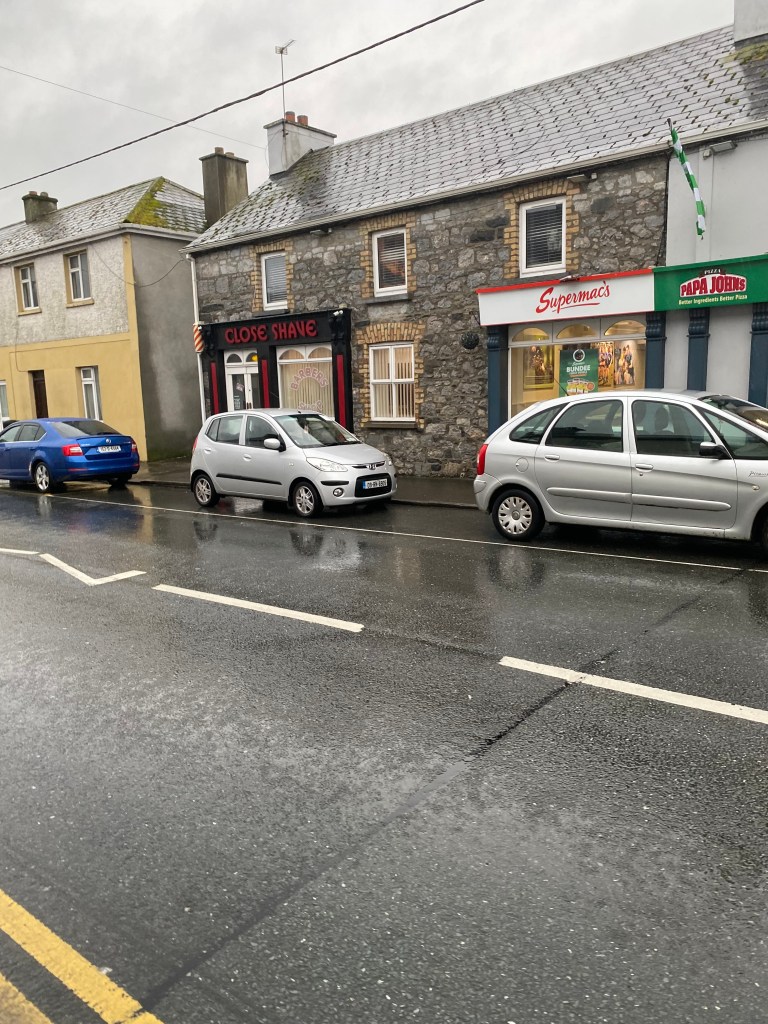
Ferbane Oct 23 
Ferbane Oct 23
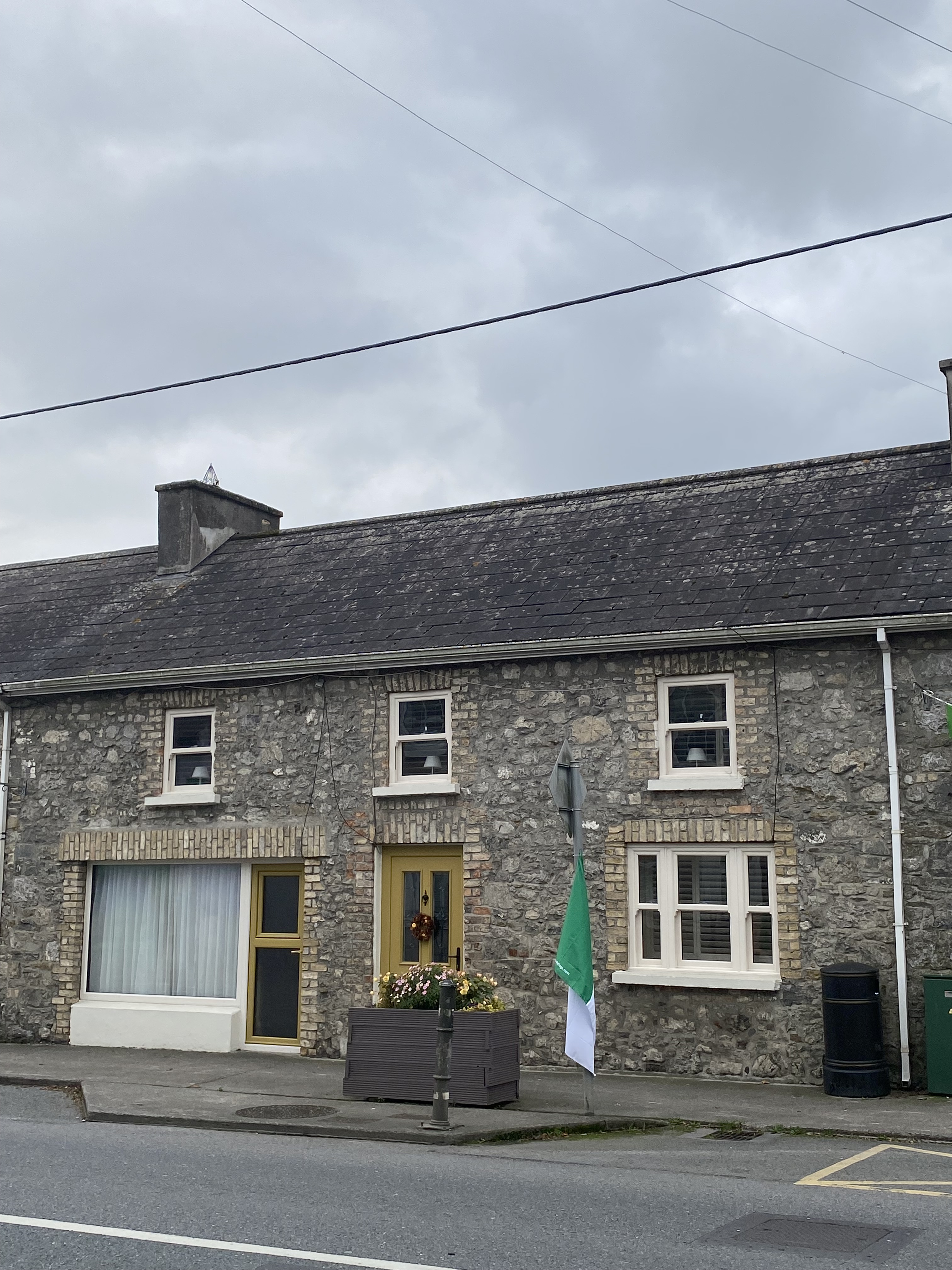
When I visited Ferbane, Oct 2023, unfortunately it was a very short stop and we’d reached the village toward the end of the day. I was driving from Dublin across to Galway and it was pelting down rain as a storm was lashing the whole of the British and Irish islands.
Returning to Ferbane Nov 2024, was a much better day with more time, better weather, and we were able to get some more pictures of the specific area our Larkin/Lorkin’s lived in. Namely they were from nearby Kilcolgan More and Kilcolgan Beg which we managed to find down the many little roads and laneways.
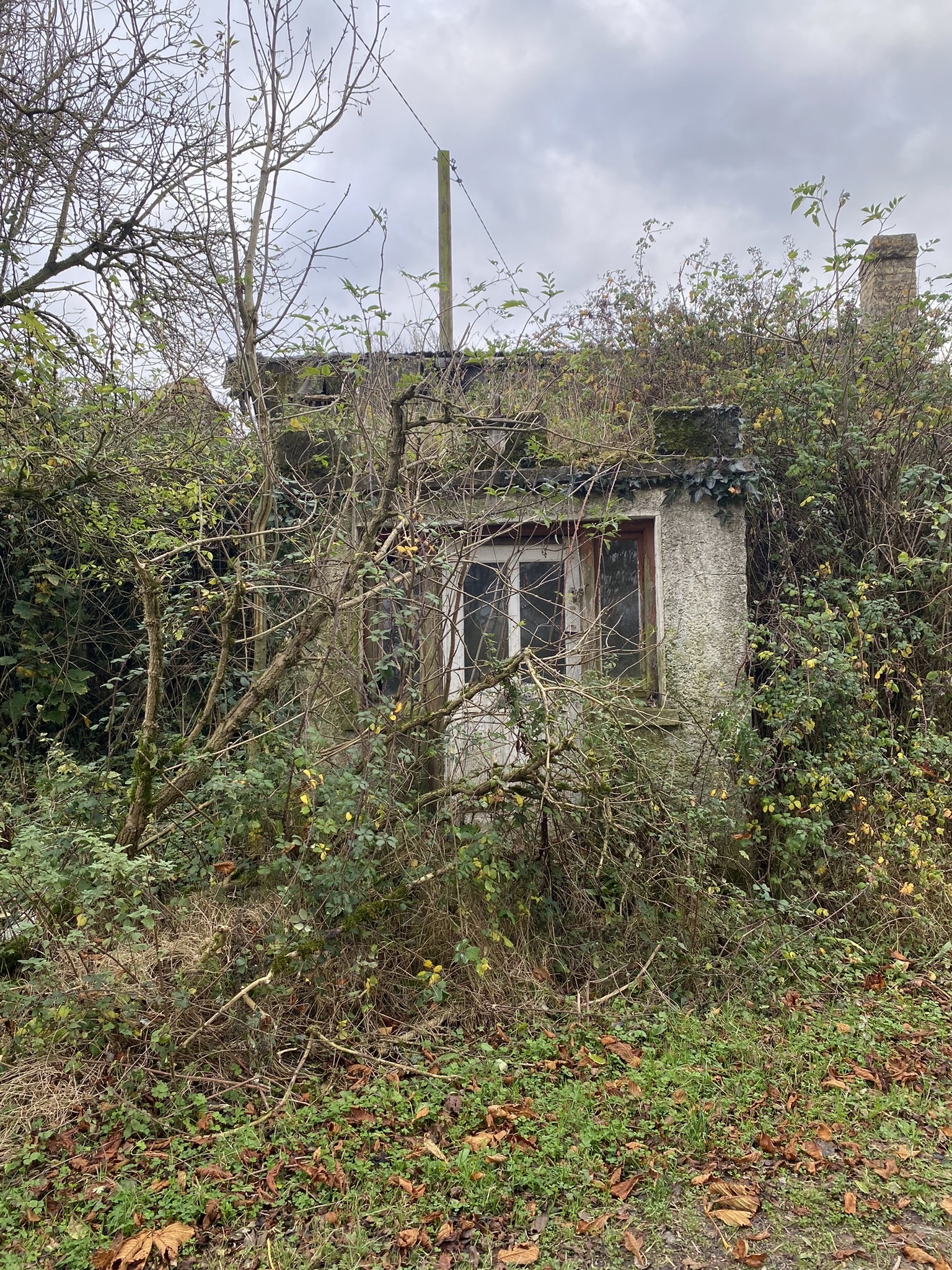


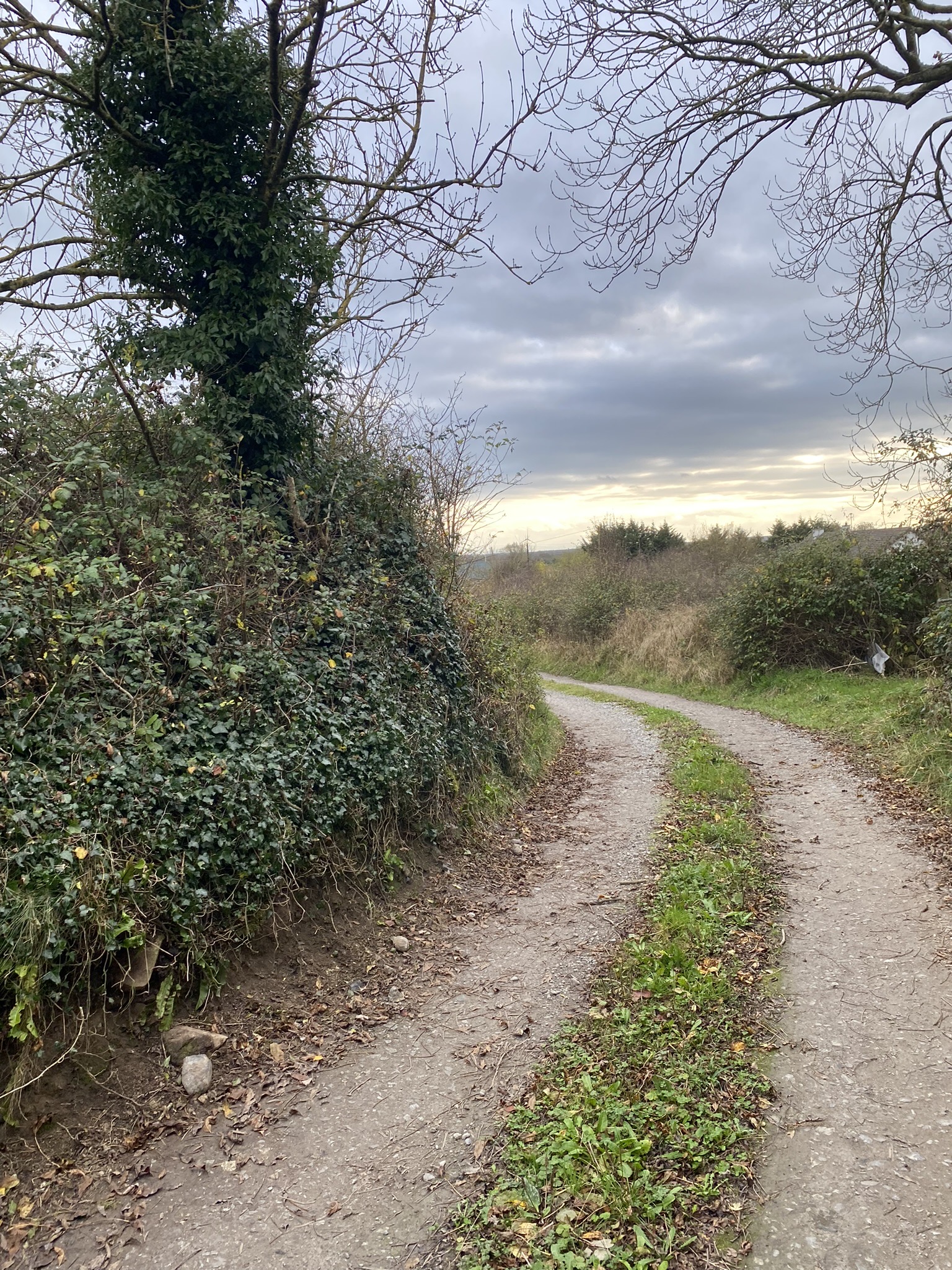
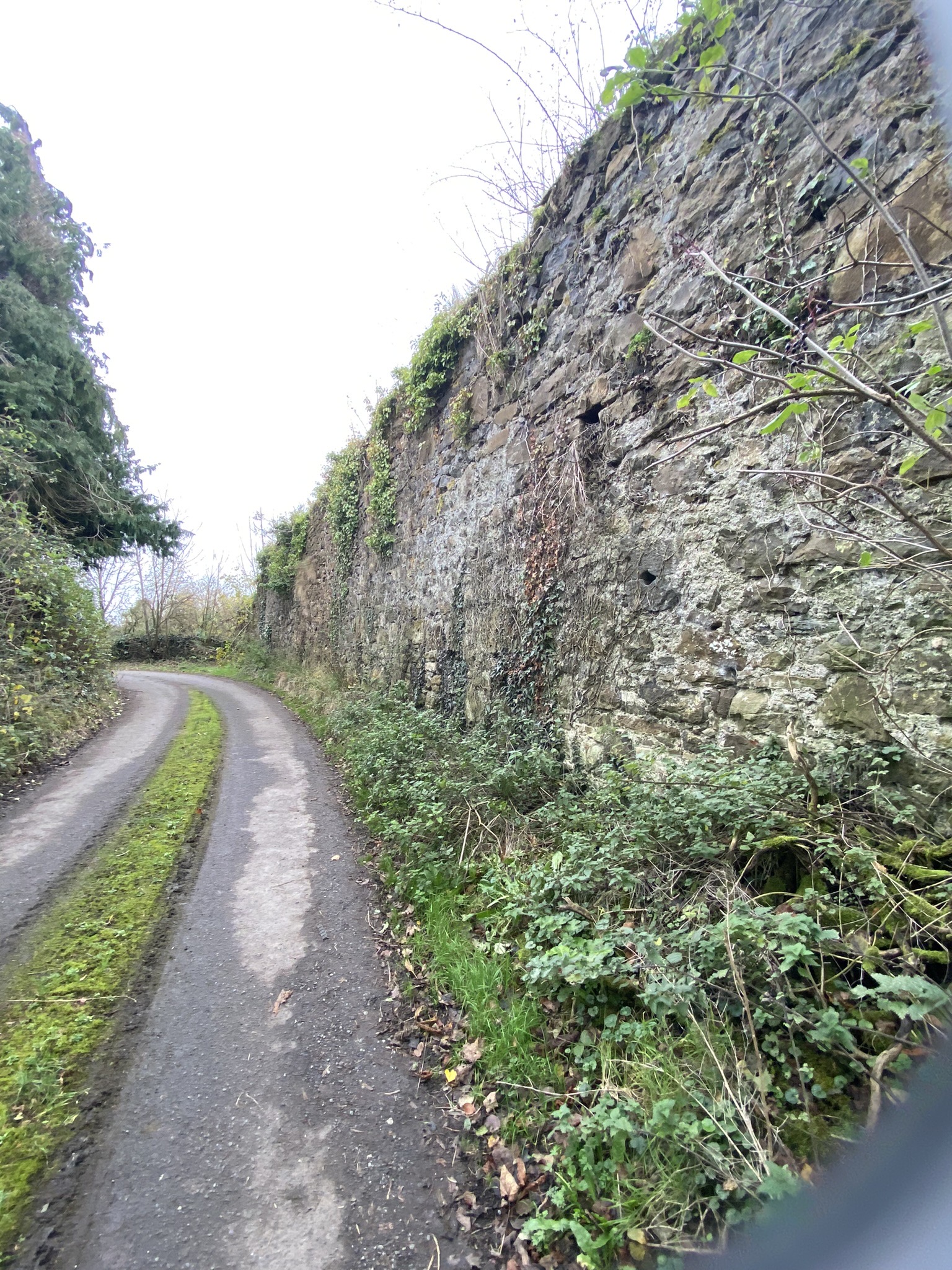
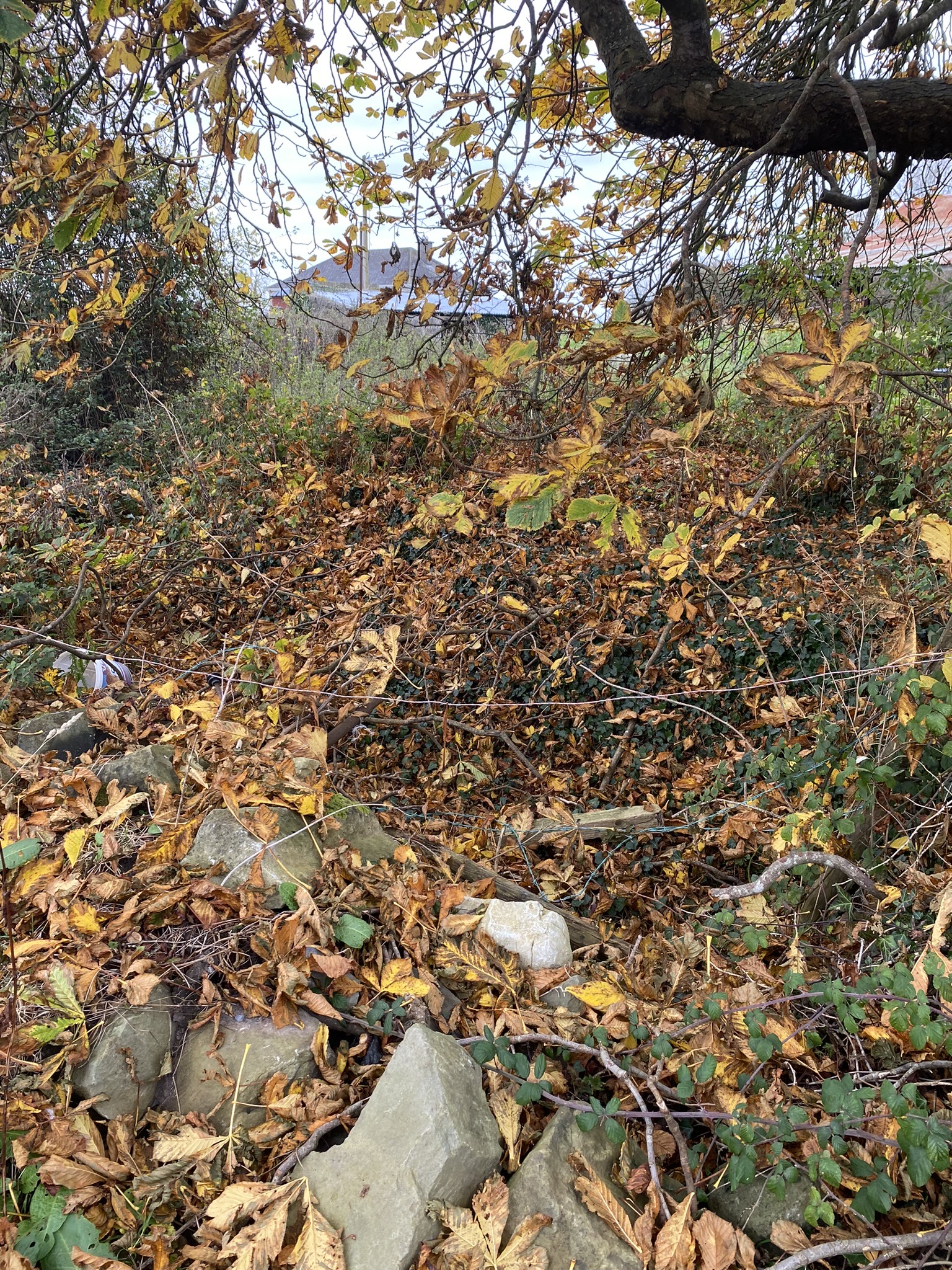

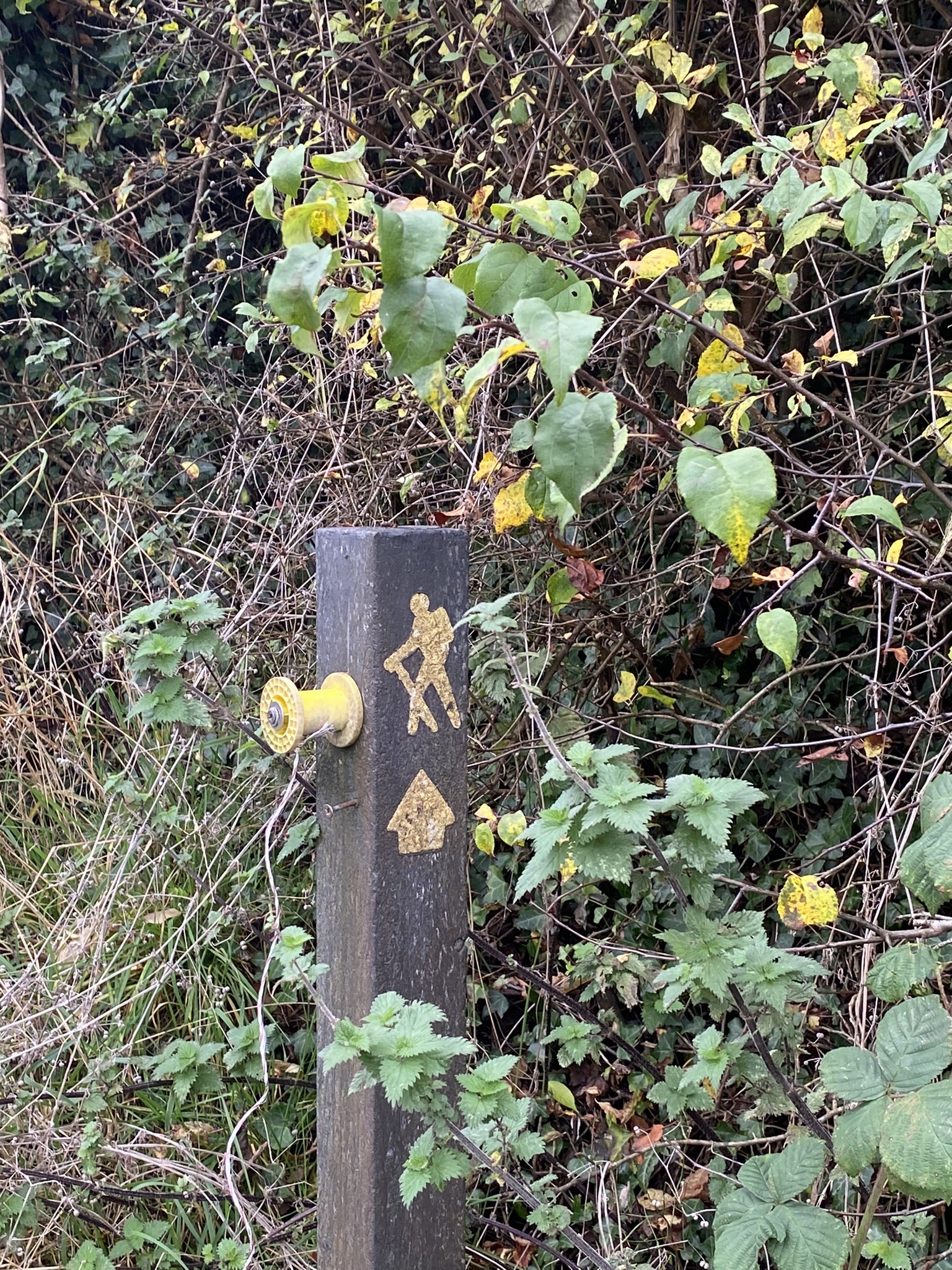
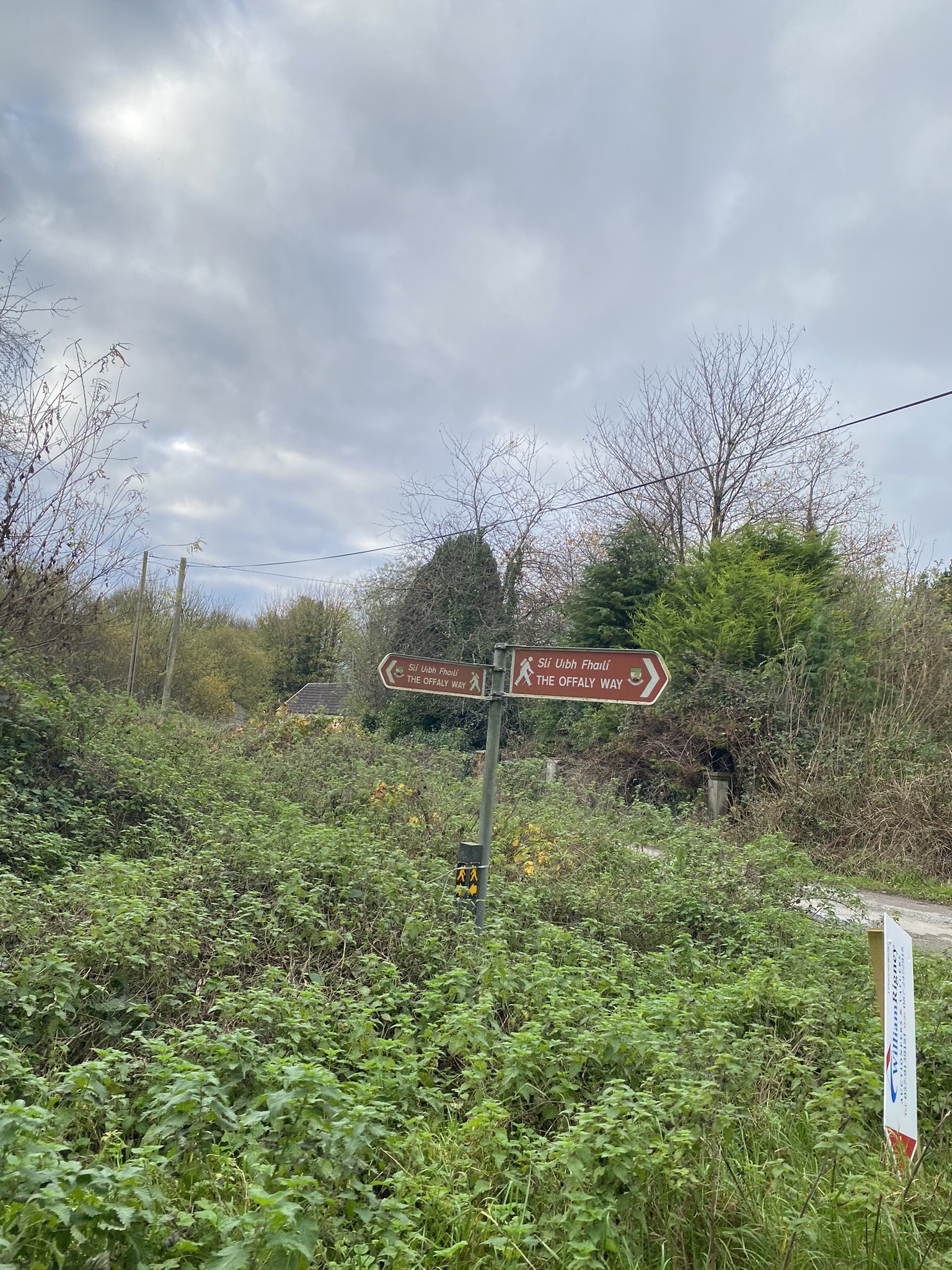
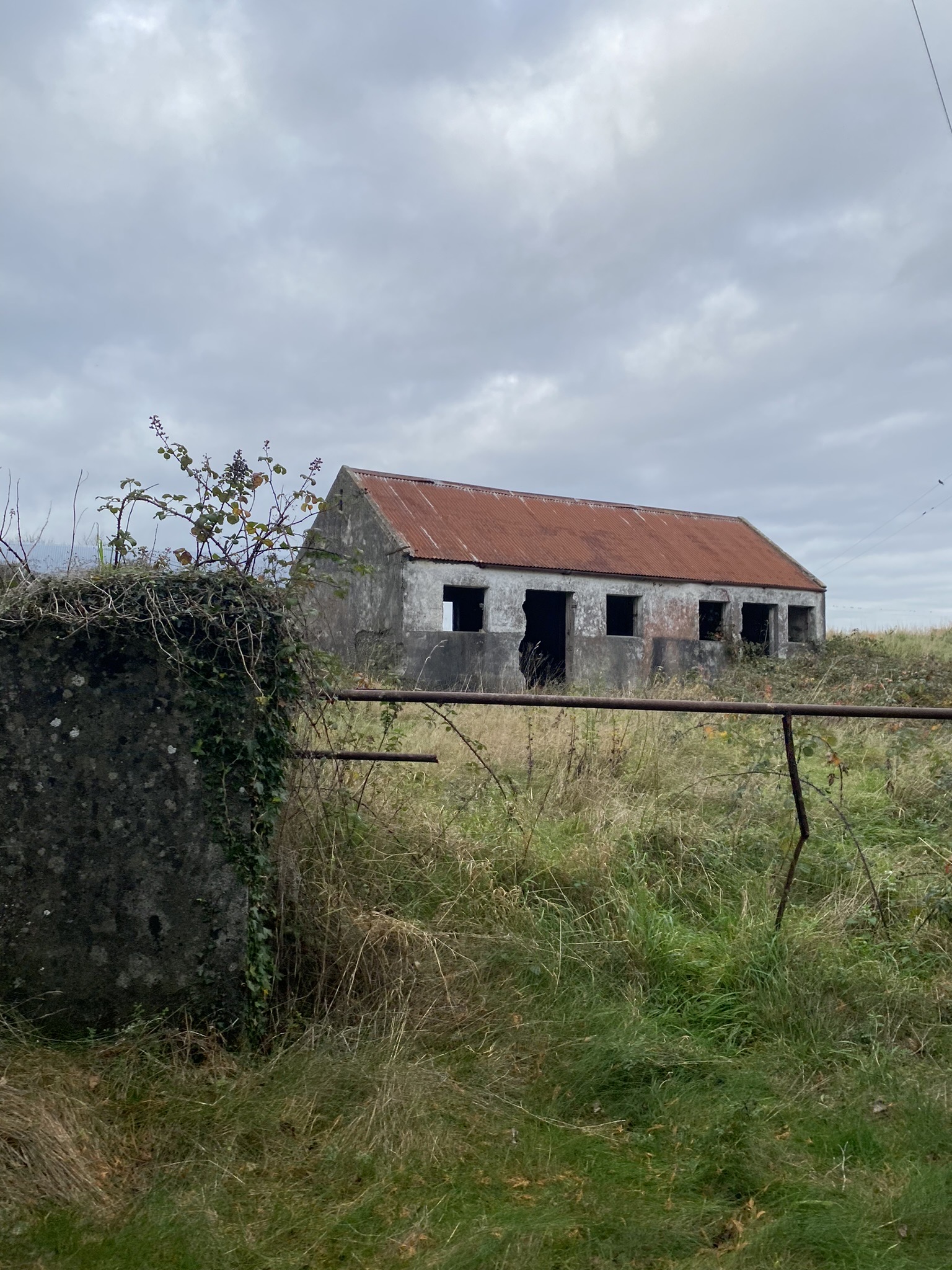
By sheer fortune in November 2024, the ruins I was taking pics of from the road caught the attention of the nearby owner who it turns out was distantly related to the families I was interested in, namely the Cantwell’s and that the Larkins, now all passed on, had lived several generations in and around nearby Cantwell Lane. And, that the house ruins were still there, as were current dwellings now owned by Egan’s and how to get there by way of a nearby adjacent laneway. What a gift! While Cantwell Lane wasn’t what I’d describe as necessarily signposted, our instructions to get there were amazing. Take a right when you get to the sign of the walking man, that’s Cantwell Lane!

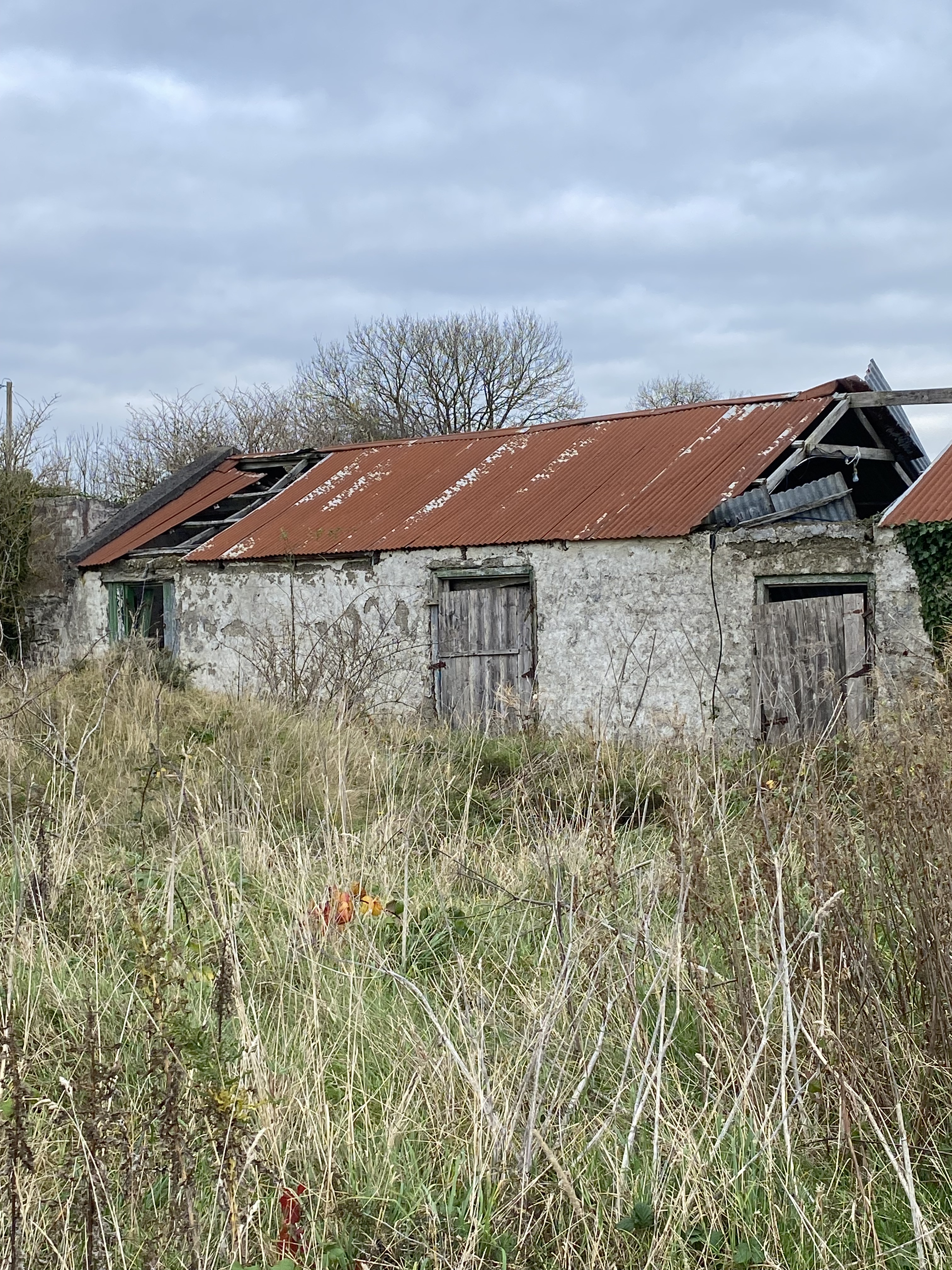
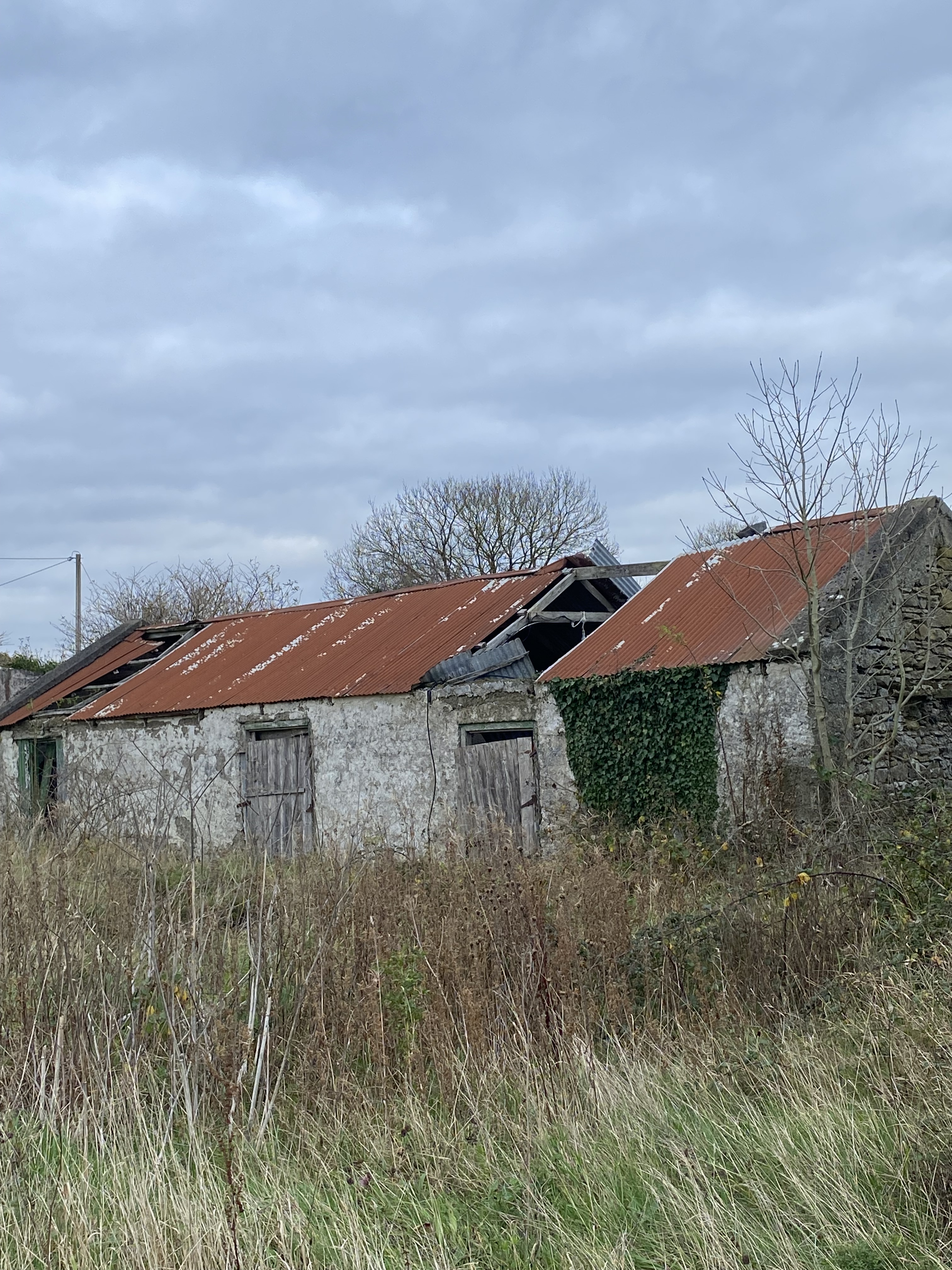

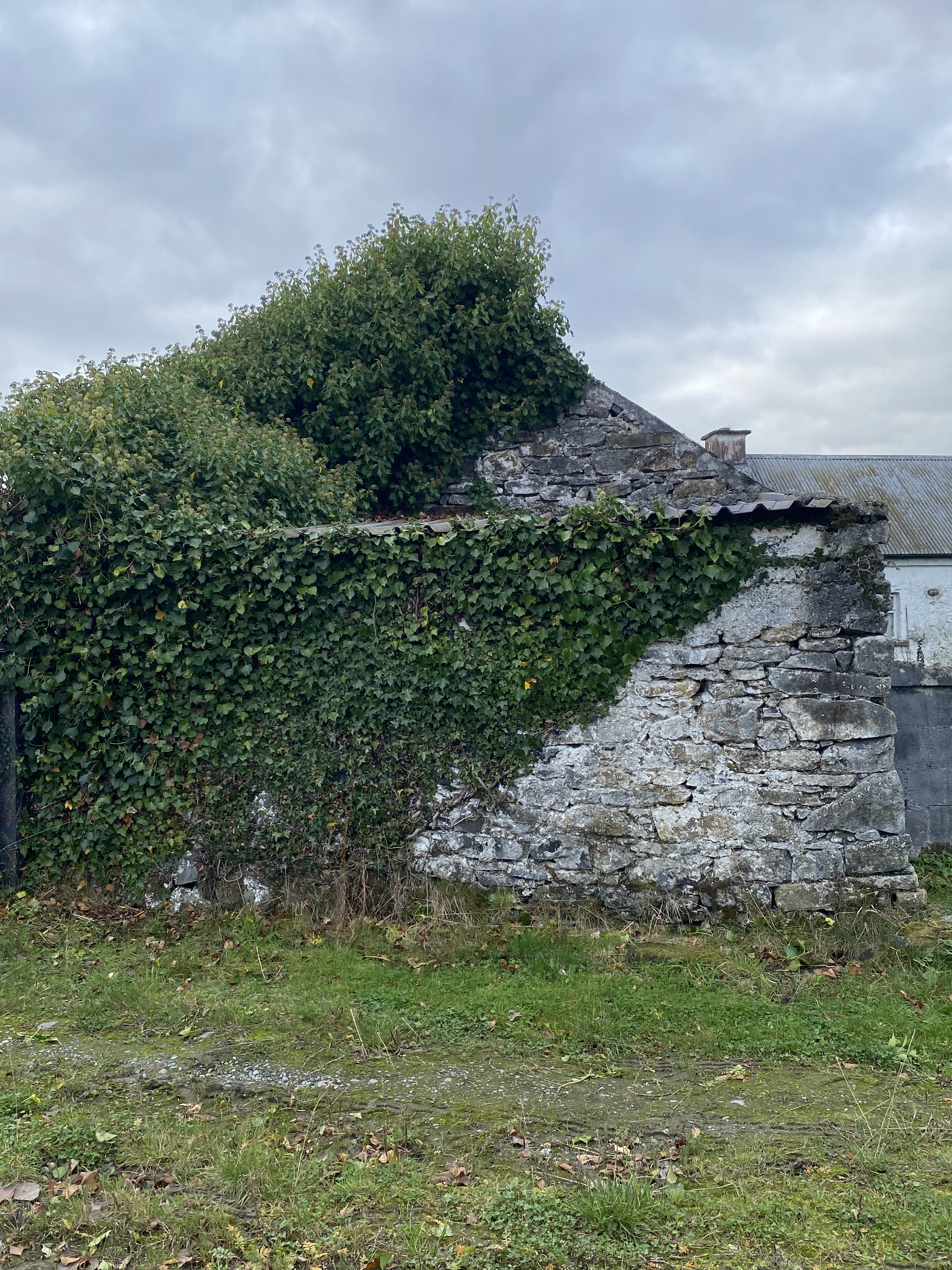
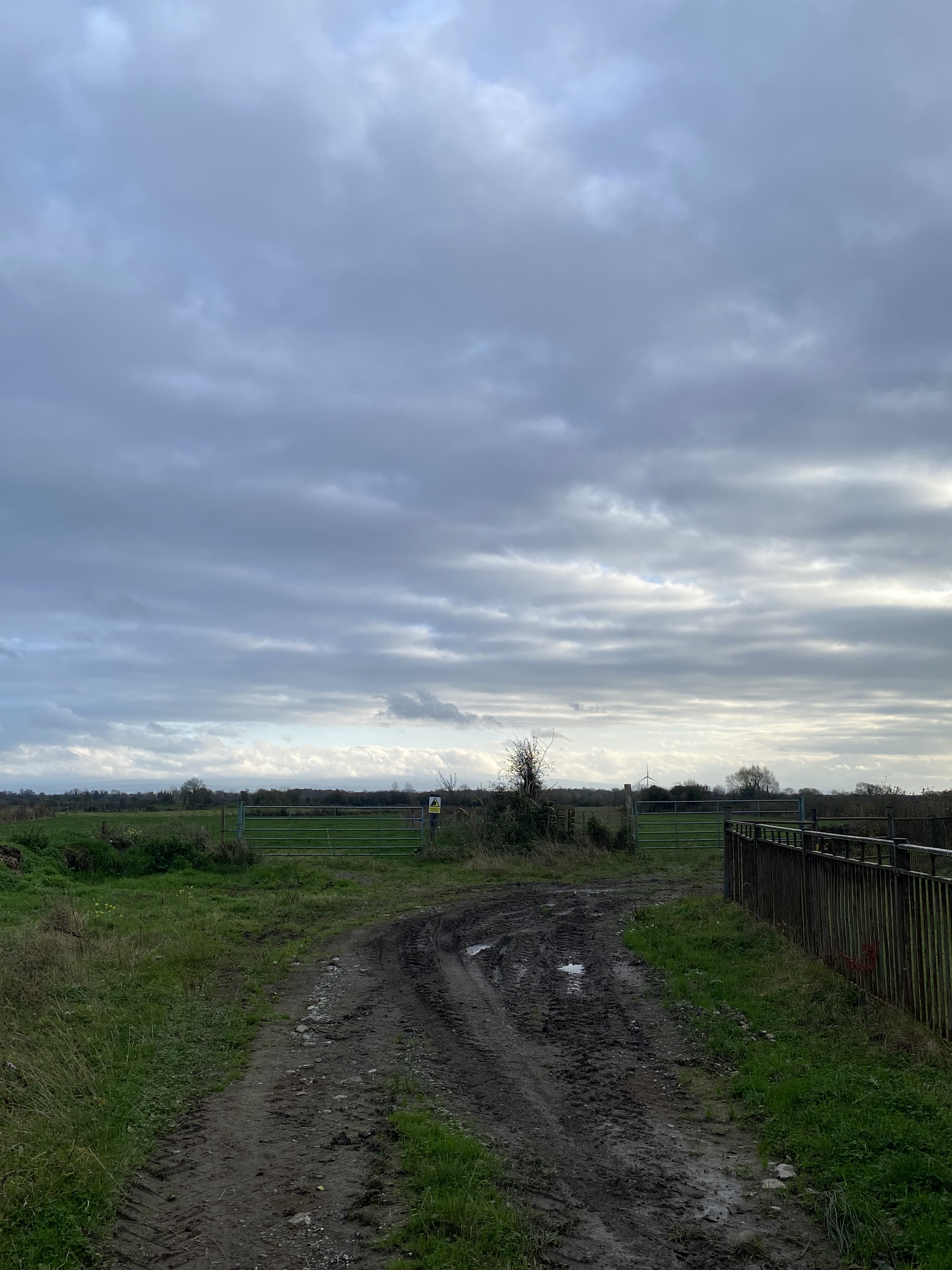
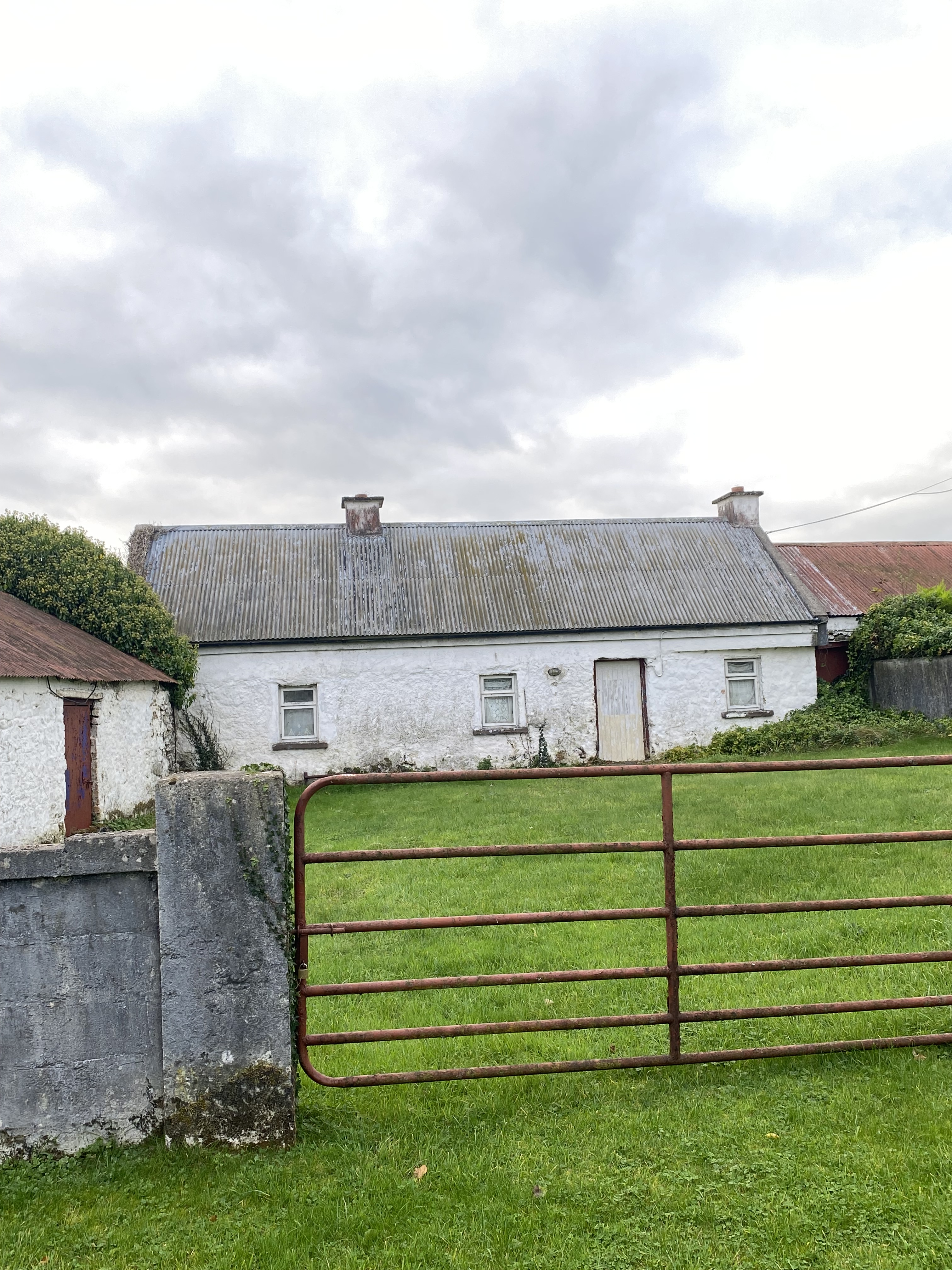
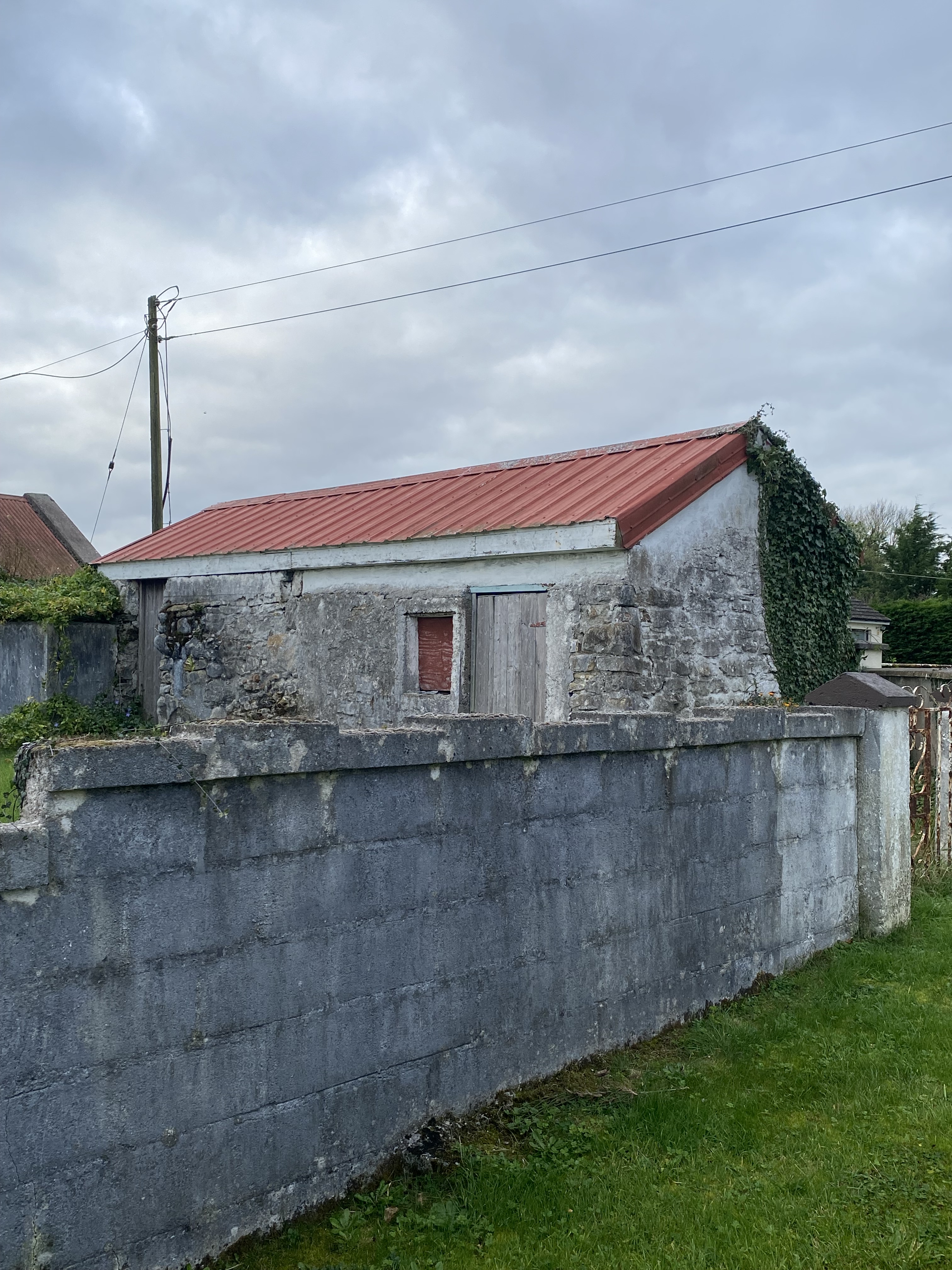


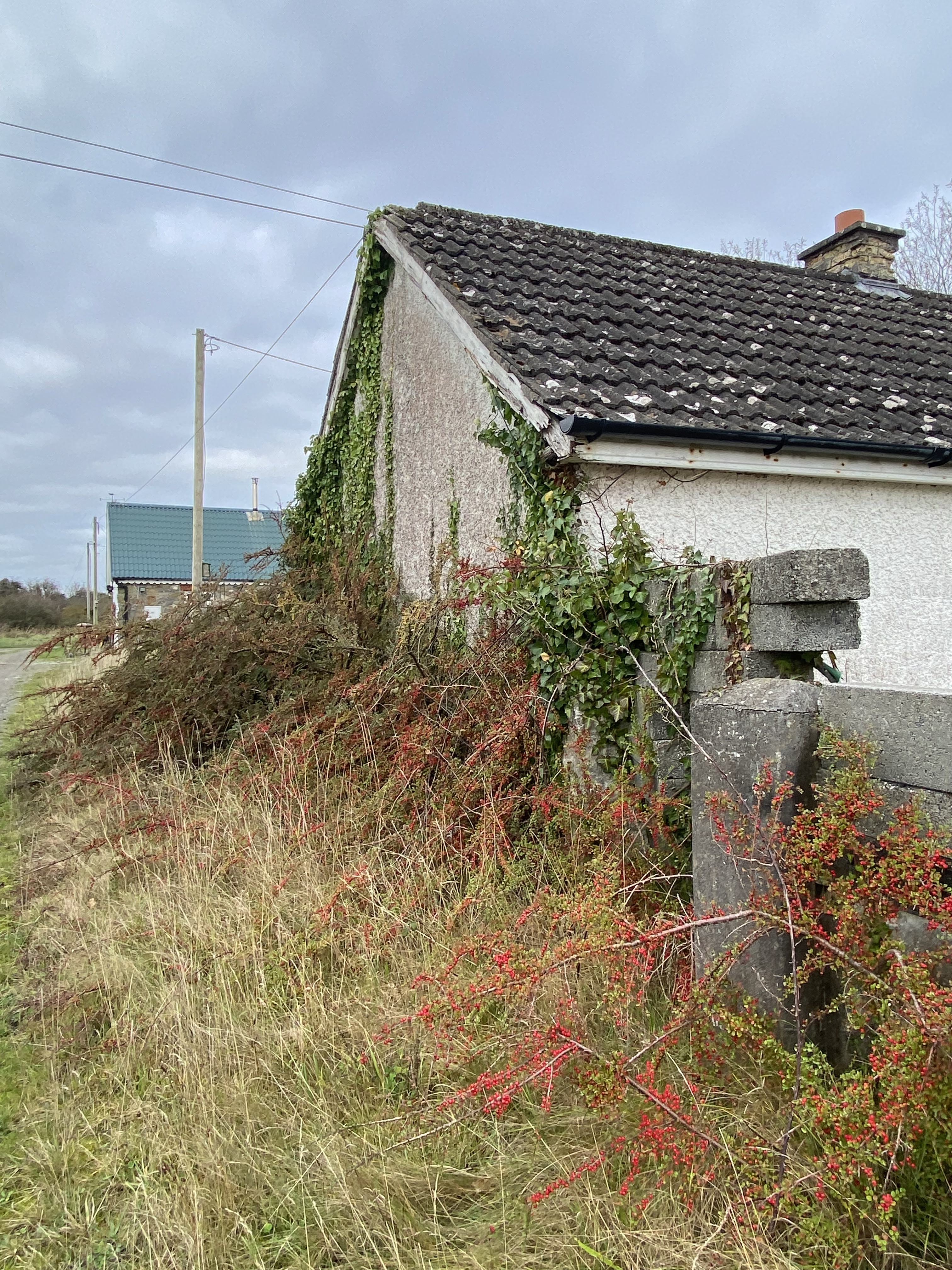
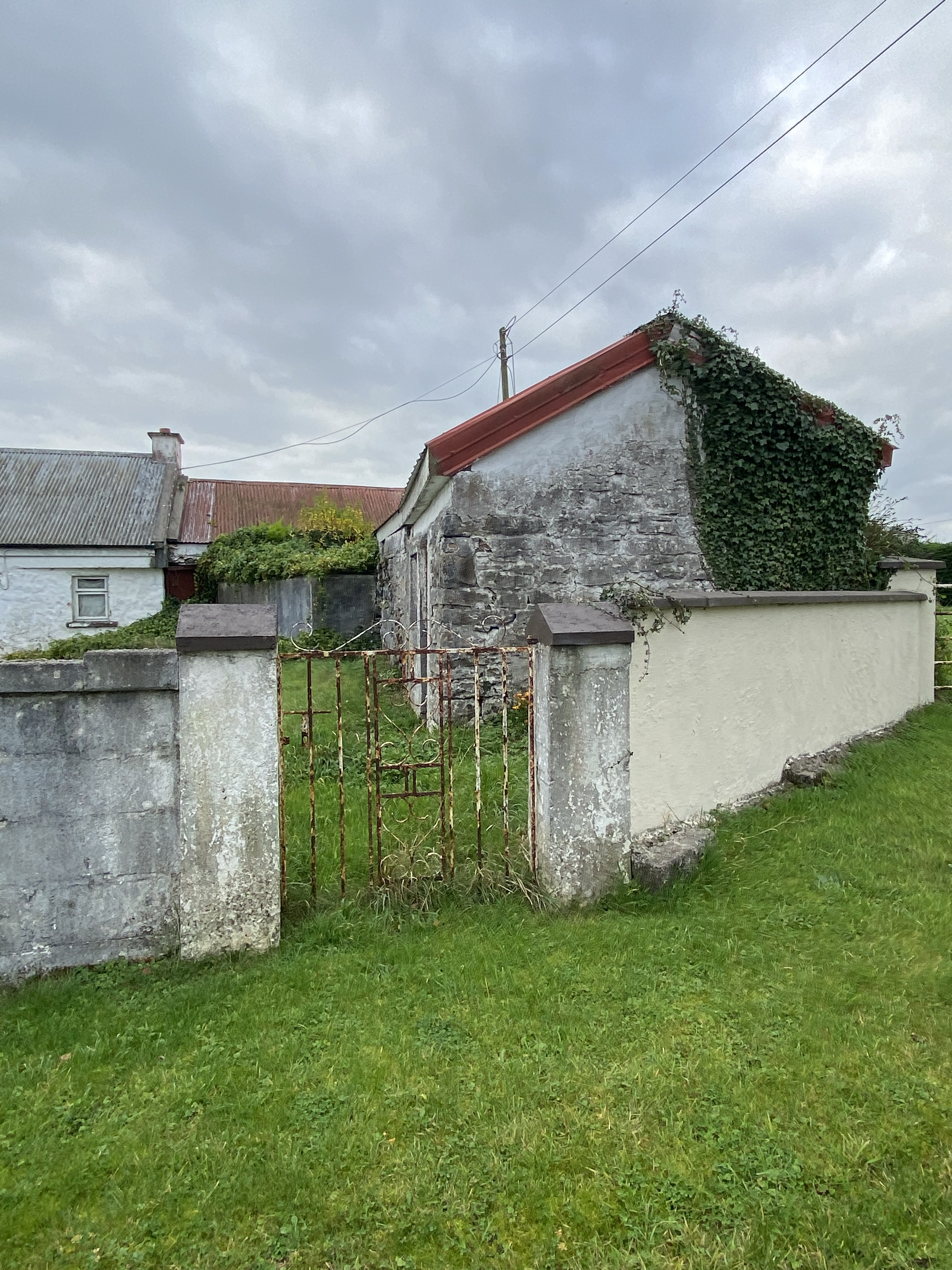
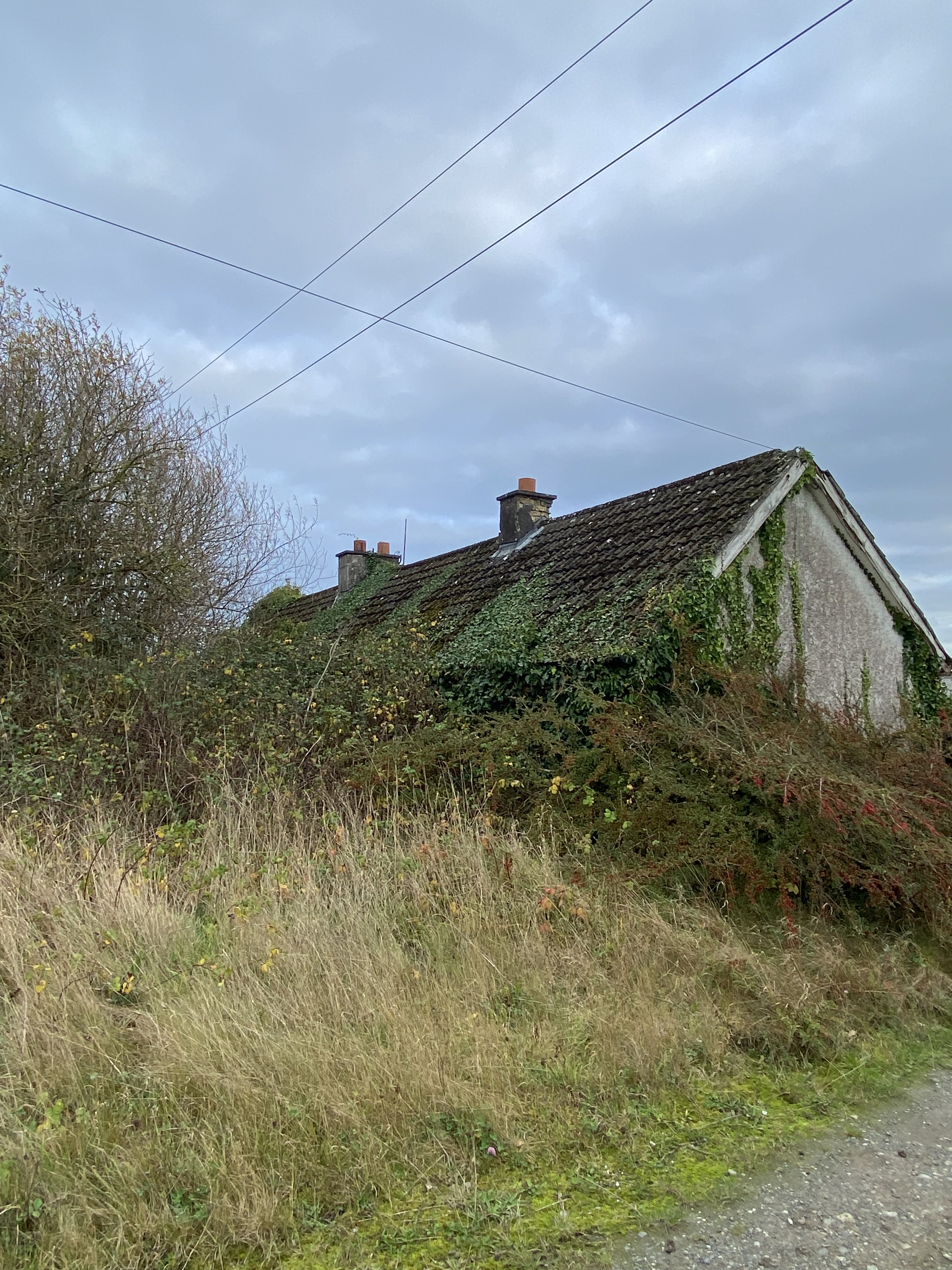
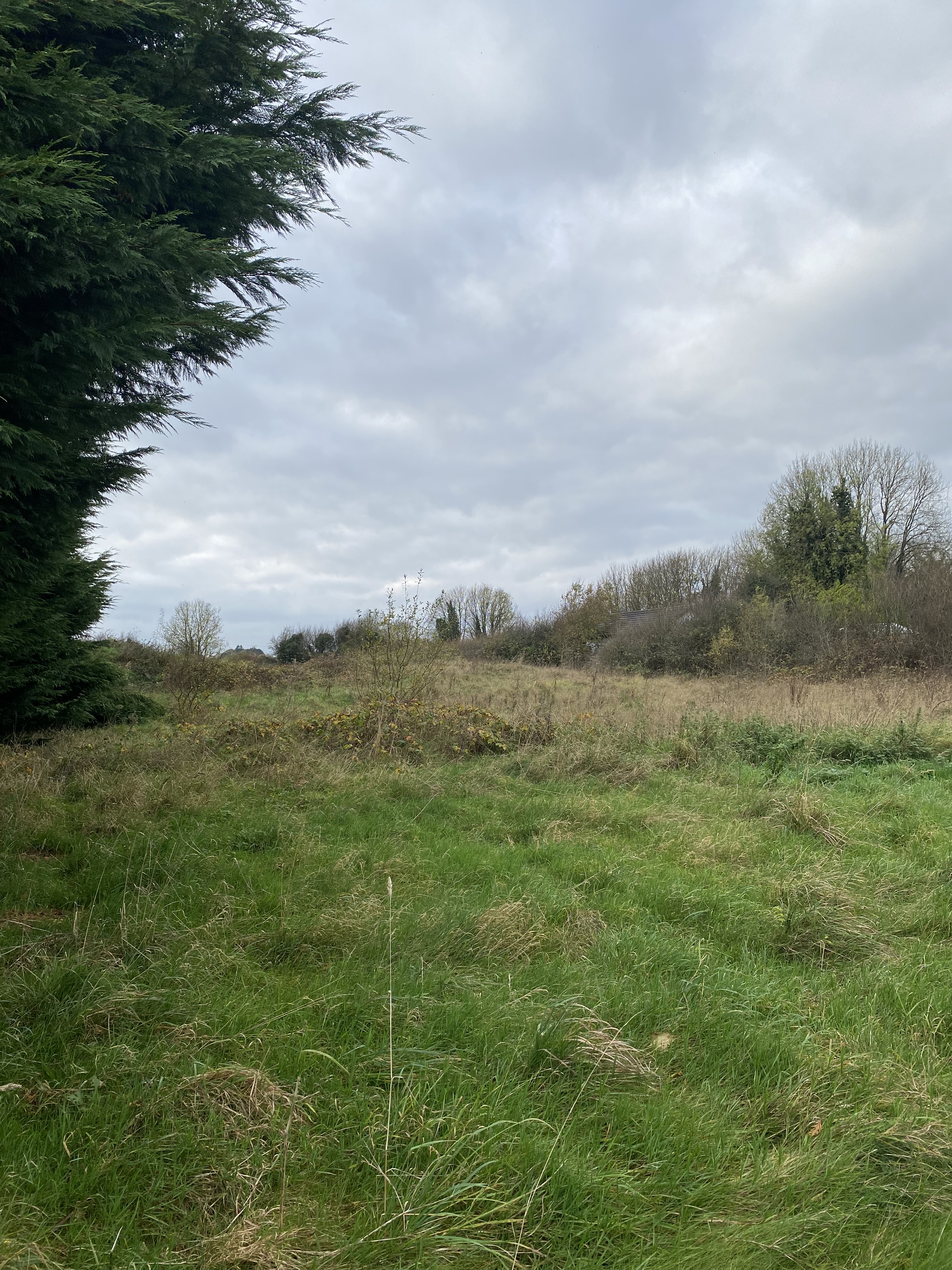
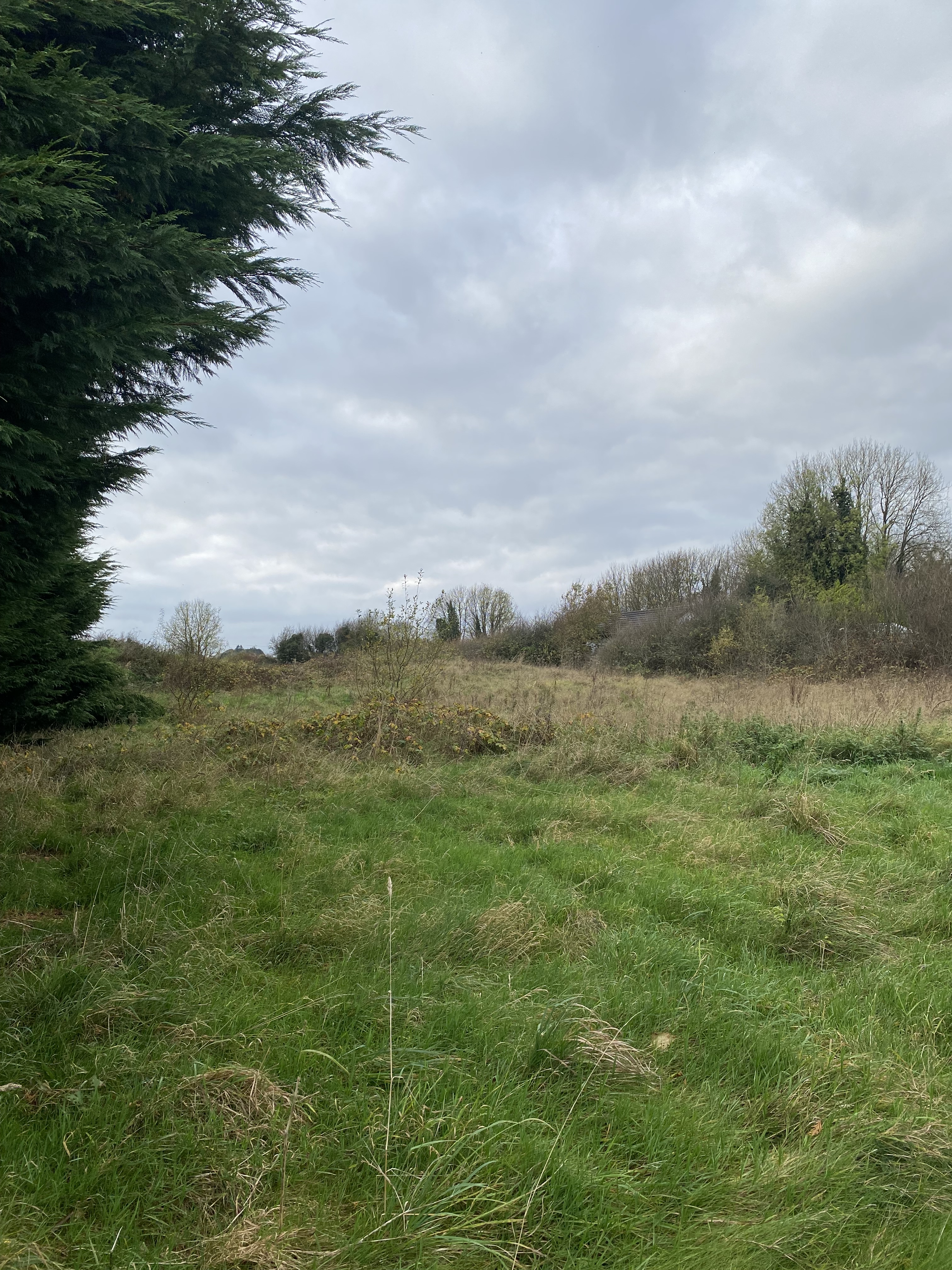

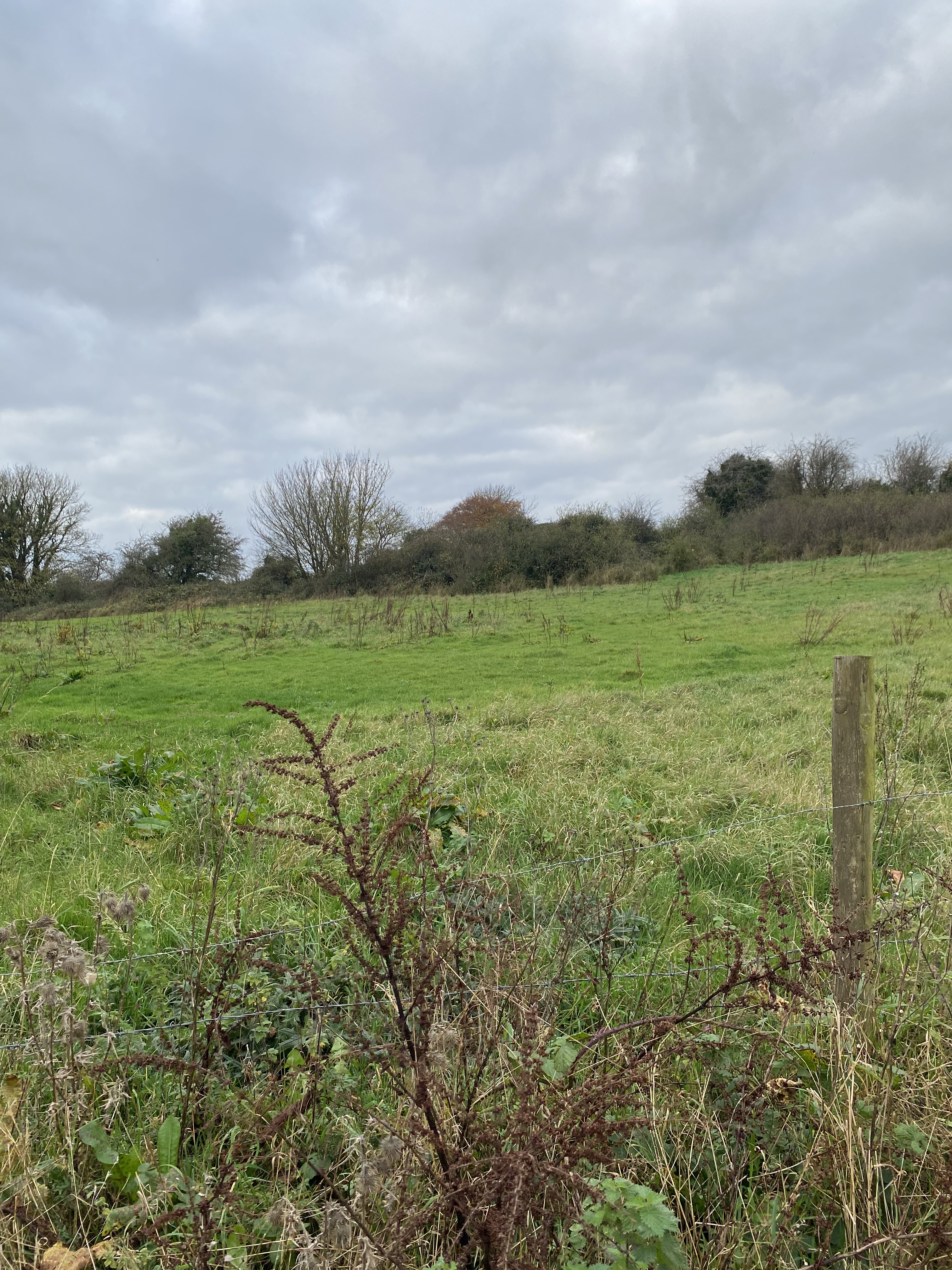

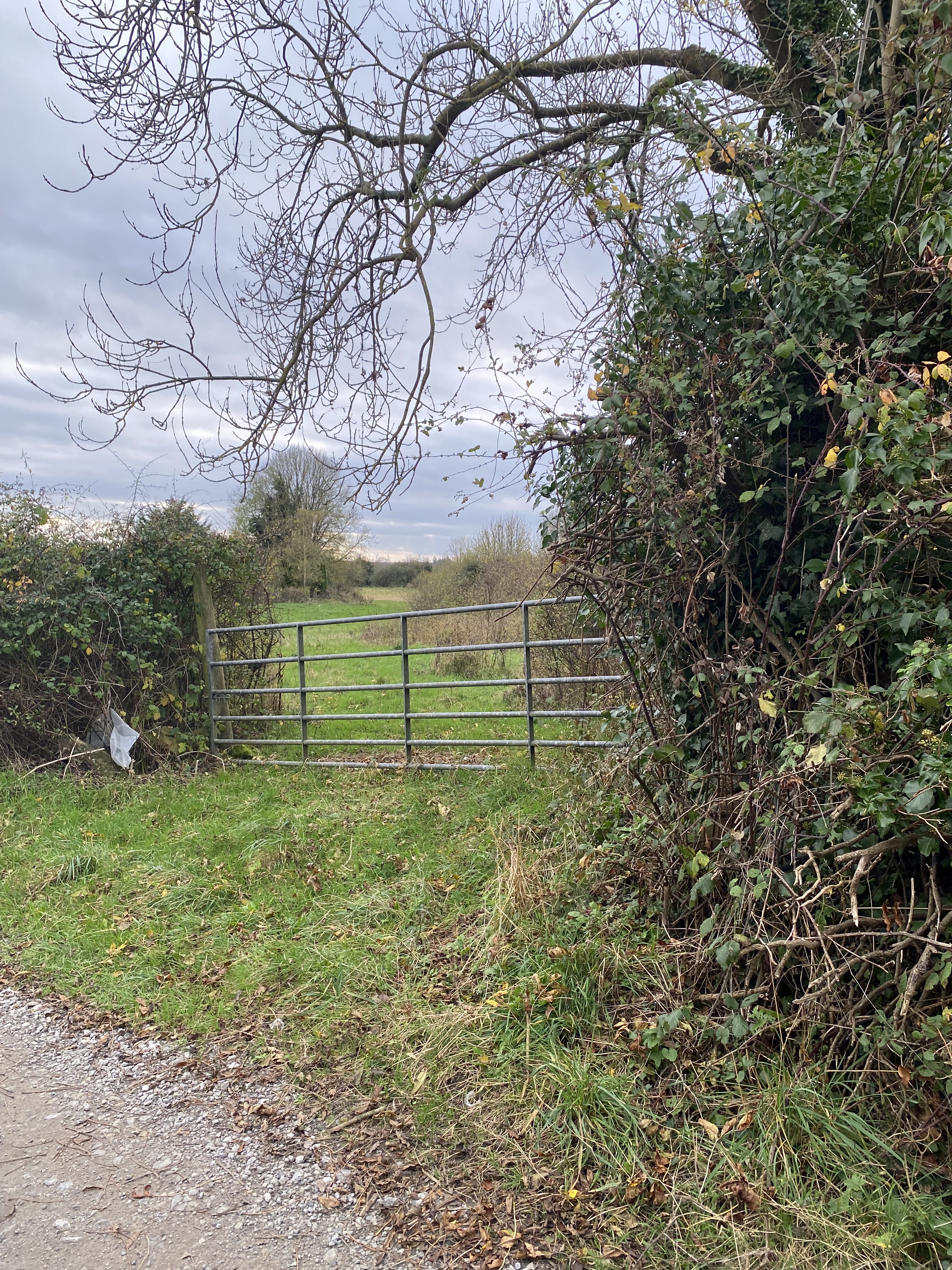


There are a number of house and farm buildings in Cantwell Lane. Some very old and in ruin and some newer. All quite close by each other on both sides of the road. Given that our Larkin’s original home was described to me as being ‘in ruins’, I’m fairly sure I know which one belonged to our Larkin based on probability. Which is not to say that other ‘newer’ homes were not built for family or extended family as time progressed on and modernity needs emerged. Our Michael Larkin had married Mary Cantwell and I’m satisfied that this little lane is where they lived and raised their family, Kilcolgan More near Ferbane in what was then Kings County, now County Offaly, Ireland.


 Yews to Eucalypts